A sector is a share of a whole
A pie chart divides a whole into sectors that sum to 100% or 360 degrees. If a sector is 72 degrees, it represents 72/360=20% of the whole. If the whole is 900 units, that sector contains 180 units. Percentages printed inside the chart remove the need to use degrees. A sector's absolute quantity cannot be determined from a percentage alone unless the total is supplied or inferable.
Keep different totals separate
Two pie charts may represent different years or groups with different totals. A 25% sector in a total of 800 equals 200; a 20% sector in a total of 1,200 equals 240. Thus a smaller percentage can represent a larger quantity. When asked for growth, first convert both shares to quantities and only then compute the percent change using the earlier quantity as base. Never compare sector angles alone across unequal wholes.
Remainders and ratios
If labelled shares sum to 85%, the remaining sector is 15%. Check that categories are mutually exclusive before interpreting the remainder. For a ratio of two sectors in the same pie, the whole cancels: 30% : 20% becomes 3 : 2. For sectors from different pies, convert to quantities first. In the practice set, write the whole at the centre of your scratch circle and each required share on the rim; this prevents mixing bases.
Turn a sector into a quantity
Suppose a pie chart allocates 400 units as A 10%, B 15%, C 20%, D 25% and E 30%. A contains 40 units and E contains 120. A and B together account for 25%, or 100 units. The difference between E and C is 120−80=40 units. These are exact because the whole is given. Without the whole, the pie alone gives proportions and angles, not absolute counts.
The central angle for D is 25% of 360°, or 90°. The angle for E is 108°. Angles are another representation of share: divide an angle by 360° to recover the fraction of the whole. Do not answer a quantity question with 90 just because D's angle is 90°; its quantity is 100 units in this example. Write the requested unit next to the expression before computing.
Compare two pies with different totals
If another year has total 600 and A is 8%, A has 48 units. Its share fell from 10% to 8%, yet its quantity rose from 40 to 48. Therefore “share decreased” does not imply “count decreased” when the whole changed. Convert shares to quantities before comparing counts across different pies. If the question asks percentage-point change, subtract the percentages (8%−10%=−2 percentage points); if it asks percent change in the share, divide the 2-point fall by the original 10%, giving a 20% relative fall.
Completeness check
Shares of mutually exclusive exhaustive sectors total 100%. In the example, 10+15+20+25+30=100. If a question hides one share, subtract the visible shares from 100. For a sector angle, all angles total 360°. These totals are useful checks but do not override a note that the chart shows only selected categories. Read any “other” sector and whether the whole is a sample or a population before treating it as complete.
Practice — 50 questions
Attempt every item before reading the answers. Use the chart or caselet printed with the question.
1. How many units are in the Unit A sector?
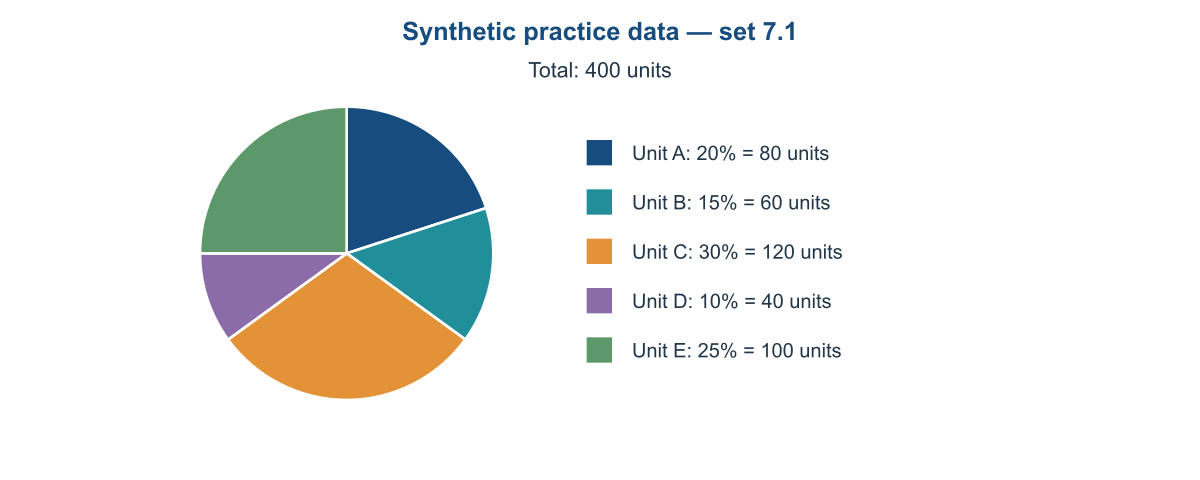
A. 85 B. 80 C. 90 D. 75
2. How many units are in Unit A and Unit B together?
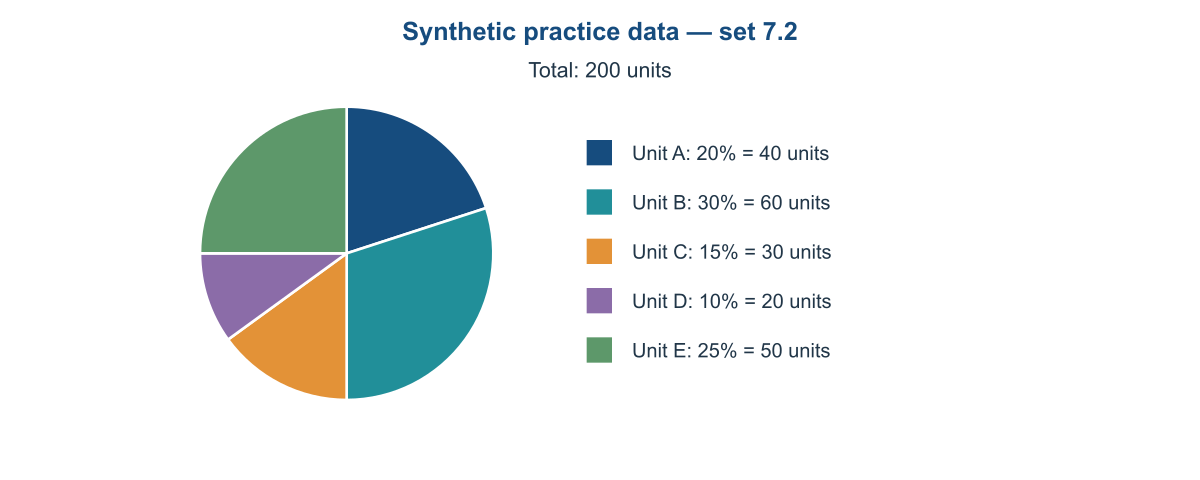
A. 110 B. 105 C. 95 D. 100
3. What is the absolute difference between Unit C and Unit D?
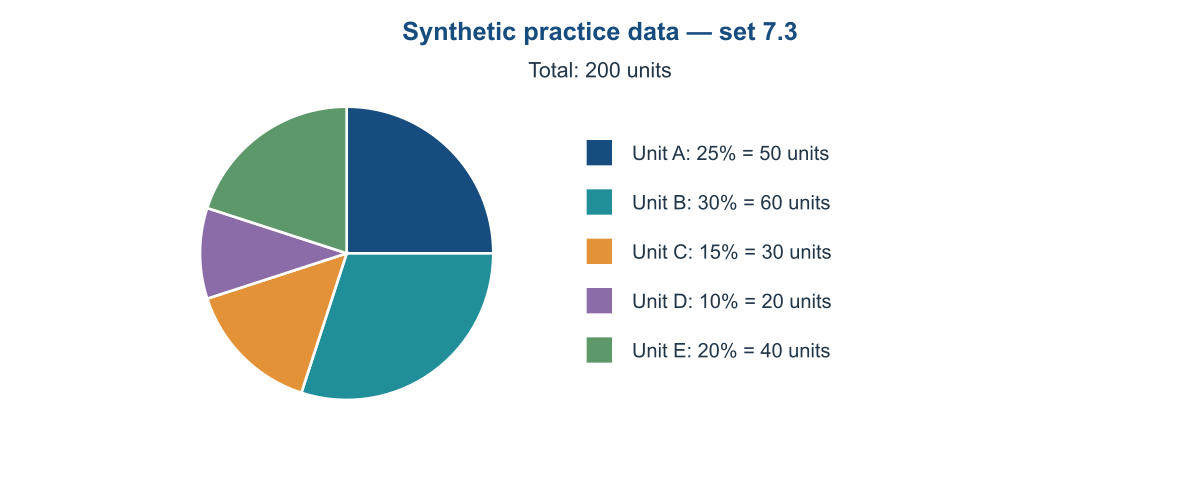
A. 15 B. 20 C. 10 D. 5
4. What is the central angle in degrees of the Unit E sector?
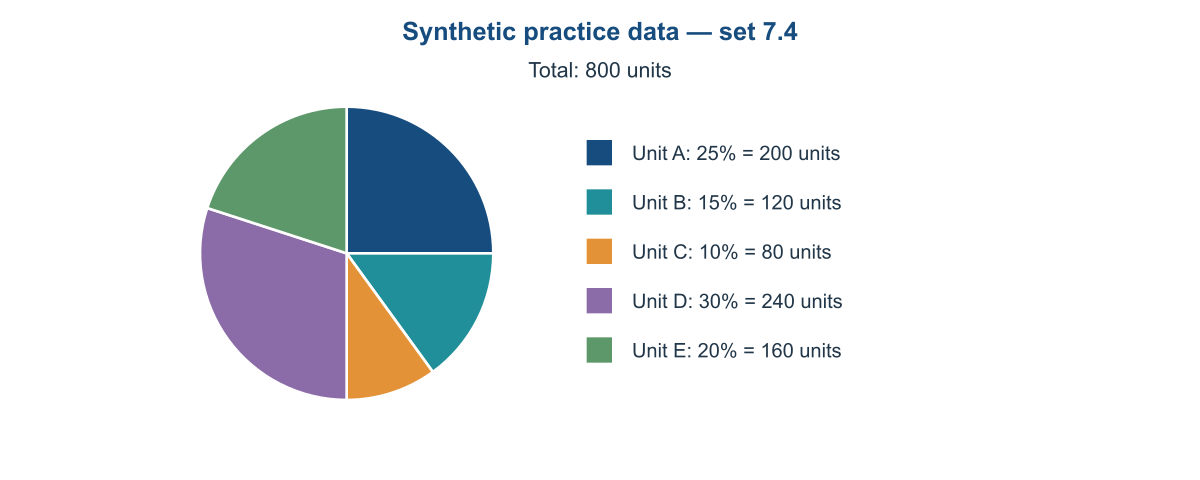
A. 77 B. 67 C. 72 D. 82
5. How many units are outside the Unit A sector?
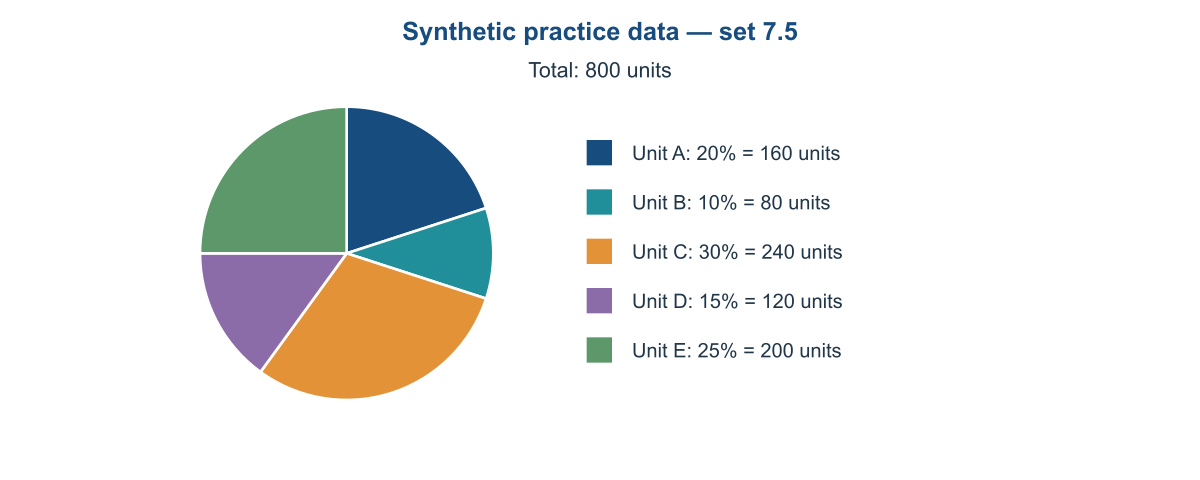
A. 650 B. 645 C. 635 D. 640
6. How many units are in the Unit A sector?
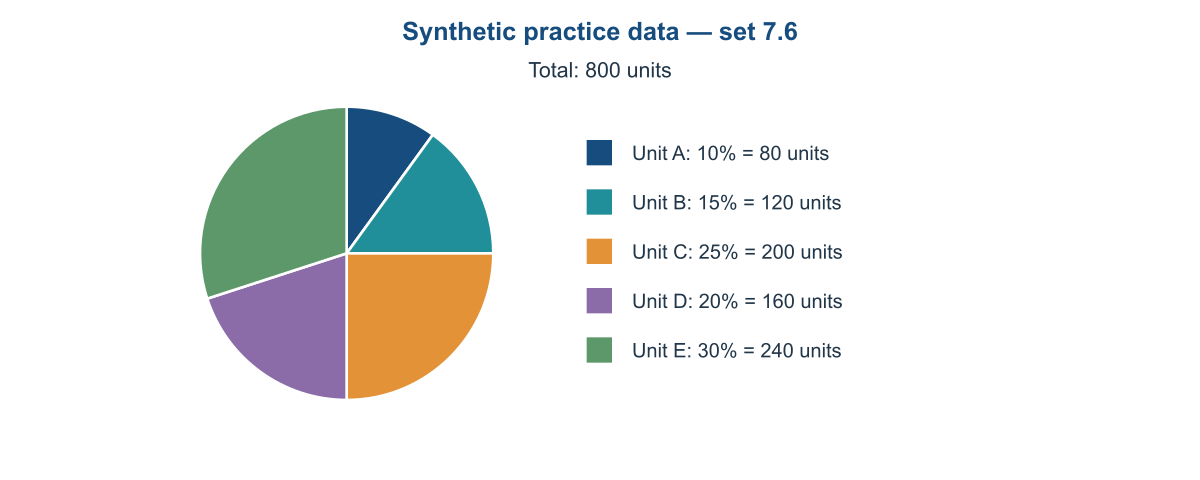
A. 90 B. 75 C. 85 D. 80
7. How many units are in Unit A and Unit B together?
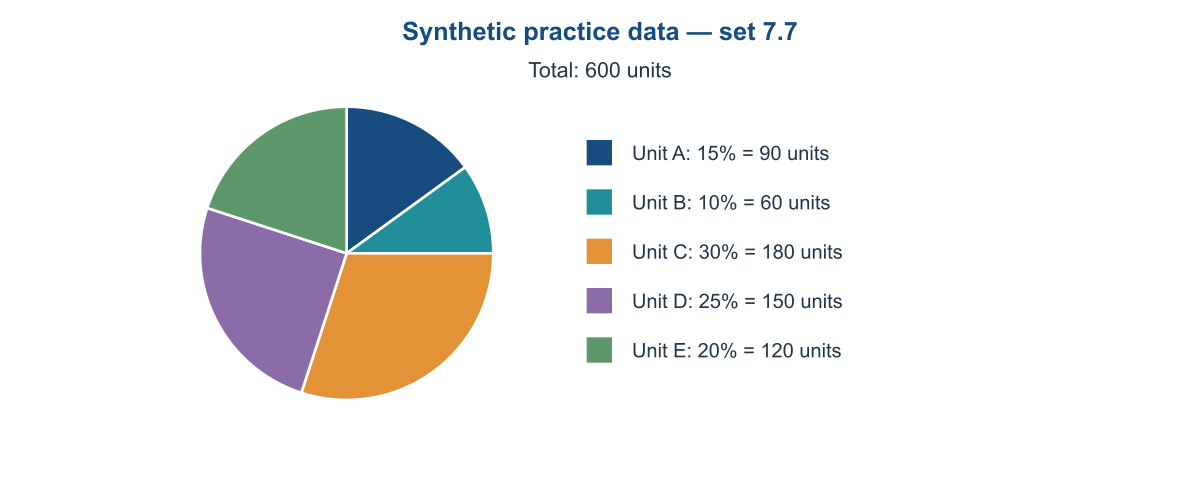
A. 155 B. 160 C. 150 D. 145
8. What is the absolute difference between Unit C and Unit D?
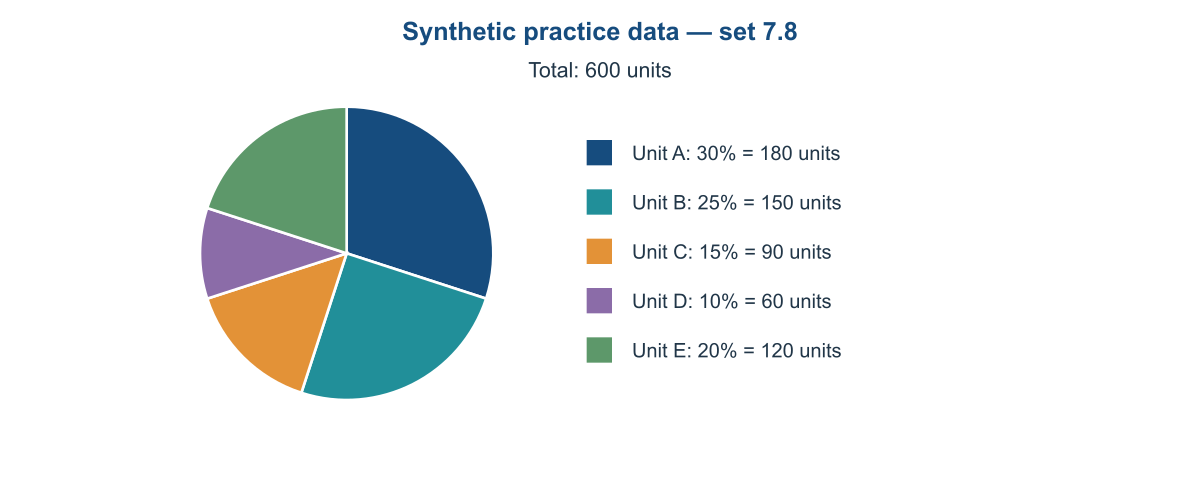
A. 25 B. 30 C. 40 D. 35
9. What is the central angle in degrees of the Unit E sector?
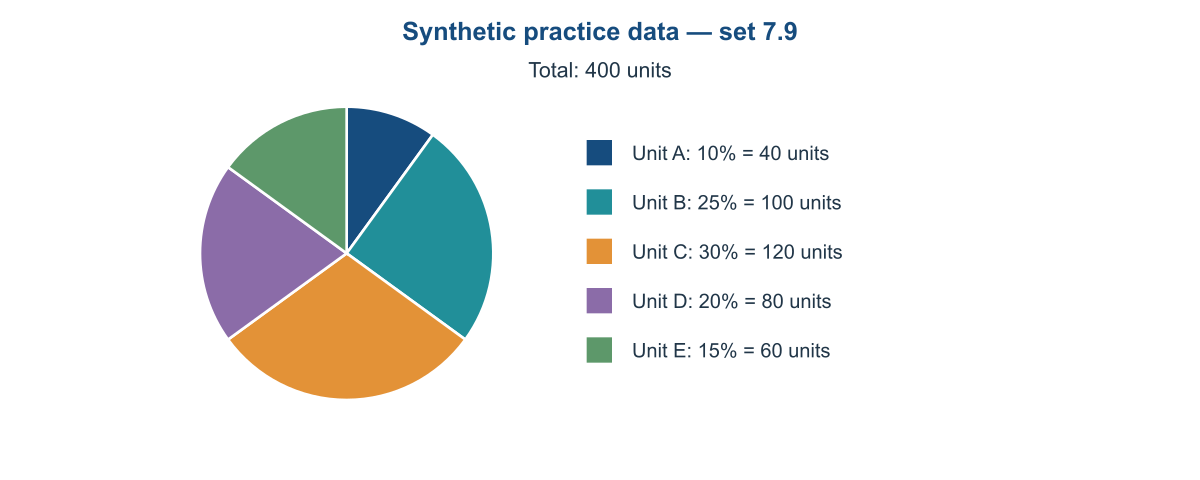
A. 64 B. 54 C. 59 D. 49
10. How many units are outside the Unit A sector?
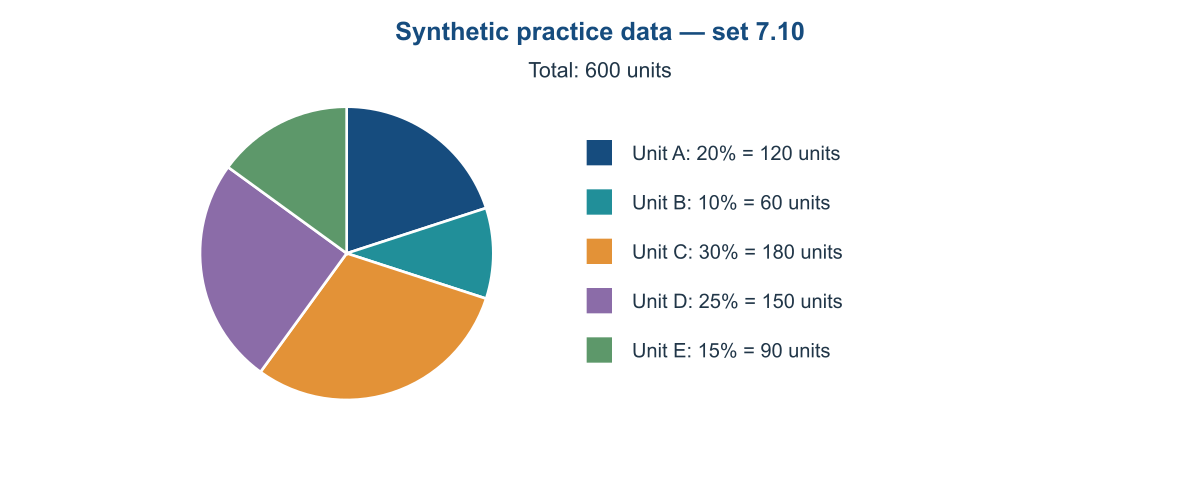
A. 485 B. 480 C. 490 D. 475
11. How many units are in the Unit A sector?
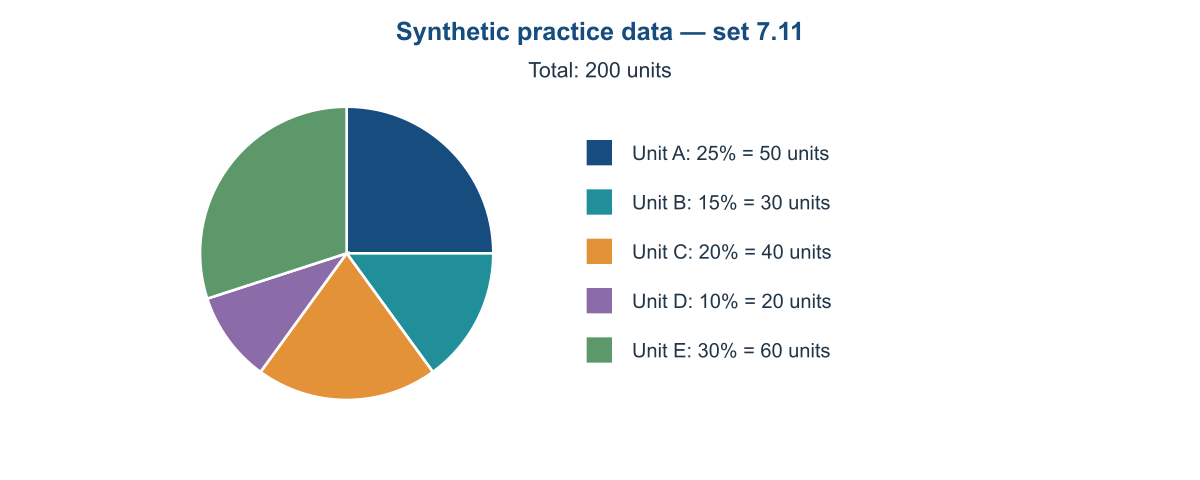
A. 55 B. 60 C. 50 D. 45
12. How many units are in Unit A and Unit B together?
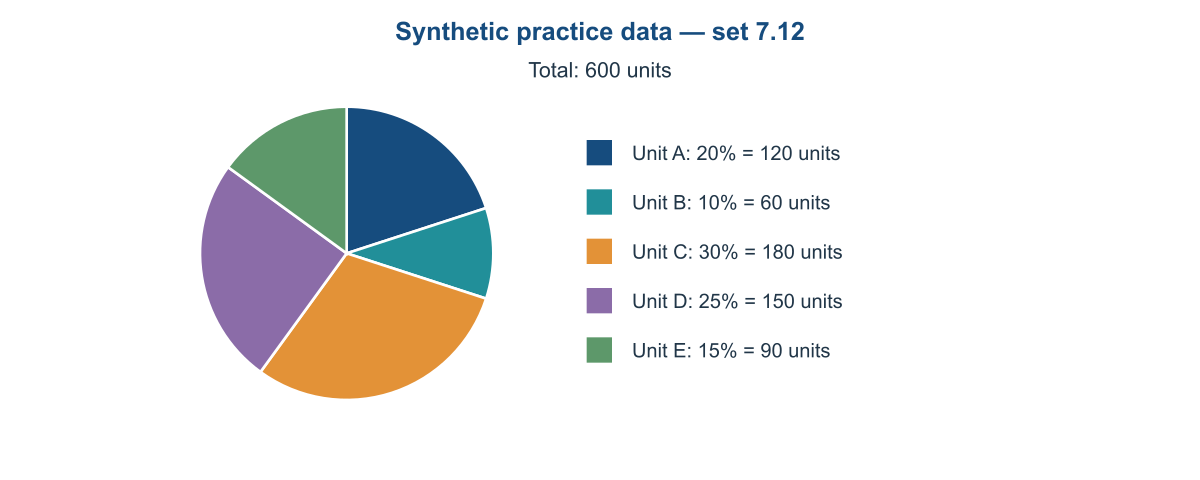
A. 175 B. 190 C. 185 D. 180
13. What is the absolute difference between Unit C and Unit D?
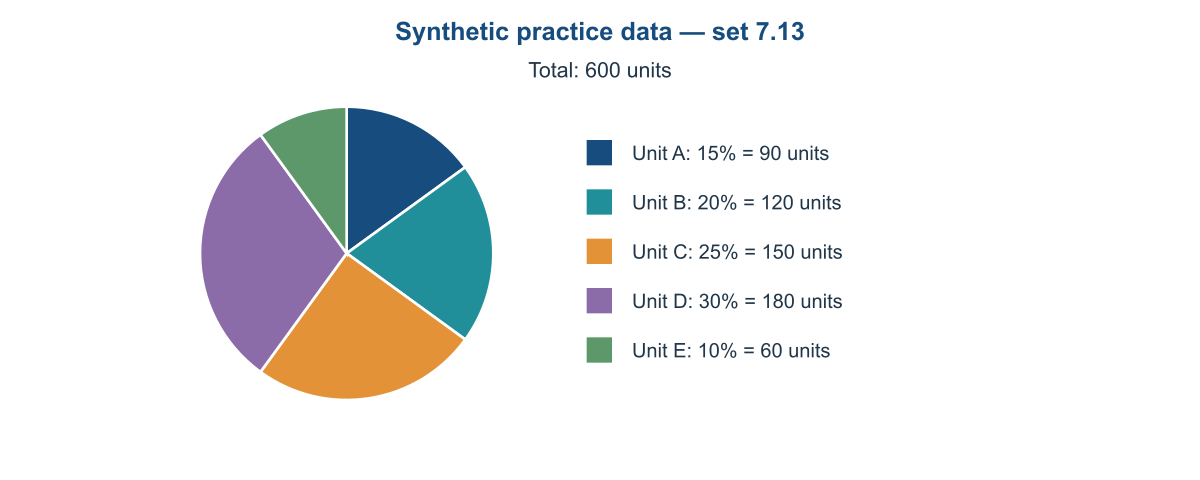
A. 30 B. 35 C. 40 D. 25
14. What is the central angle in degrees of the Unit E sector?
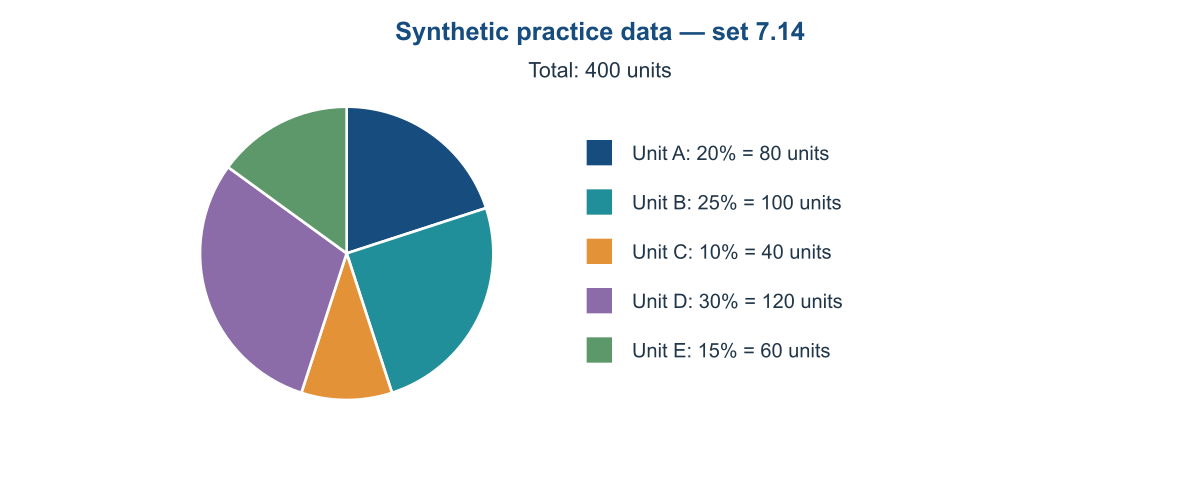
A. 64 B. 59 C. 54 D. 49
15. How many units are outside the Unit A sector?
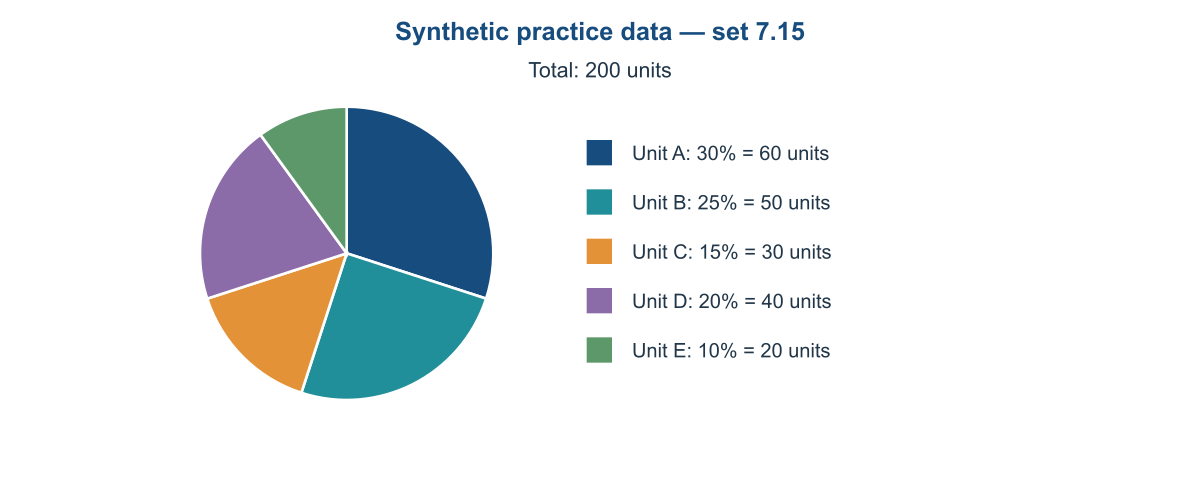
A. 140 B. 145 C. 150 D. 135
16. How many units are in the Unit A sector?
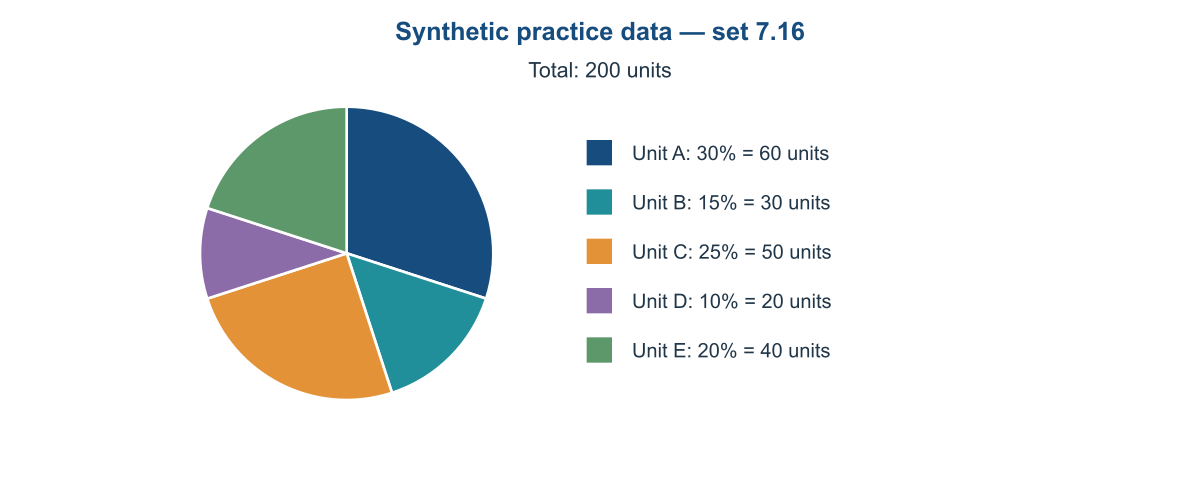
A. 55 B. 70 C. 65 D. 60
17. How many units are in Unit A and Unit B together?
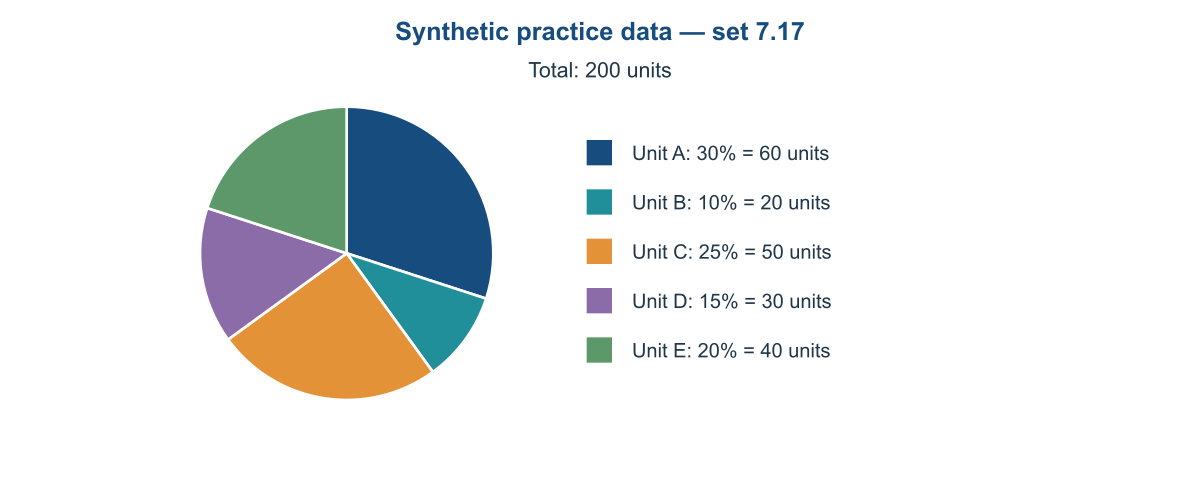
A. 85 B. 90 C. 80 D. 75
18. What is the absolute difference between Unit C and Unit D?
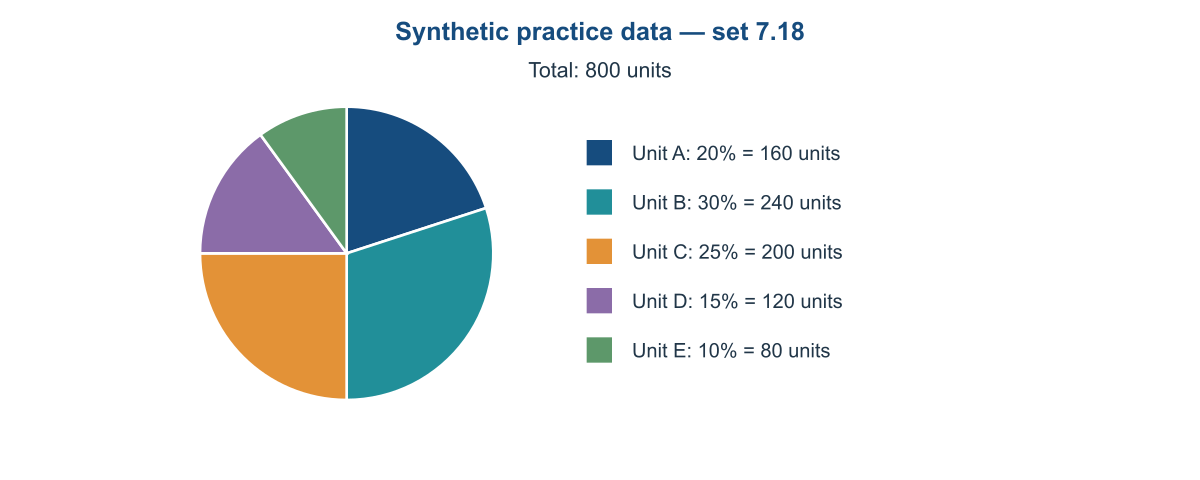
A. 85 B. 90 C. 75 D. 80
19. What is the central angle in degrees of the Unit E sector?
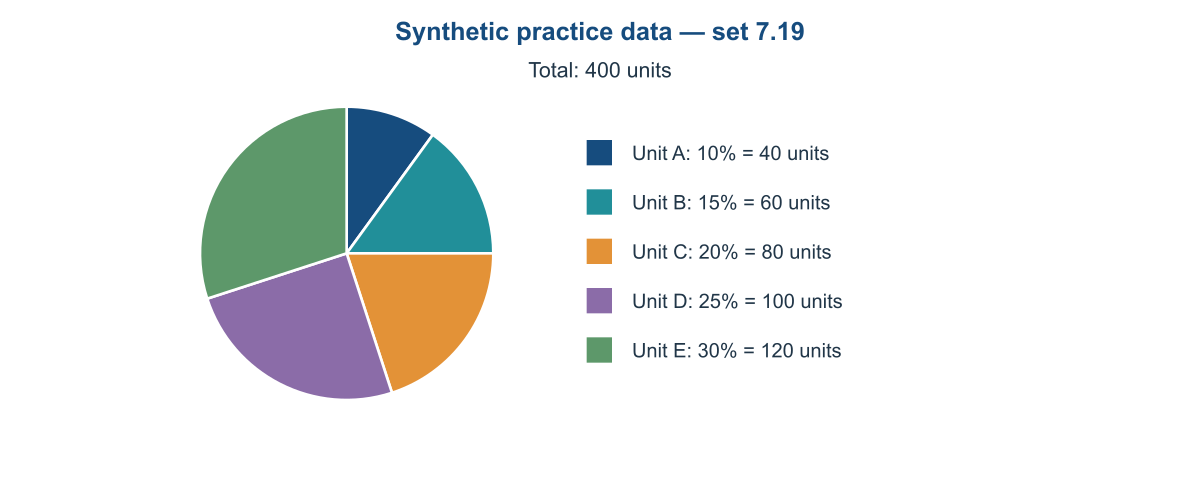
A. 113 B. 103 C. 118 D. 108
20. How many units are outside the Unit A sector?
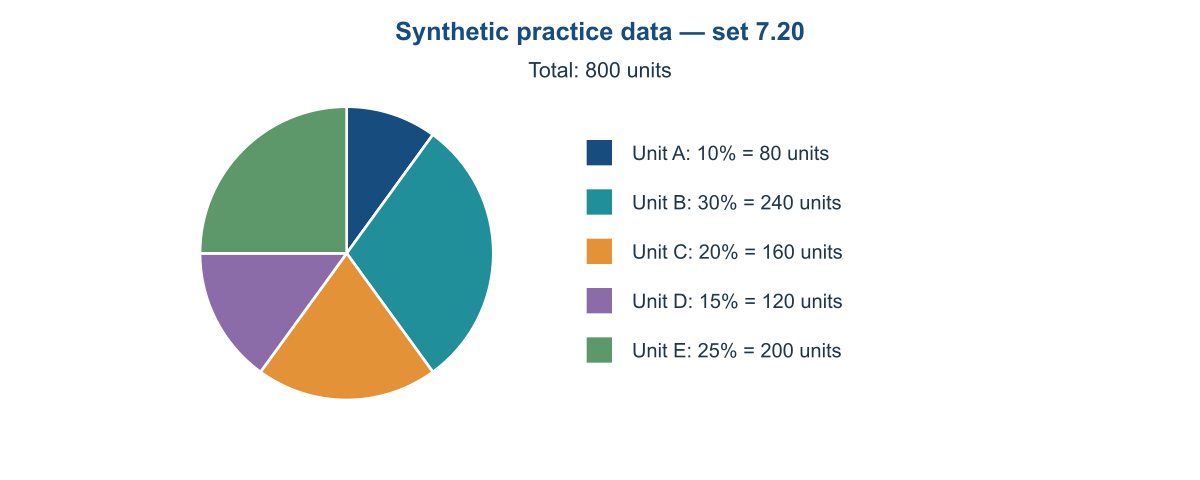
A. 720 B. 730 C. 725 D. 715
21. How many units are in the Unit A sector?
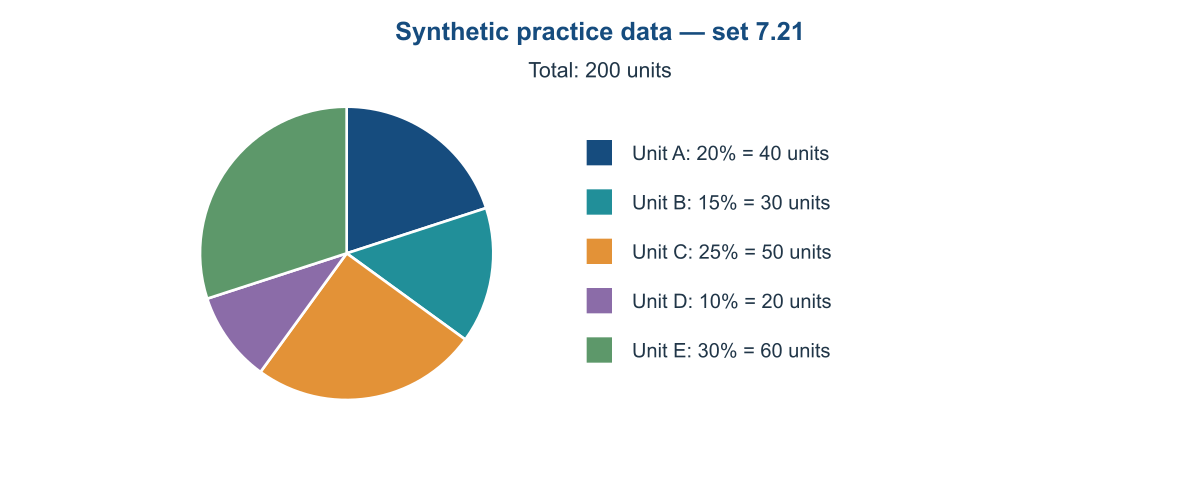
A. 40 B. 35 C. 50 D. 45
22. How many units are in Unit A and Unit B together?
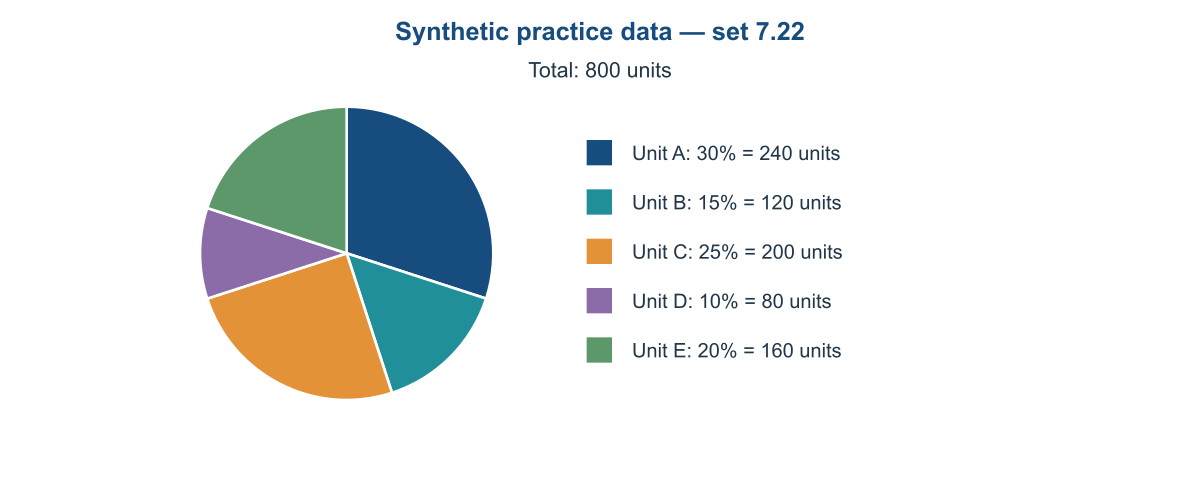
A. 360 B. 355 C. 370 D. 365
23. What is the absolute difference between Unit C and Unit D?
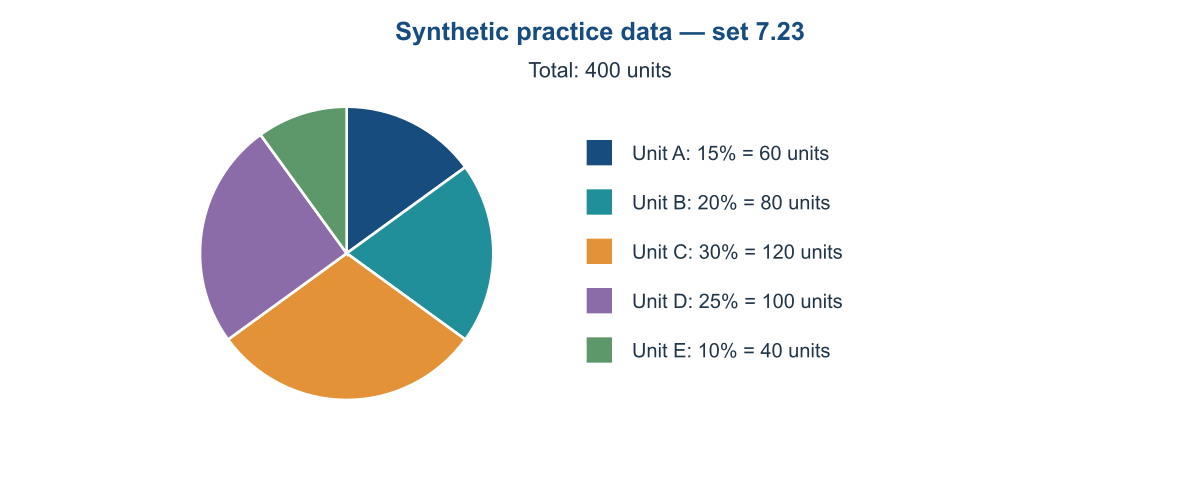
A. 25 B. 15 C. 30 D. 20
24. What is the central angle in degrees of the Unit E sector?
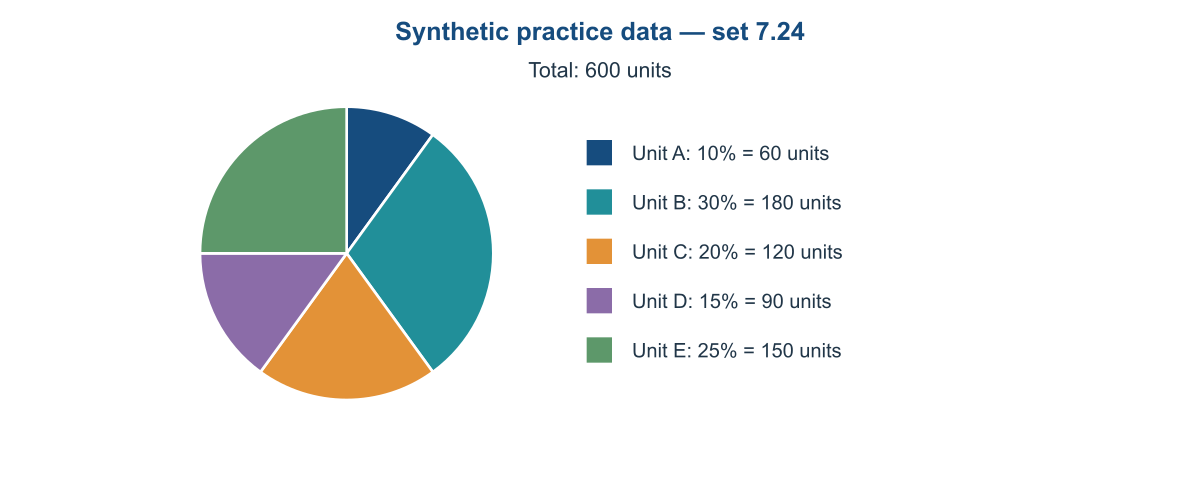
A. 85 B. 100 C. 95 D. 90
25. How many units are outside the Unit A sector?
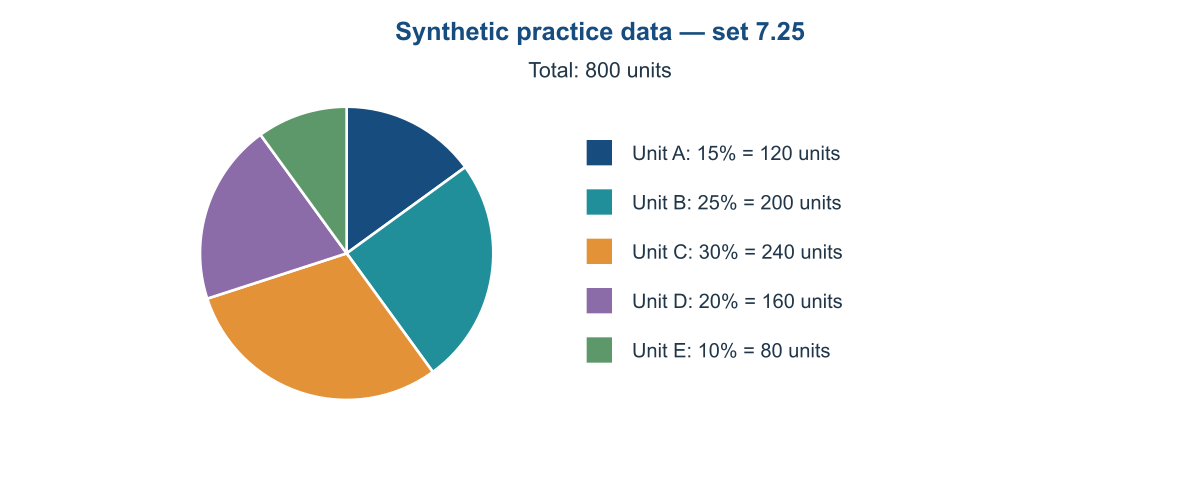
A. 690 B. 675 C. 680 D. 685
26. How many units are in the Unit A sector?
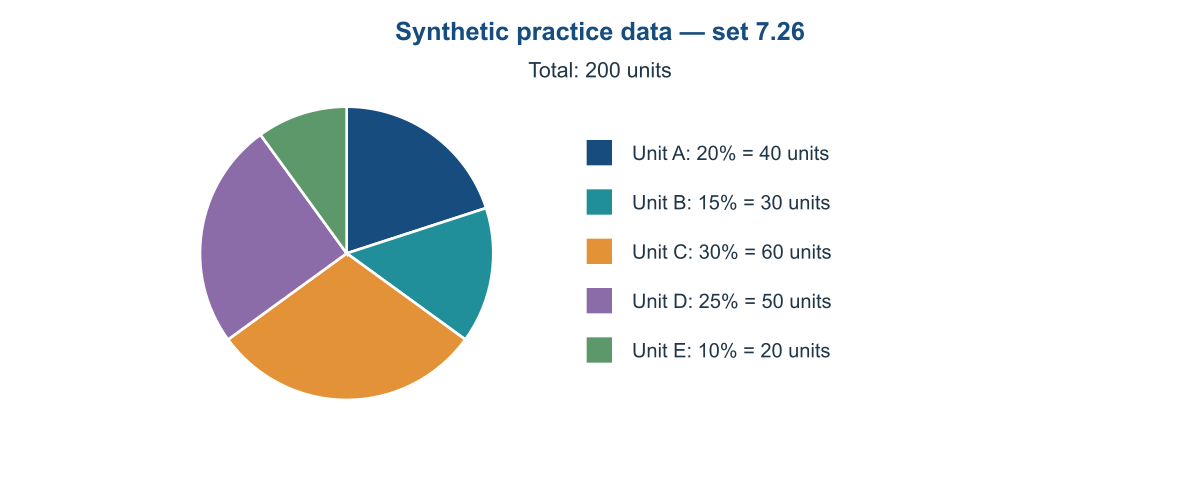
A. 50 B. 35 C. 40 D. 45
27. How many units are in Unit A and Unit B together?
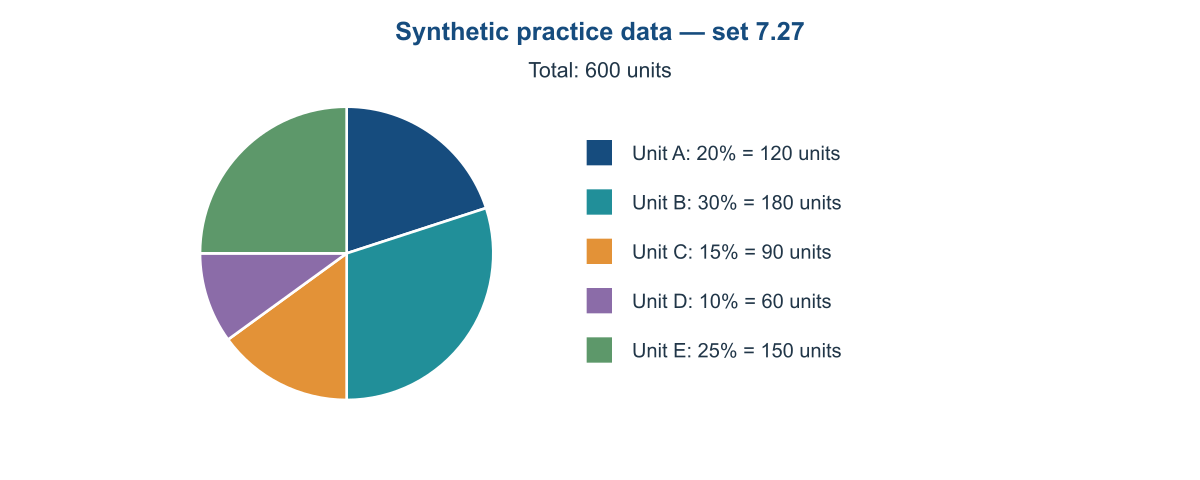
A. 305 B. 310 C. 295 D. 300
28. What is the absolute difference between Unit C and Unit D?
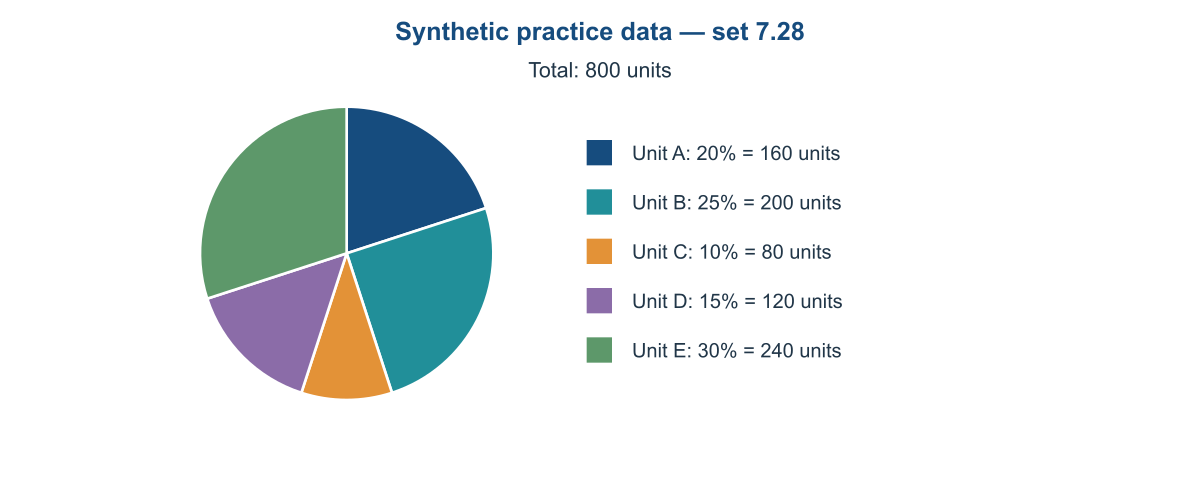
A. 45 B. 35 C. 40 D. 50
29. What is the central angle in degrees of the Unit E sector?
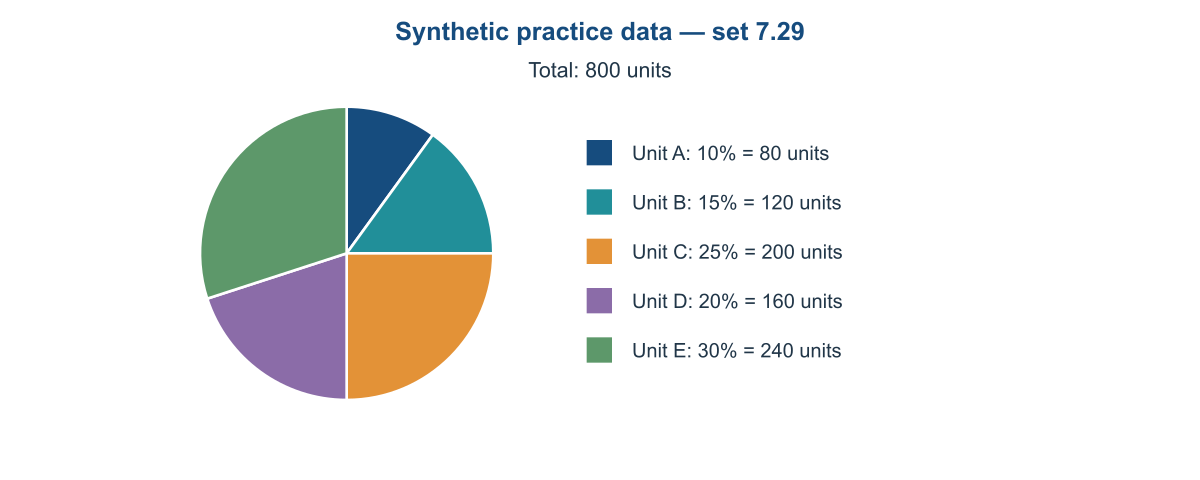
A. 103 B. 108 C. 118 D. 113
30. How many units are outside the Unit A sector?
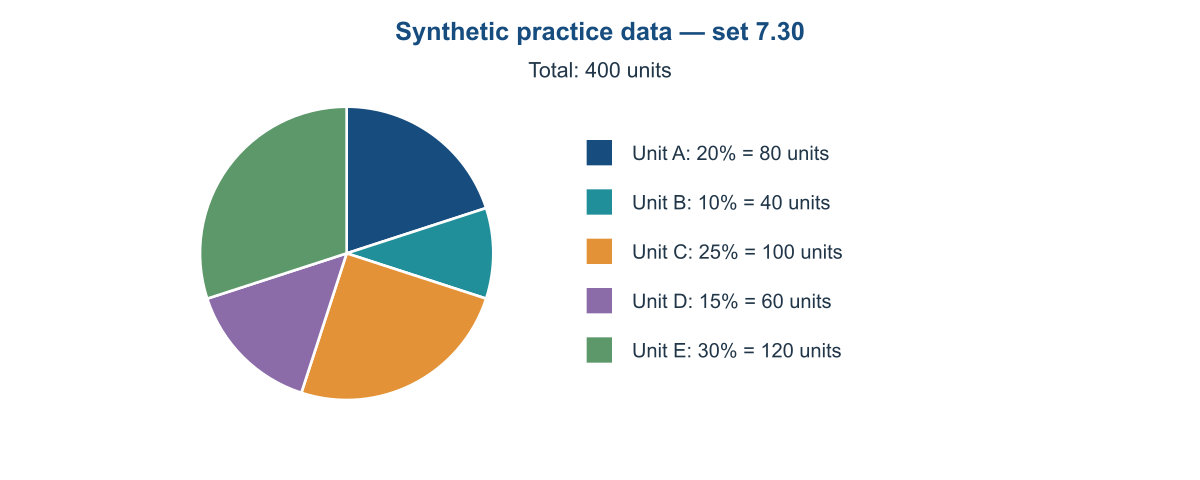
A. 330 B. 325 C. 320 D. 315
31. How many units are in the Unit A sector?
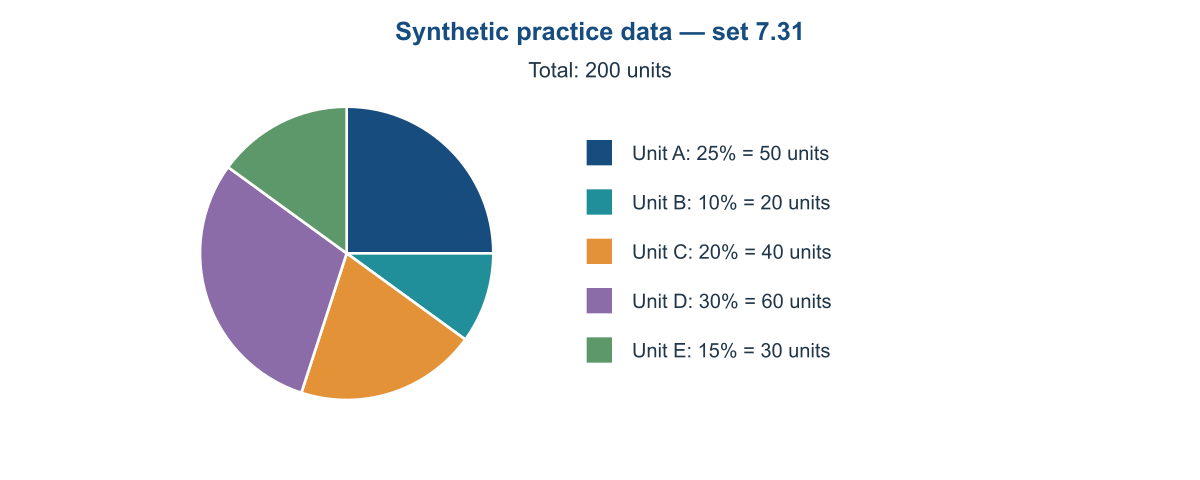
A. 55 B. 50 C. 60 D. 45
32. How many units are in Unit A and Unit B together?
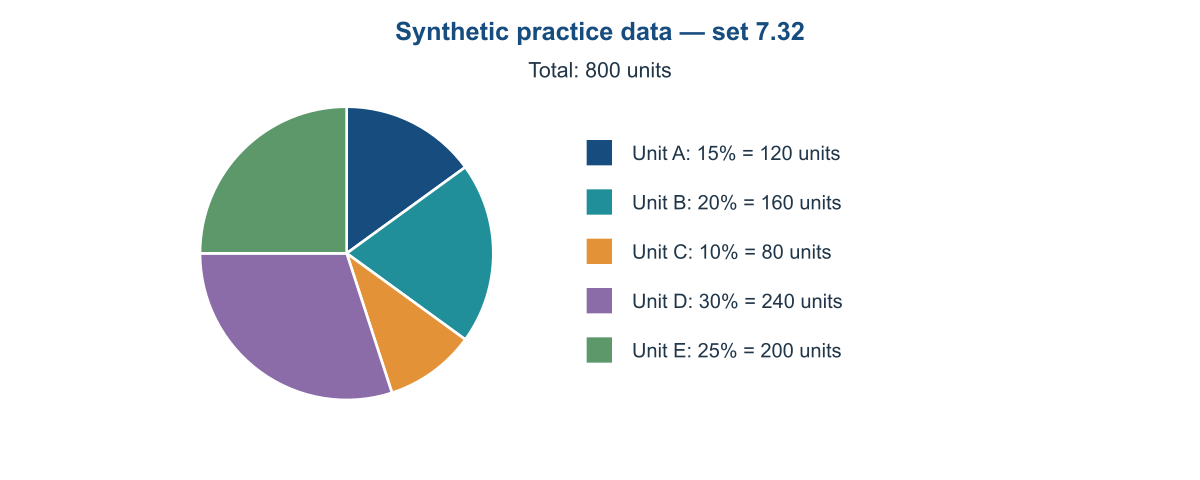
A. 285 B. 280 C. 275 D. 290
33. What is the absolute difference between Unit C and Unit D?
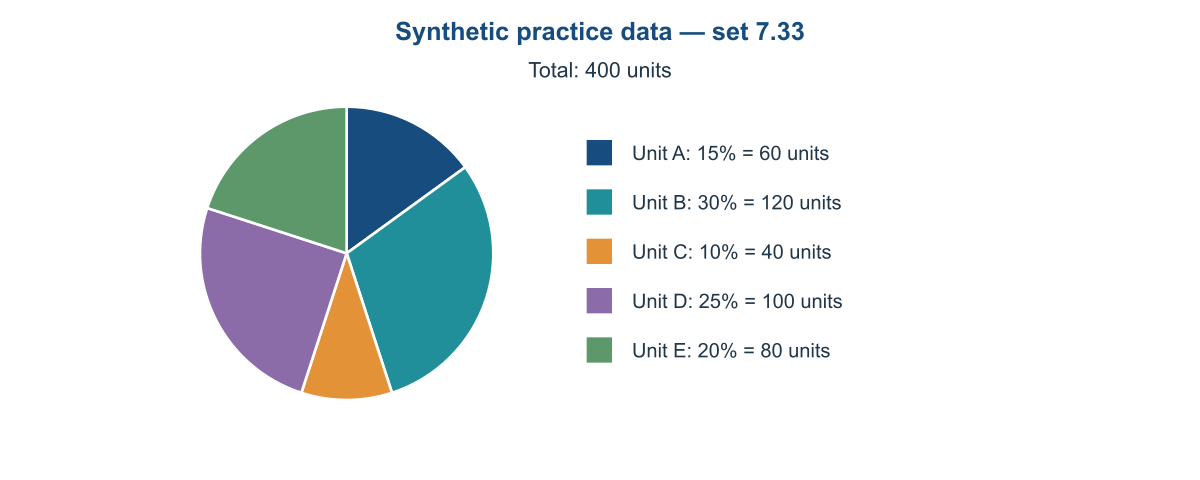
A. 55 B. 60 C. 65 D. 70
34. What is the central angle in degrees of the Unit E sector?
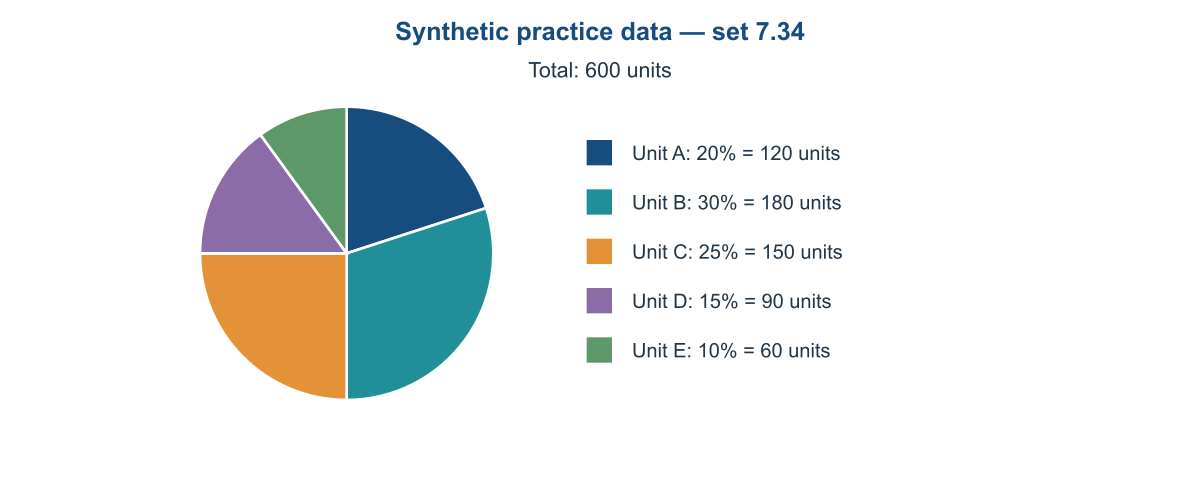
A. 41 B. 46 C. 36 D. 31
35. How many units are outside the Unit A sector?
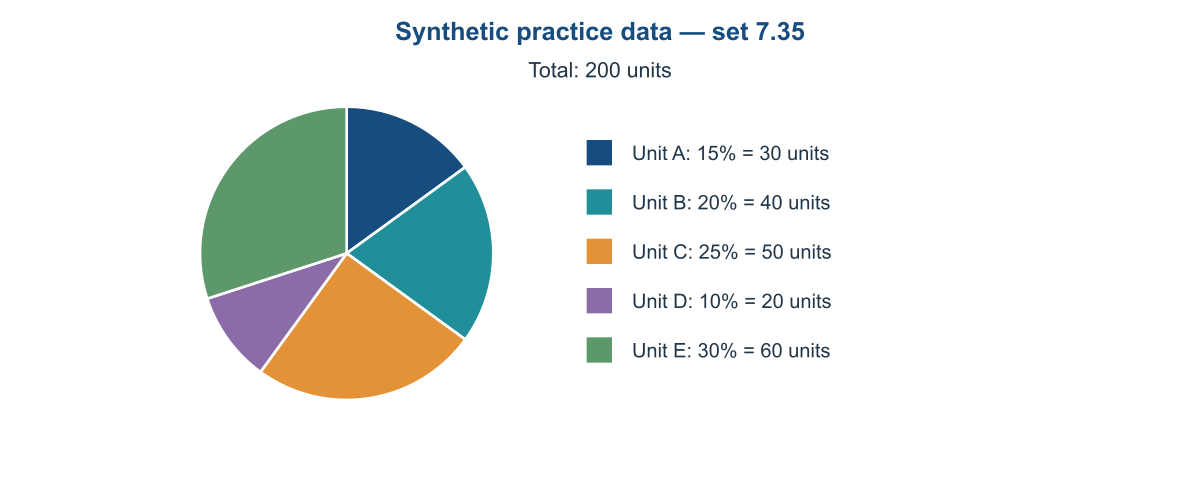
A. 170 B. 180 C. 175 D. 165
36. How many units are in the Unit A sector?
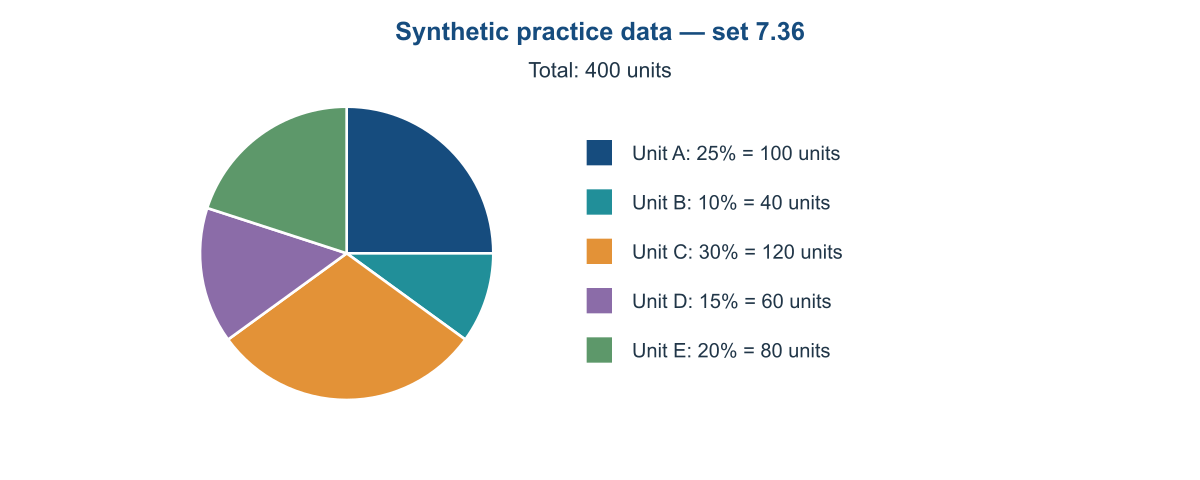
A. 100 B. 95 C. 110 D. 105
37. How many units are in Unit A and Unit B together?
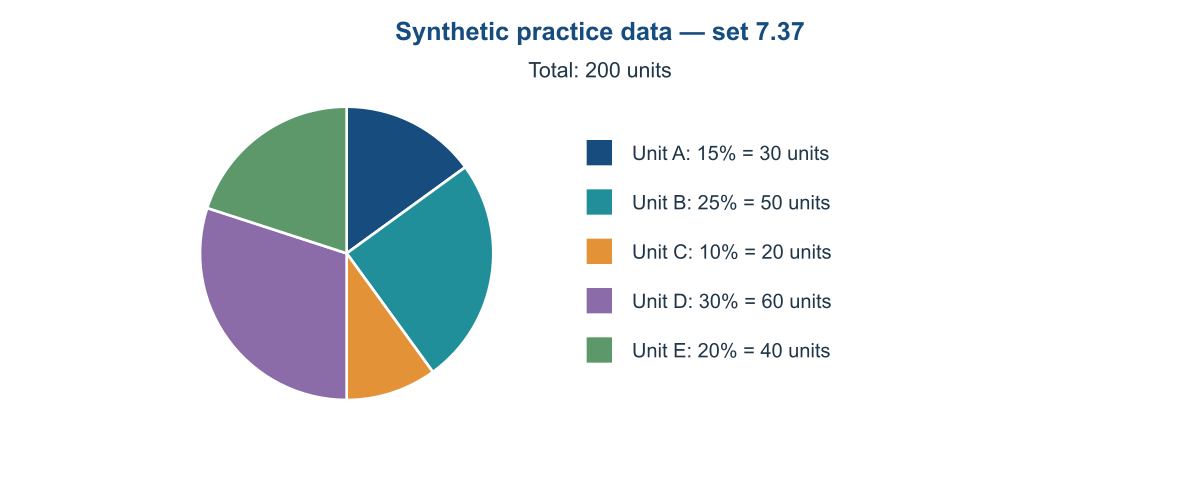
A. 90 B. 80 C. 85 D. 75
38. What is the absolute difference between Unit C and Unit D?
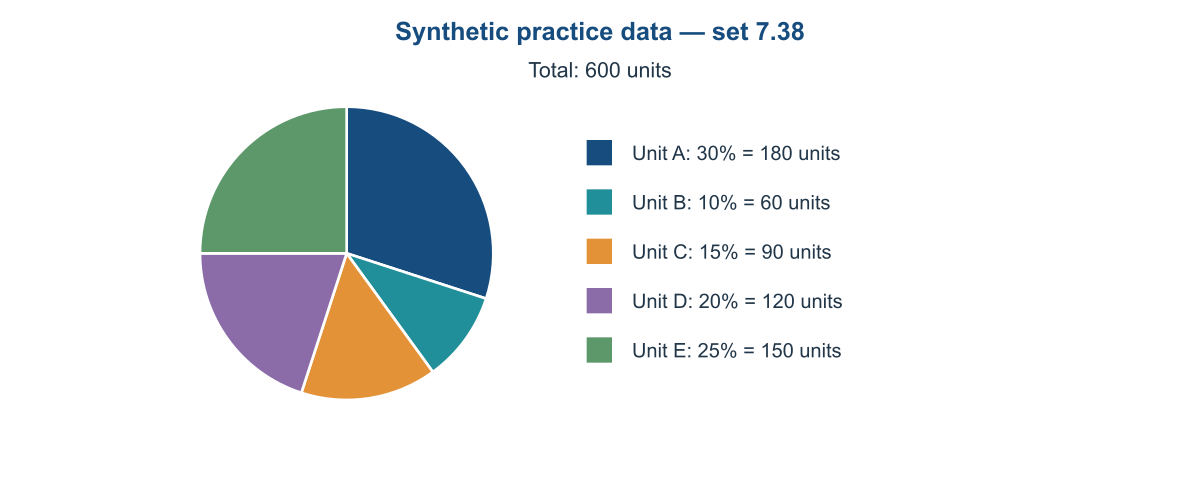
A. 25 B. 35 C. 30 D. 40
39. What is the central angle in degrees of the Unit E sector?
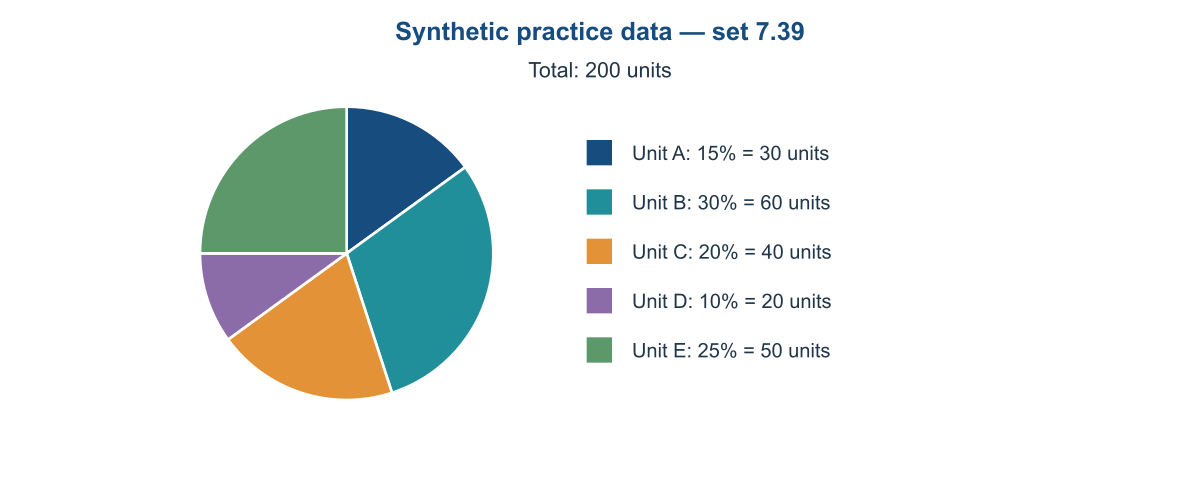
A. 100 B. 95 C. 90 D. 85
40. How many units are outside the Unit A sector?
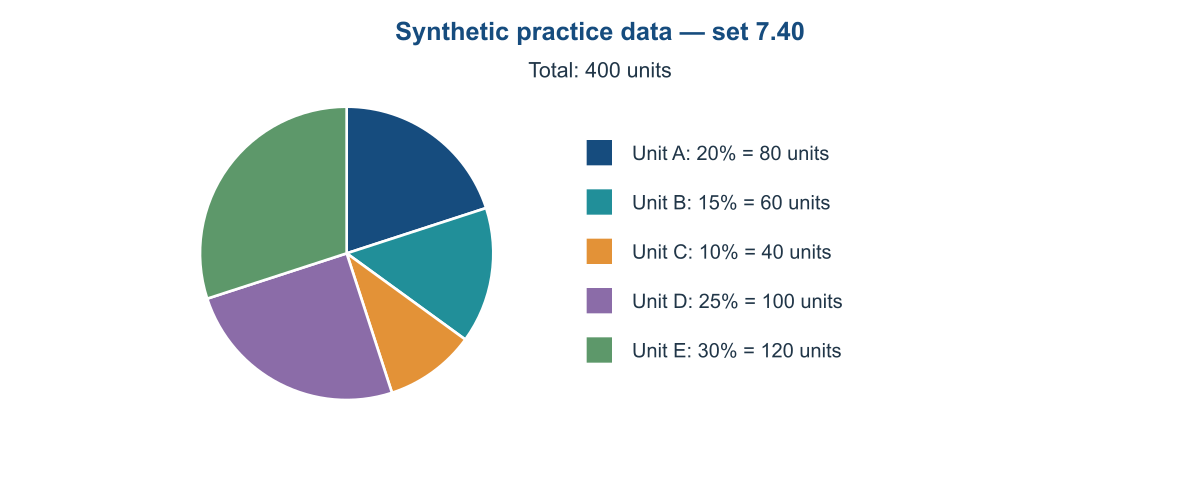
A. 320 B. 325 C. 315 D. 330
41. How many units are in the Unit A sector?
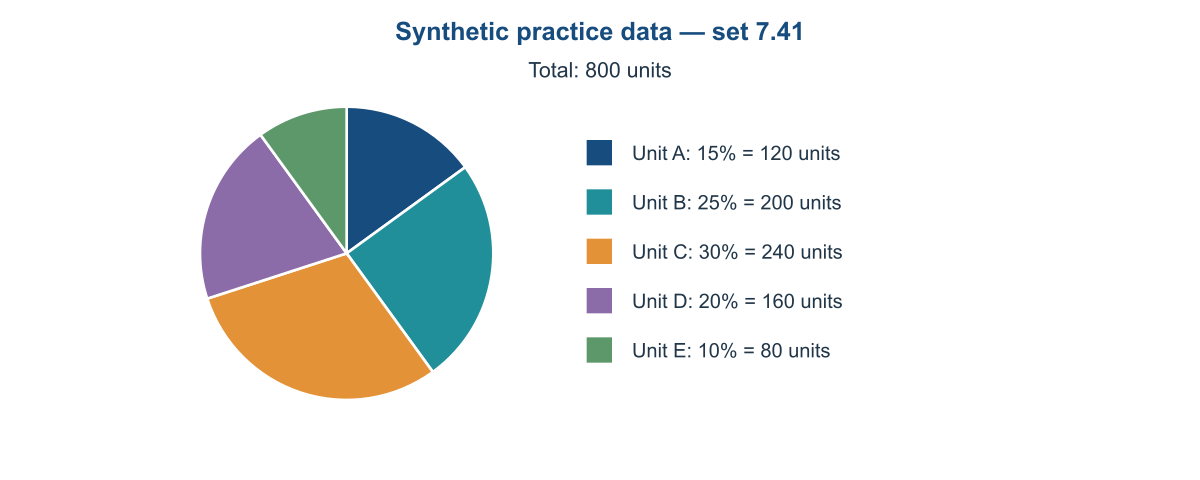
A. 125 B. 130 C. 115 D. 120
42. How many units are in Unit A and Unit B together?
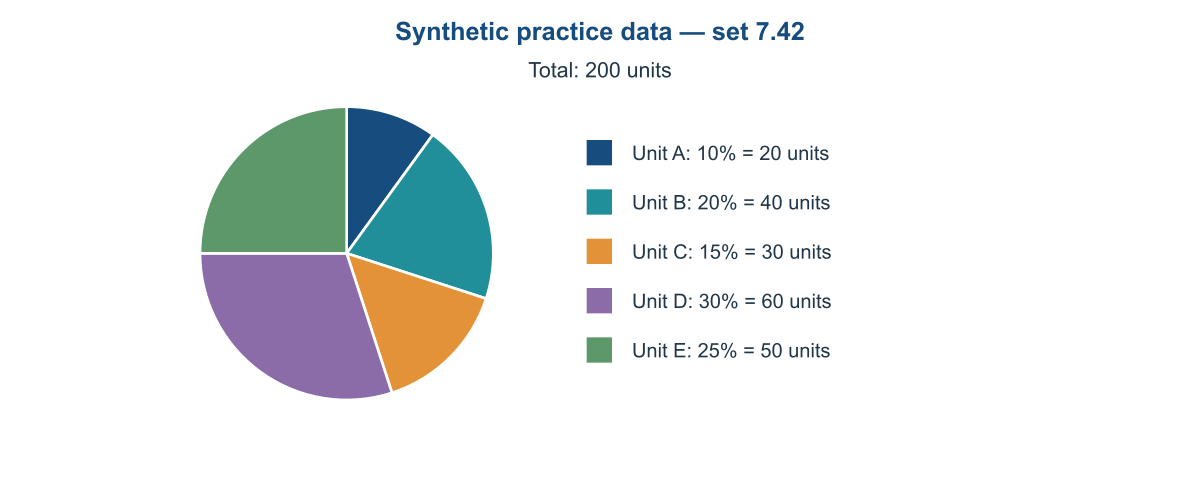
A. 60 B. 70 C. 65 D. 55
43. What is the absolute difference between Unit C and Unit D?
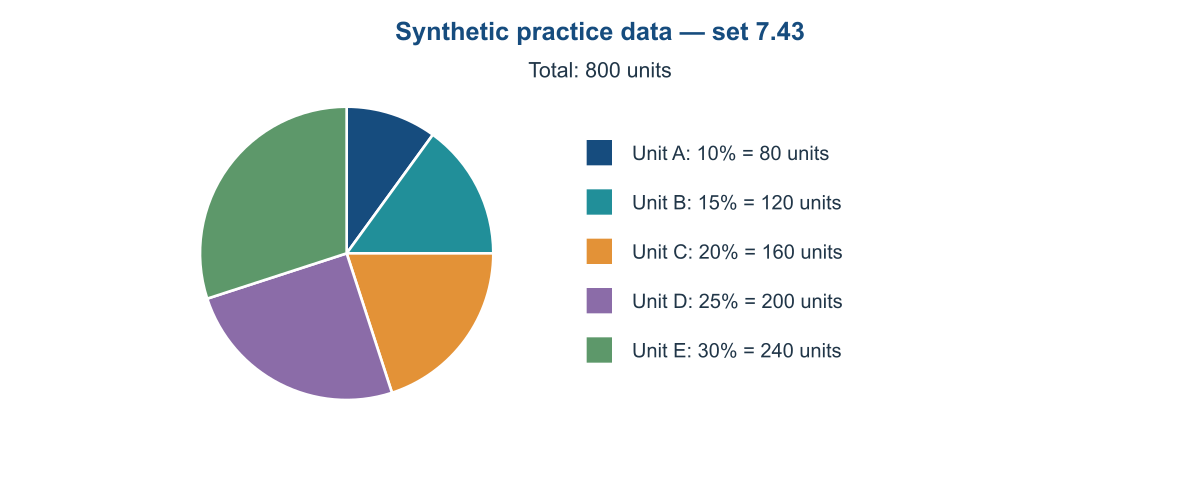
A. 40 B. 45 C. 35 D. 50
44. What is the central angle in degrees of the Unit E sector?
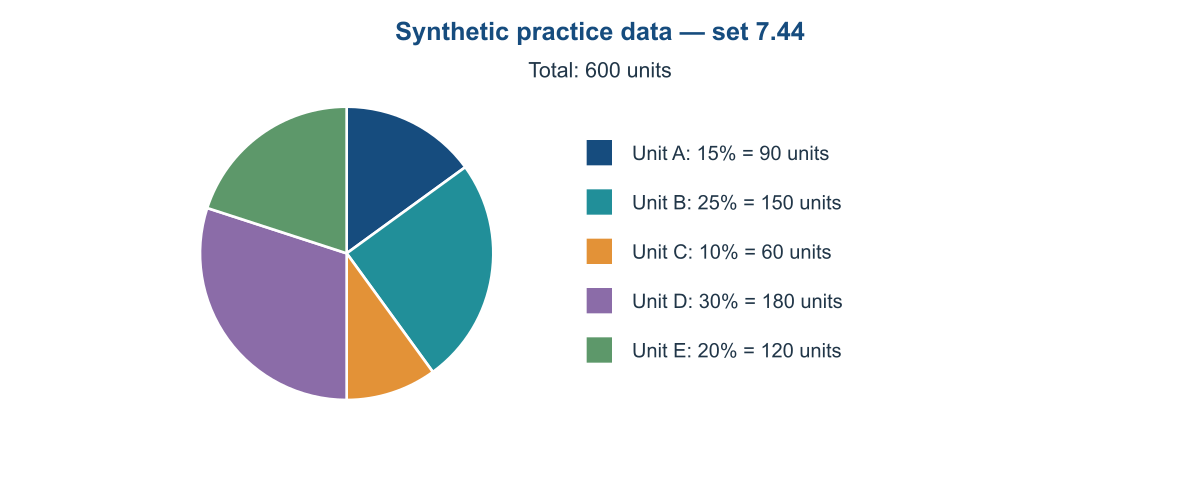
A. 72 B. 82 C. 77 D. 67
45. How many units are outside the Unit A sector?
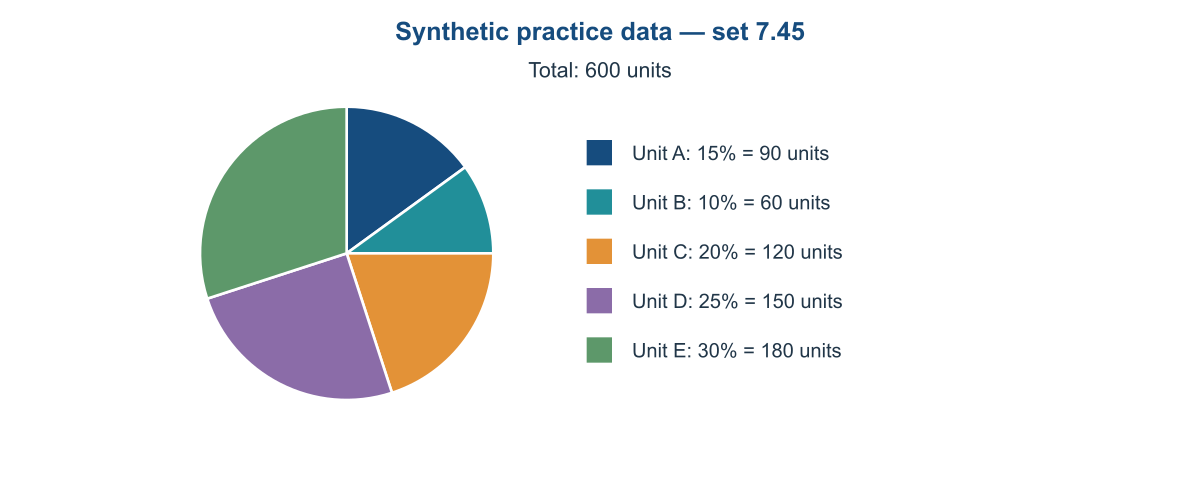
A. 505 B. 520 C. 515 D. 510
46. How many units are in the Unit A sector?
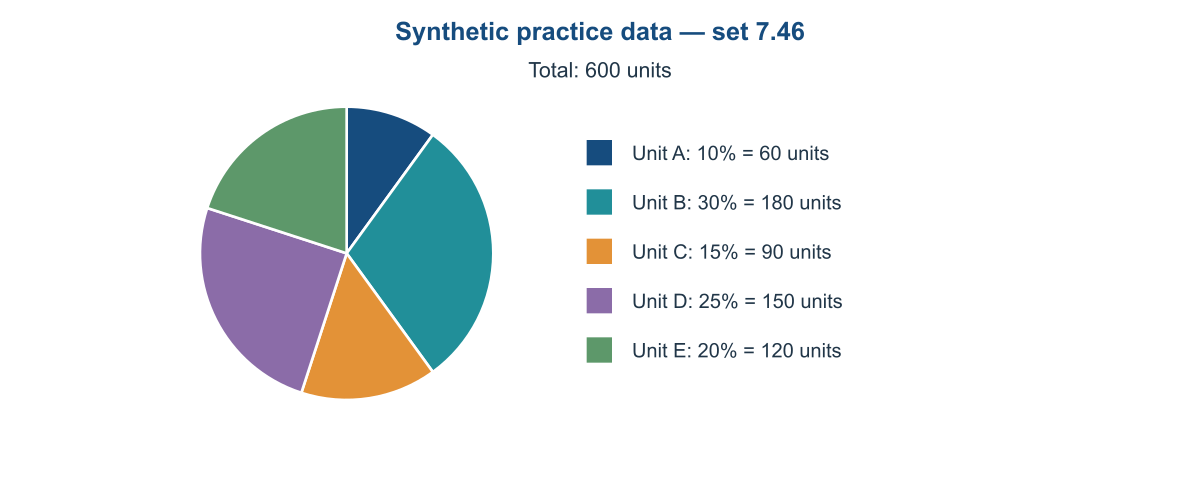
A. 60 B. 70 C. 65 D. 55
47. How many units are in Unit A and Unit B together?
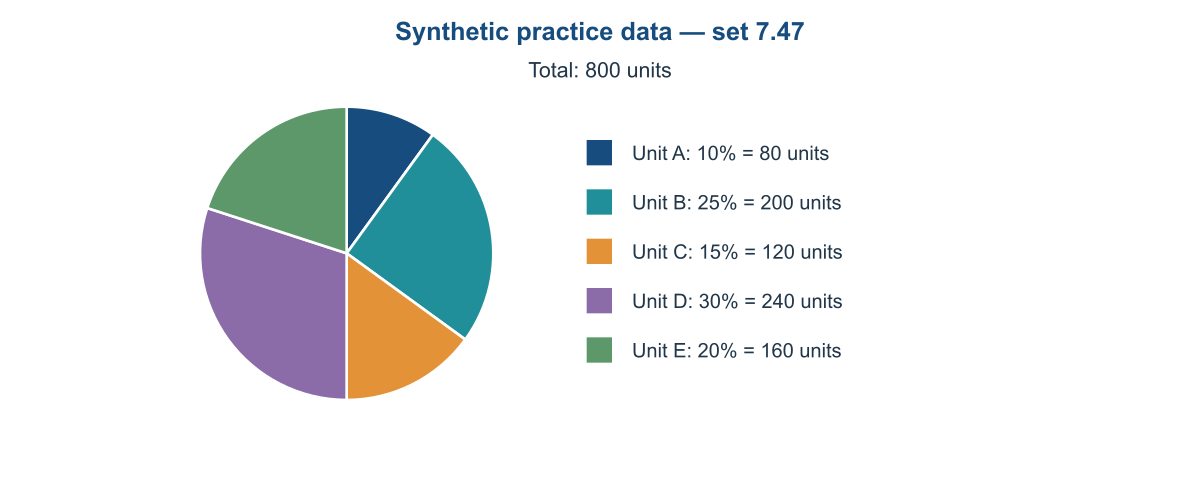
A. 275 B. 280 C. 285 D. 290
48. What is the absolute difference between Unit C and Unit D?
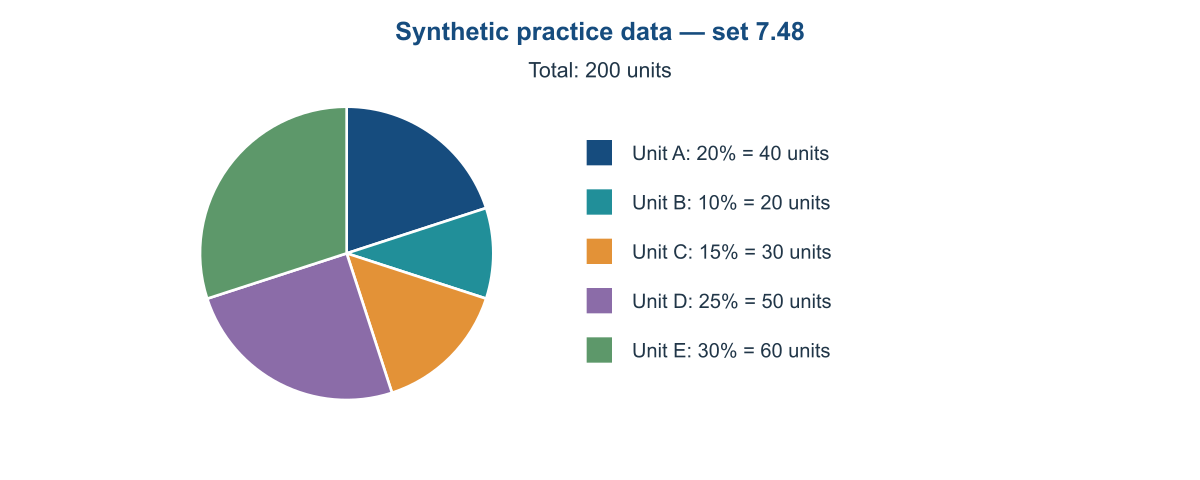
A. 30 B. 25 C. 20 D. 15
49. What is the central angle in degrees of the Unit E sector?
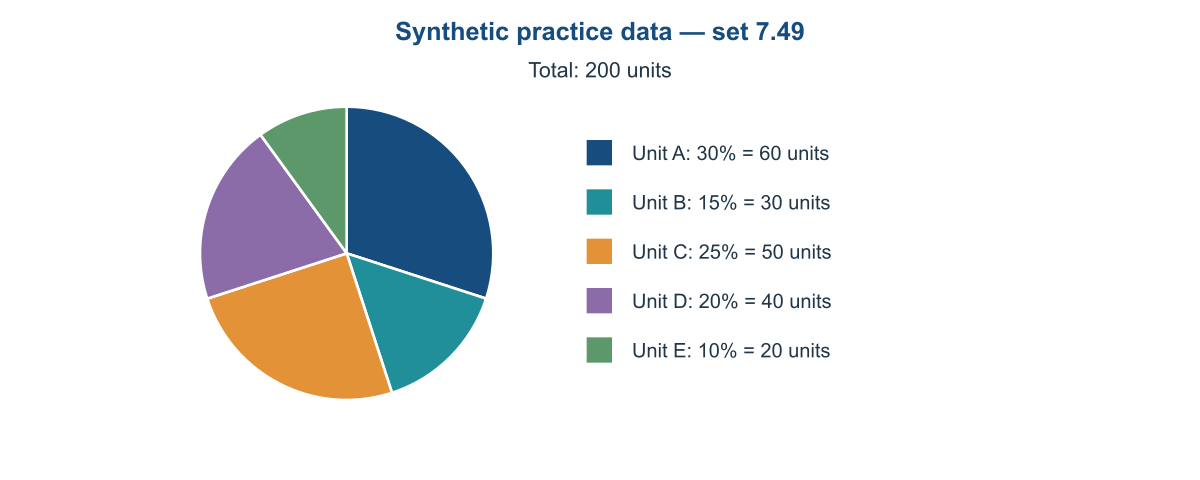
A. 46 B. 36 C. 31 D. 41
50. How many units are outside the Unit A sector?
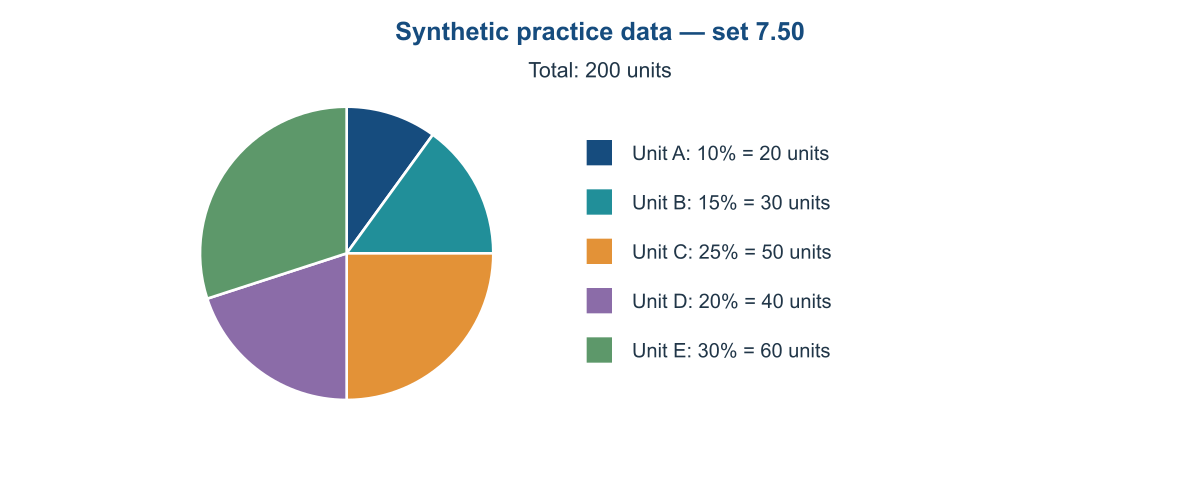
A. 190 B. 185 C. 175 D. 180
Answers and explanations
Check the value and the unit before comparing your working with the calculation.
1. B. Unit A has 20% of 400; 400×20/100=80 units.
APDI26-07-01 | pie-charts | Easy
2. D. Add their sector quantities: 40+60=100.
APDI26-07-02 | pie-charts | Easy
3. C. Unit C=30, D=20; absolute difference 10.
APDI26-07-03 | pie-charts | Easy
4. C. Unit E is 20% of a 360° circle; angle 72°.
APDI26-07-04 | pie-charts | Easy
5. D. Total 800 minus Unit A 160 gives 640.
APDI26-07-05 | pie-charts | Easy
6. D. Unit A has 10% of 800; 800×10/100=80 units.
APDI26-07-06 | pie-charts | Easy
7. C. Add their sector quantities: 90+60=150.
APDI26-07-07 | pie-charts | Easy
8. B. Unit C=90, D=60; absolute difference 30.
APDI26-07-08 | pie-charts | Easy
9. B. Unit E is 15% of a 360° circle; angle 54°.
APDI26-07-09 | pie-charts | Easy
10. B. Total 600 minus Unit A 120 gives 480.
APDI26-07-10 | pie-charts | Easy
11. C. Unit A has 25% of 200; 200×25/100=50 units.
APDI26-07-11 | pie-charts | Easy
12. D. Add their sector quantities: 120+60=180.
APDI26-07-12 | pie-charts | Easy
13. A. Unit C=150, D=180; absolute difference 30.
APDI26-07-13 | pie-charts | Easy
14. C. Unit E is 15% of a 360° circle; angle 54°.
APDI26-07-14 | pie-charts | Easy
15. A. Total 200 minus Unit A 60 gives 140.
APDI26-07-15 | pie-charts | Easy
16. D. Unit A has 30% of 200; 200×30/100=60 units.
APDI26-07-16 | pie-charts | Medium
17. C. Add their sector quantities: 60+20=80.
APDI26-07-17 | pie-charts | Medium
18. D. Unit C=200, D=120; absolute difference 80.
APDI26-07-18 | pie-charts | Medium
19. D. Unit E is 30% of a 360° circle; angle 108°.
APDI26-07-19 | pie-charts | Medium
20. A. Total 800 minus Unit A 80 gives 720.
APDI26-07-20 | pie-charts | Medium
21. A. Unit A has 20% of 200; 200×20/100=40 units.
APDI26-07-21 | pie-charts | Medium
22. A. Add their sector quantities: 240+120=360.
APDI26-07-22 | pie-charts | Medium
23. D. Unit C=120, D=100; absolute difference 20.
APDI26-07-23 | pie-charts | Medium
24. D. Unit E is 25% of a 360° circle; angle 90°.
APDI26-07-24 | pie-charts | Medium
25. C. Total 800 minus Unit A 120 gives 680.
APDI26-07-25 | pie-charts | Medium
26. C. Unit A has 20% of 200; 200×20/100=40 units.
APDI26-07-26 | pie-charts | Medium
27. D. Add their sector quantities: 120+180=300.
APDI26-07-27 | pie-charts | Medium
28. C. Unit C=80, D=120; absolute difference 40.
APDI26-07-28 | pie-charts | Medium
29. B. Unit E is 30% of a 360° circle; angle 108°.
APDI26-07-29 | pie-charts | Medium
30. C. Total 400 minus Unit A 80 gives 320.
APDI26-07-30 | pie-charts | Medium
31. B. Unit A has 25% of 200; 200×25/100=50 units.
APDI26-07-31 | pie-charts | Medium
32. B. Add their sector quantities: 120+160=280.
APDI26-07-32 | pie-charts | Medium
33. B. Unit C=40, D=100; absolute difference 60.
APDI26-07-33 | pie-charts | Medium
34. C. Unit E is 10% of a 360° circle; angle 36°.
APDI26-07-34 | pie-charts | Medium
35. A. Total 200 minus Unit A 30 gives 170.
APDI26-07-35 | pie-charts | Medium
36. A. Unit A has 25% of 400; 400×25/100=100 units.
APDI26-07-36 | pie-charts | Medium
37. B. Add their sector quantities: 30+50=80.
APDI26-07-37 | pie-charts | Medium
38. C. Unit C=90, D=120; absolute difference 30.
APDI26-07-38 | pie-charts | Medium
39. C. Unit E is 25% of a 360° circle; angle 90°.
APDI26-07-39 | pie-charts | Medium
40. A. Total 400 minus Unit A 80 gives 320.
APDI26-07-40 | pie-charts | Medium
41. D. Unit A has 15% of 800; 800×15/100=120 units.
APDI26-07-41 | pie-charts | Difficult
42. A. Add their sector quantities: 20+40=60.
APDI26-07-42 | pie-charts | Difficult
43. A. Unit C=160, D=200; absolute difference 40.
APDI26-07-43 | pie-charts | Difficult
44. A. Unit E is 20% of a 360° circle; angle 72°.
APDI26-07-44 | pie-charts | Difficult
45. D. Total 600 minus Unit A 90 gives 510.
APDI26-07-45 | pie-charts | Difficult
46. A. Unit A has 10% of 600; 600×10/100=60 units.
APDI26-07-46 | pie-charts | Difficult
47. B. Add their sector quantities: 80+200=280.
APDI26-07-47 | pie-charts | Difficult
48. C. Unit C=30, D=50; absolute difference 20.
APDI26-07-48 | pie-charts | Difficult
49. B. Unit E is 10% of a 360° circle; angle 36°.
APDI26-07-49 | pie-charts | Difficult
50. D. Total 200 minus Unit A 20 gives 180.
APDI26-07-50 | pie-charts | Difficult