Read each visual's scale separately
A mixed chart may combine bars and a line, or counts and percentages on two vertical axes. A bar reaching 80 on the left axis and a line reaching 20 on the right axis are not directly comparable as numbers until you know their units. Identify every axis, series legend and time category. When a question asks for a derived quantity, write the formula using the correct series: if a bar gives total sales and a line gives profit margin, profit may require margin times sales under the stem's definition.
Radar or web charts
A radar chart places categories around spokes. Read the radial tick spacing and identify the polygon for the requested group. Do not judge values by polygon area unless the question explicitly defines area as the statistic; the relevant value is the intersection of a series with a category spoke. To compare two groups, read both values on the same spoke and subtract or divide as asked.
Plan before calculating
Write a tiny data table of only the two or three needed values. State the unit beside each value. For a weighted total, use the appropriate weights rather than adding percentages. If a mixed chart gives a total and a rate, calculate the component quantity before comparing across periods. Check whether the result should be a count, money amount, ratio or percent. Many distractors come from reading the right number on the wrong axis.
Compare series at one category
In a grouped display, Series Alpha and Series Beta may have values 60 and 75 at Unit A. Their combined value is 135, and Beta exceeds Alpha by 15. If asked for the ratio Alpha:Beta, reduce 60:75 to 4:5. If asked by what percentage Beta exceeds Alpha, use 15/60=25%. A ratio or percentage requires two clearly labelled series; guessing from colour without checking the legend can reverse the comparison.
For a radar display, find Unit A's spoke, then read each polygon's value at that spoke. The region inside the polygon is an attractive visual cue, but its area does not equal the sum of the displayed values. Five values of 60, 70, 80, 90 and 100 total 400 even if the polygon looks smaller than another polygon with a different shape. The exact spoke labels printed beside the chart control the calculation.
Recognise when a mixed display is not directly comparable
Suppose bars show 200 applications and a line shows a 30% success rate. The successful count is 200×0.30=60, not 230. A bar value of 200 and a line value of 30 cannot be added while their units differ. If another category has 150 applications and 40% success, it also has 60 successes. The larger application count does not mean more successes. In mixed displays, derive a common unit first, then compare.
Keep a scratch legend
Write “blue=A, teal=B” above your working and copy only the required category values. When the question names a total across categories, add values from the same series unless it explicitly asks for a cross-series total. If a second axis appears, label it with its unit. A clean scratch legend can prevent a wrong answer faster than a long recalculation after the fact. The chapter's practice radar charts print every spoke value to make their data recoverable without visual estimation.
Practice — 50 questions
Attempt every item before reading the answers. Use the chart or caselet printed with the question.
1. What is the combined value of the two series at Unit A?
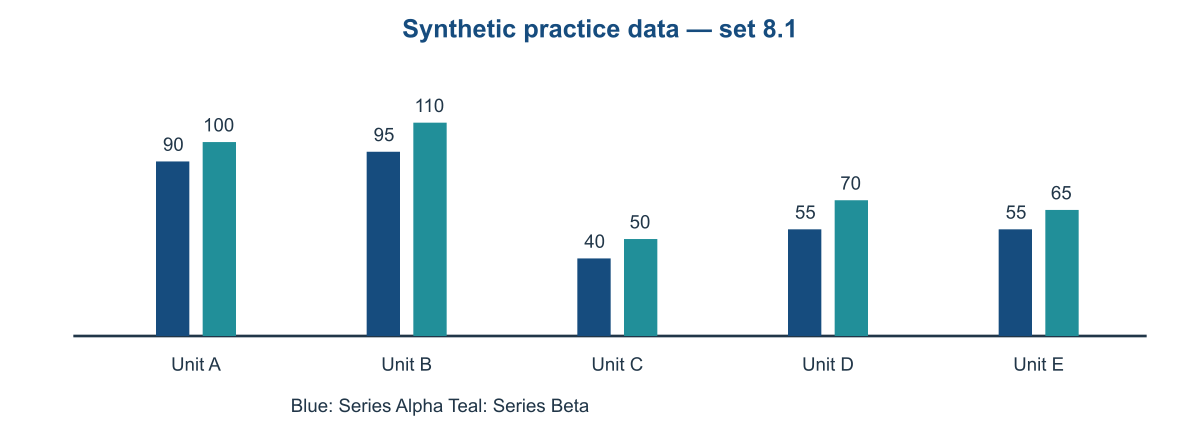
A. 190 B. 185 C. 195 D. 200
2. How much greater is the teal value than the blue value at Unit B?
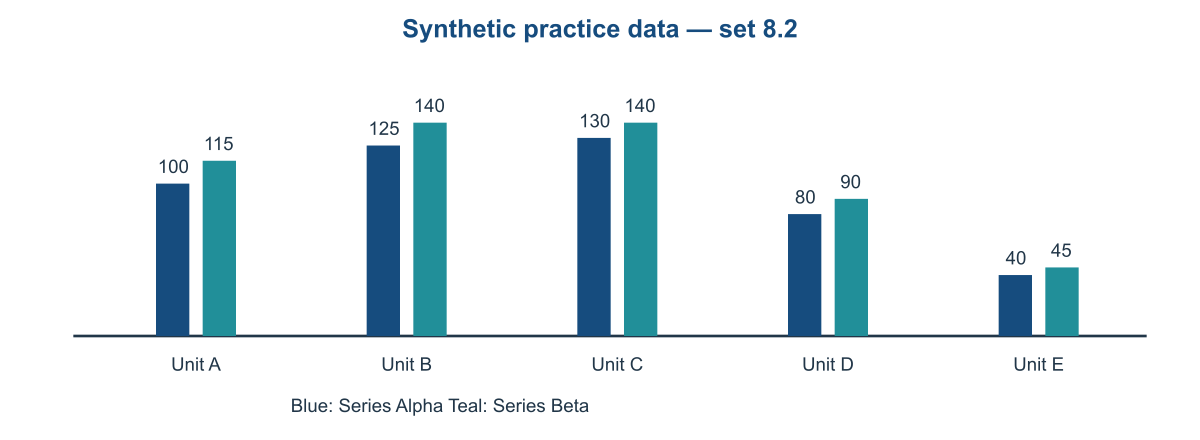
A. 15 B. 10 C. 25 D. 20
3. What is the total of the five blue values?
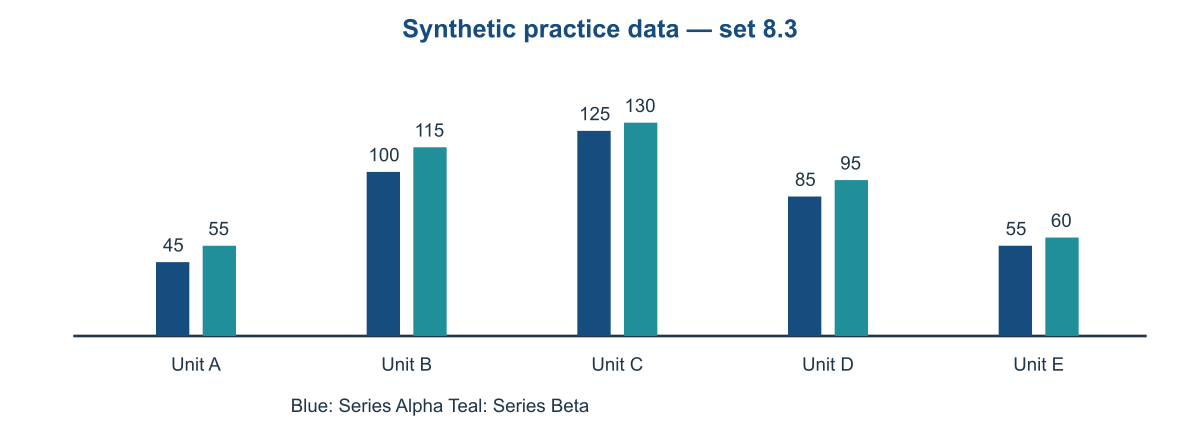
A. 415 B. 405 C. 410 D. 420
4. What is the highest teal value?
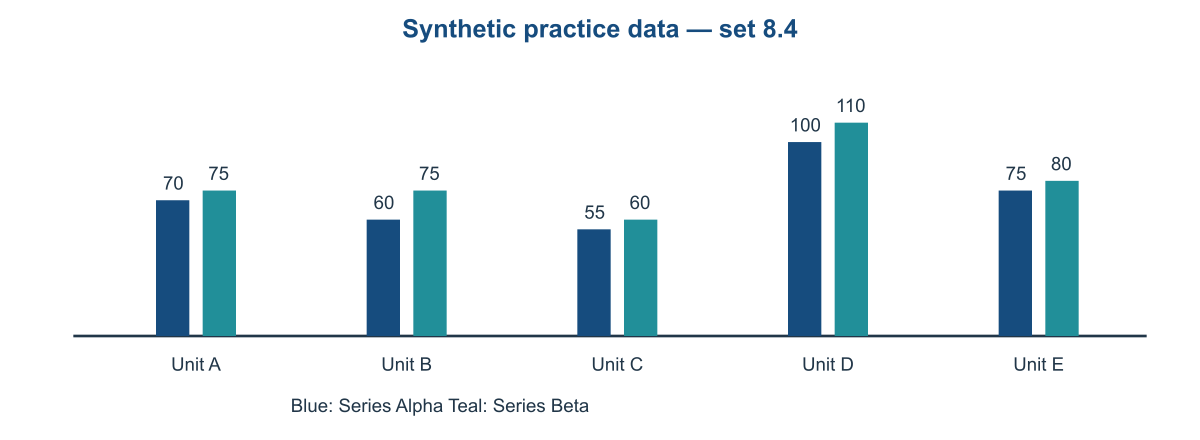
A. 105 B. 115 C. 120 D. 110
5. What is the combined value at Unit E?
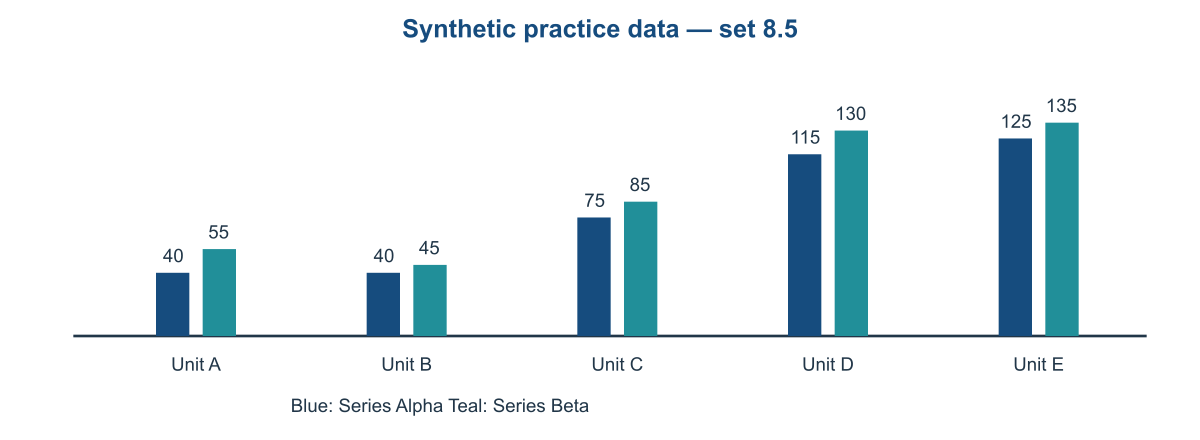
A. 260 B. 265 C. 270 D. 255
6. What is the combined value of the two series at Unit A?
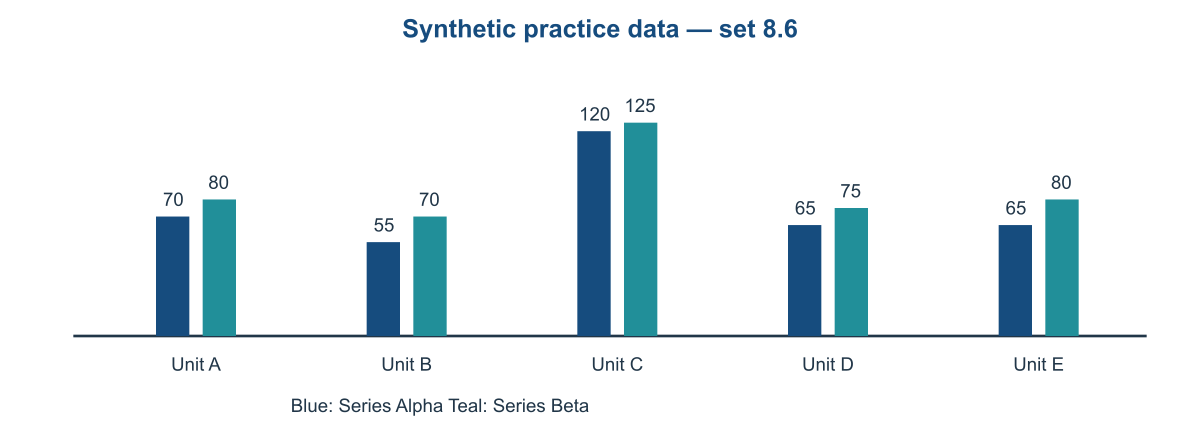
A. 155 B. 160 C. 145 D. 150
7. How much greater is the teal value than the blue value at Unit B?
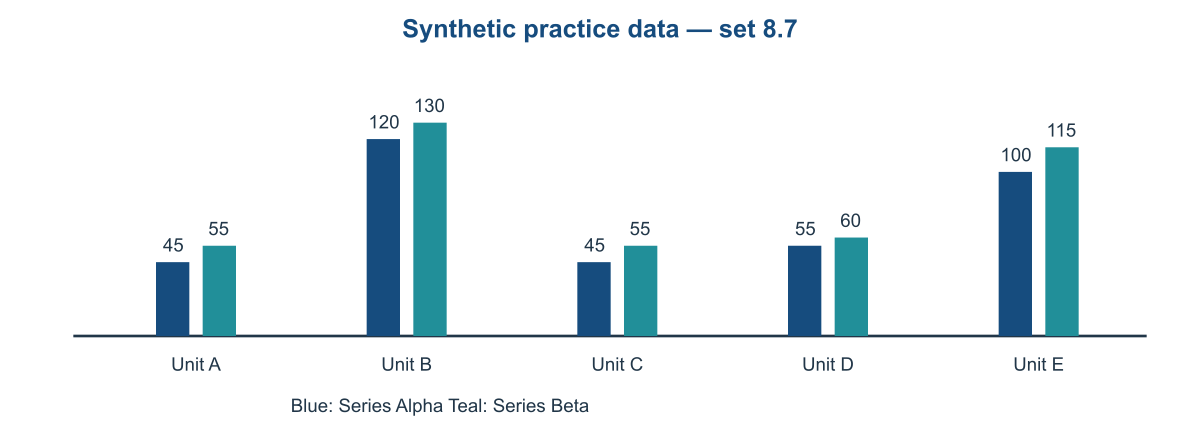
A. 10 B. 20 C. 15 D. 5
8. What is the total of the five blue values?
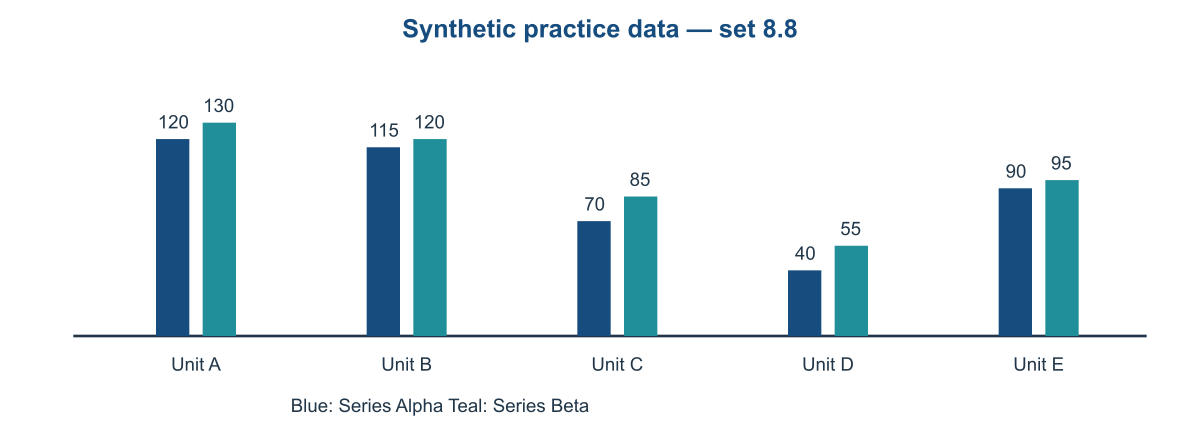
A. 440 B. 445 C. 430 D. 435
9. What is the highest teal value?
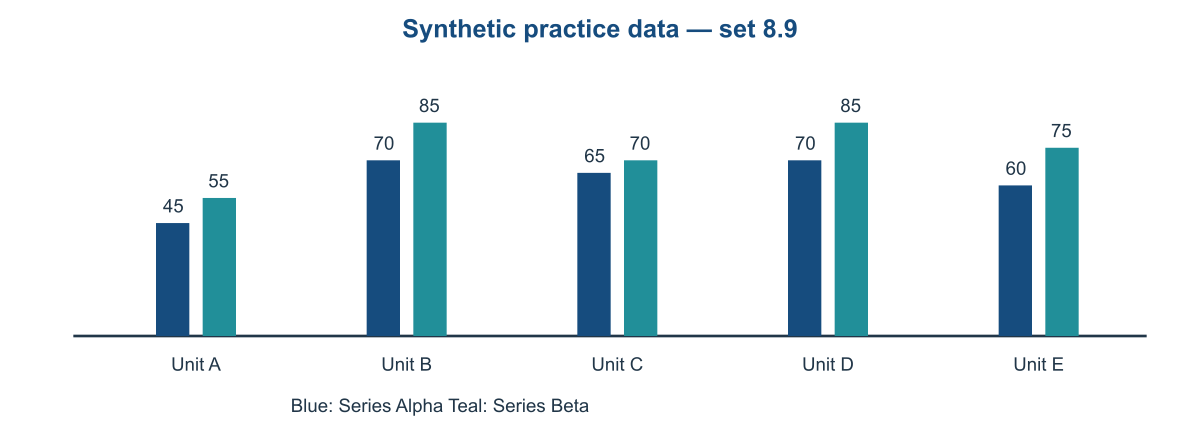
A. 95 B. 90 C. 85 D. 80
10. What is the combined value at Unit E?
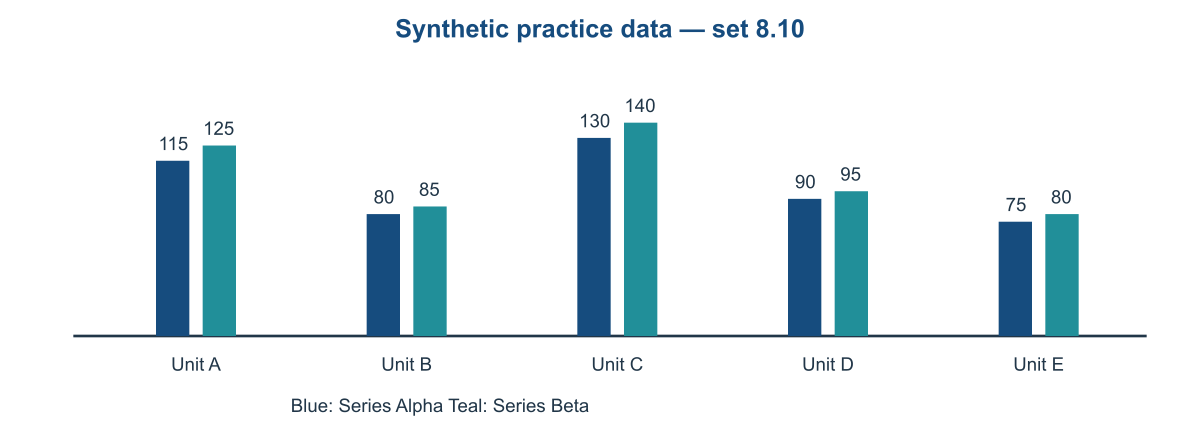
A. 160 B. 155 C. 165 D. 150
11. What is the combined value of the two series at Unit A?
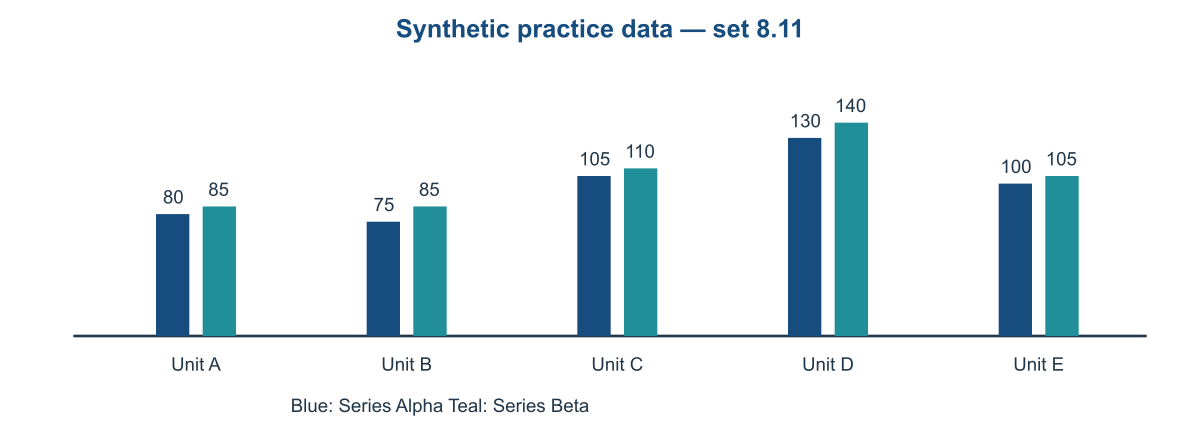
A. 160 B. 170 C. 165 D. 175
12. How much greater is the teal value than the blue value at Unit B?
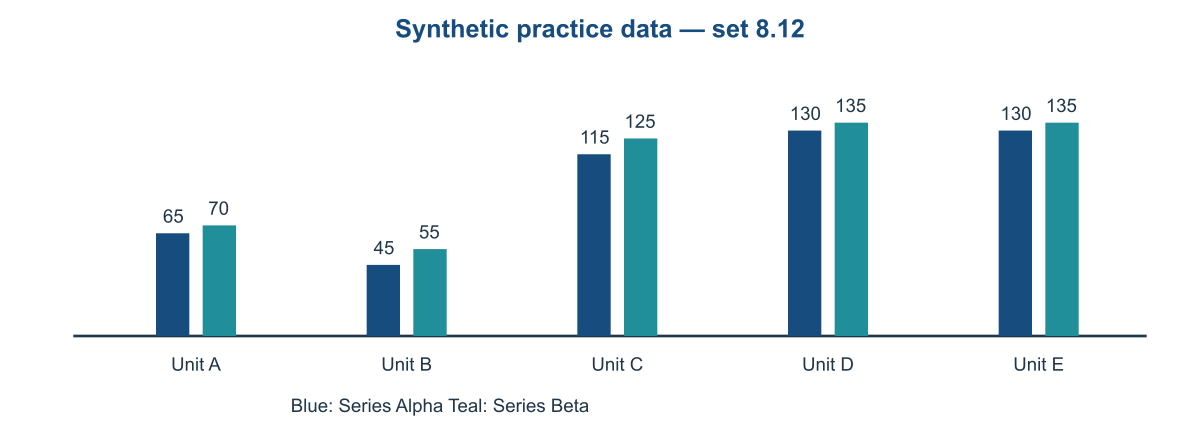
A. 5 B. 15 C. 20 D. 10
13. What is the total of the five blue values?
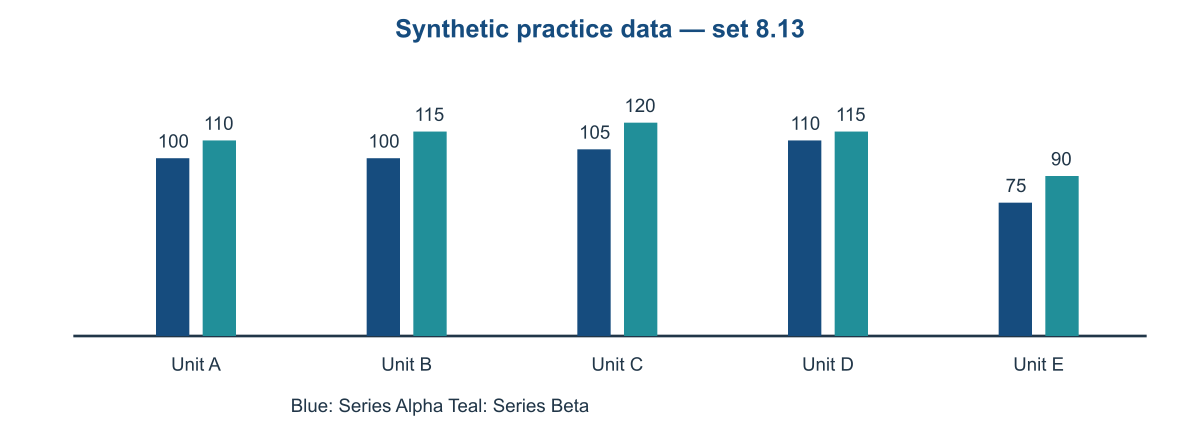
A. 500 B. 495 C. 485 D. 490
14. What is the highest teal value?
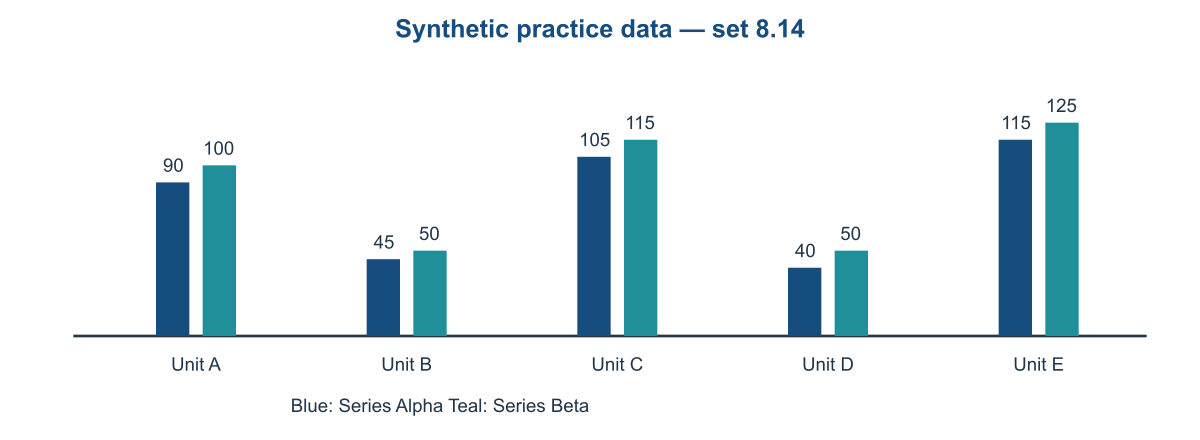
A. 135 B. 130 C. 120 D. 125
15. What is the combined value at Unit E?
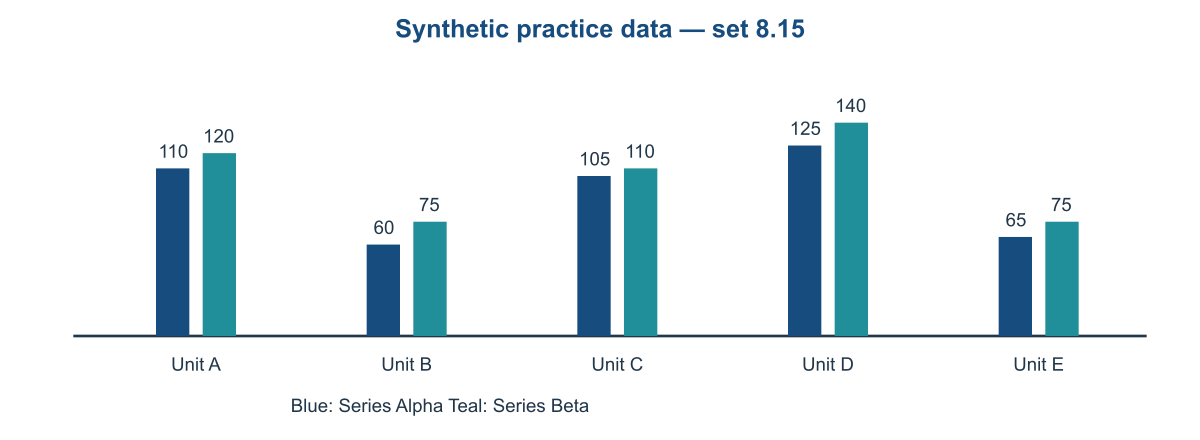
A. 150 B. 145 C. 135 D. 140
16. What is the combined value of the two series at Unit A?
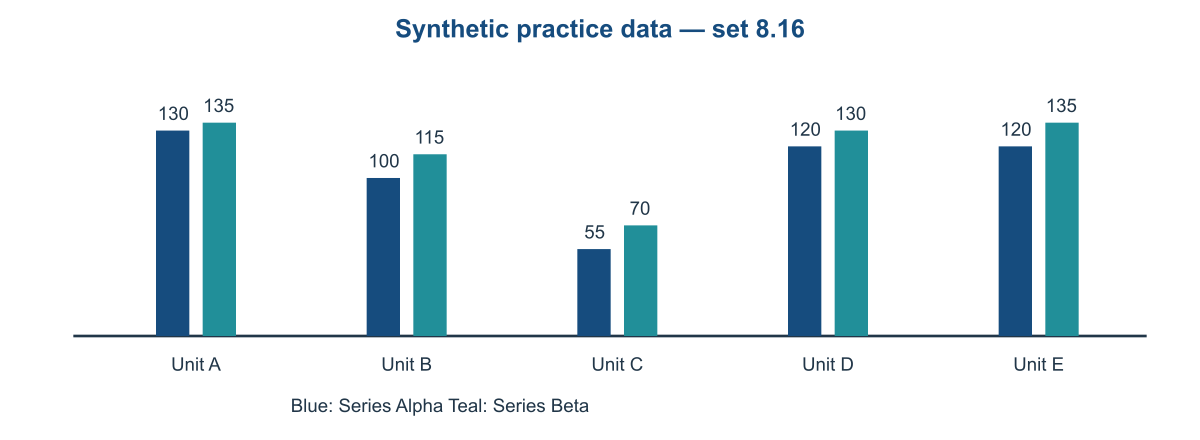
A. 260 B. 265 C. 270 D. 275
17. How much greater is the teal value than the blue value at Unit B?
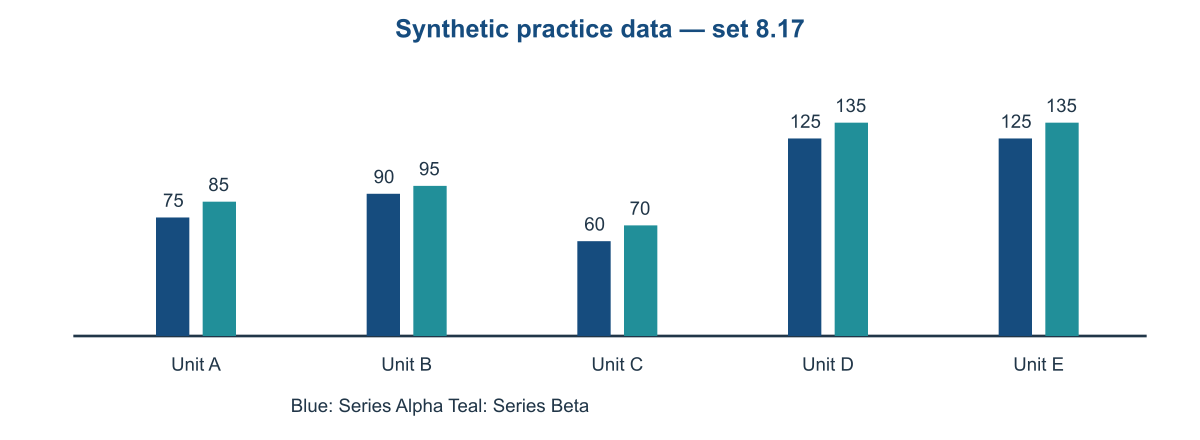
A. 15 B. 5 C. 0 D. 10
18. What is the total of the five blue values?
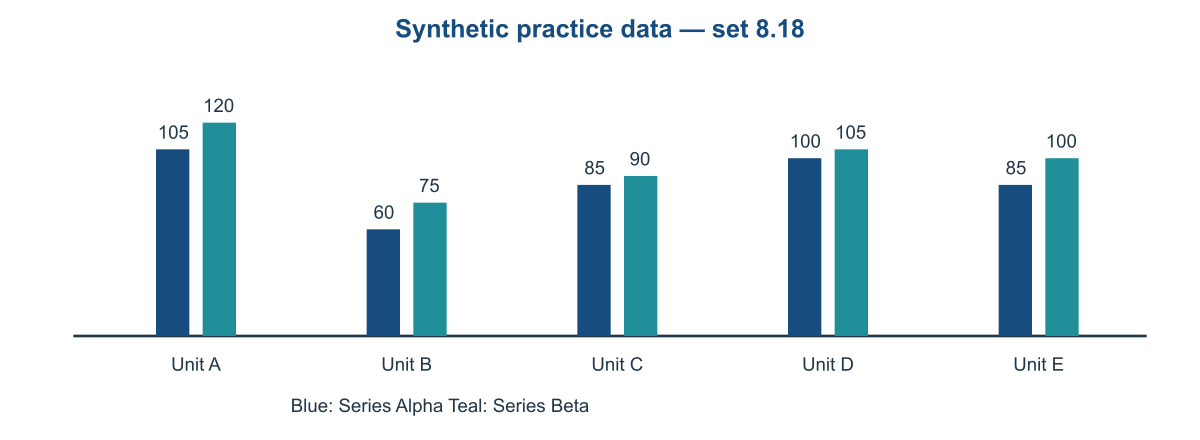
A. 445 B. 430 C. 435 D. 440
19. What is the highest teal value?
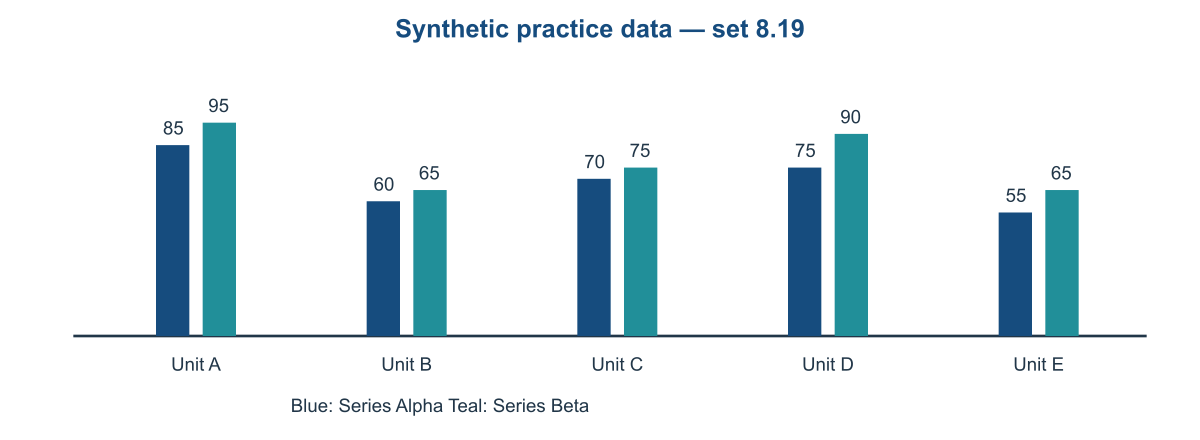
A. 105 B. 90 C. 100 D. 95
20. What is the combined value at Unit E?
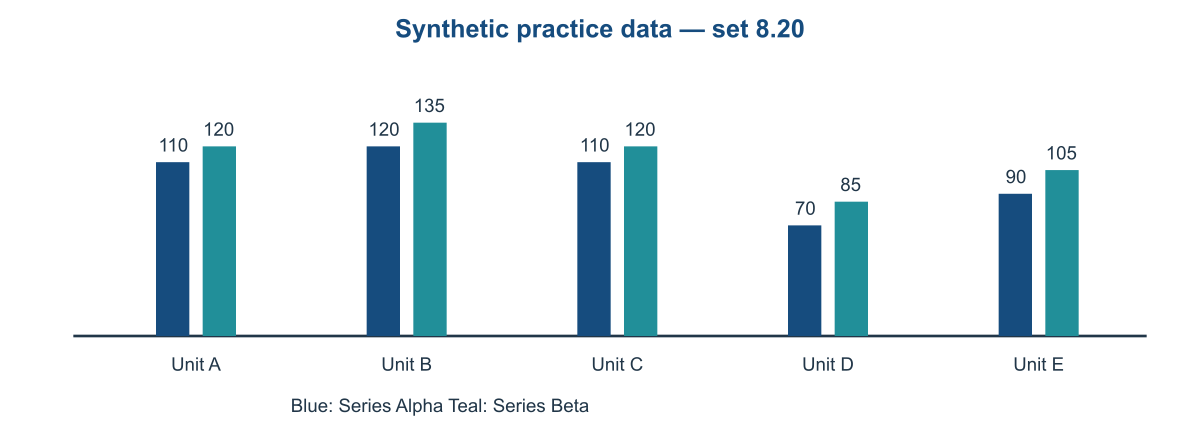
A. 205 B. 195 C. 190 D. 200
21. What is the combined value of the two series at Unit A?
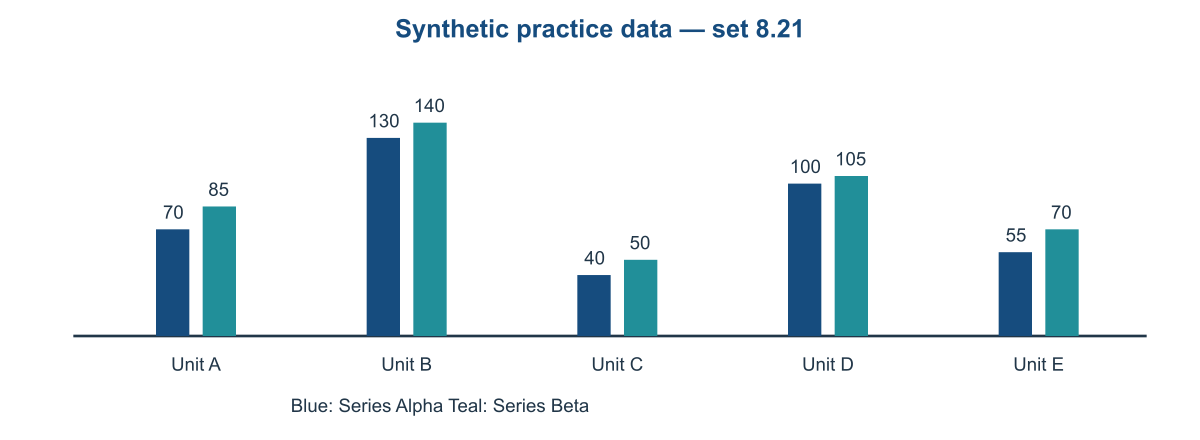
A. 155 B. 160 C. 150 D. 165
22. How much greater is the teal value than the blue value at Unit B?
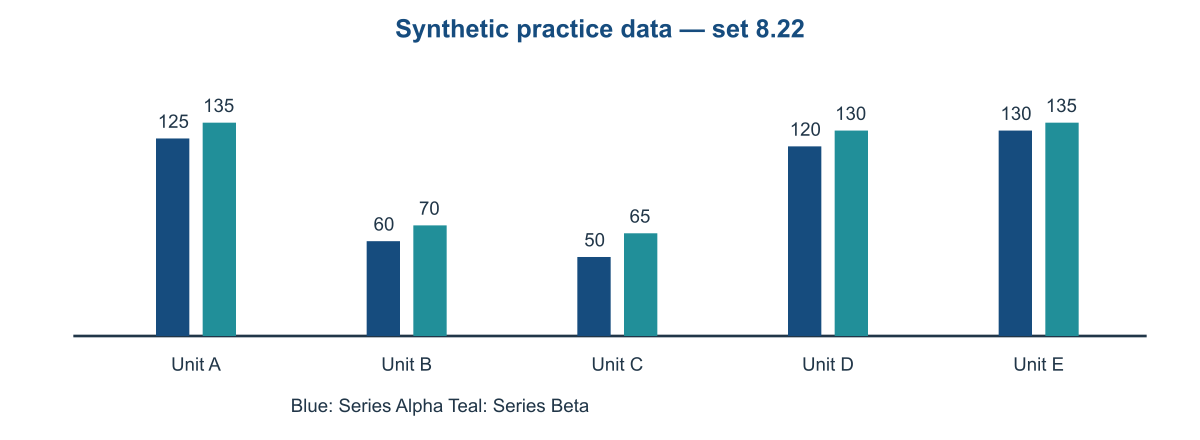
A. 5 B. 15 C. 10 D. 20
23. What is the total of the five blue values?
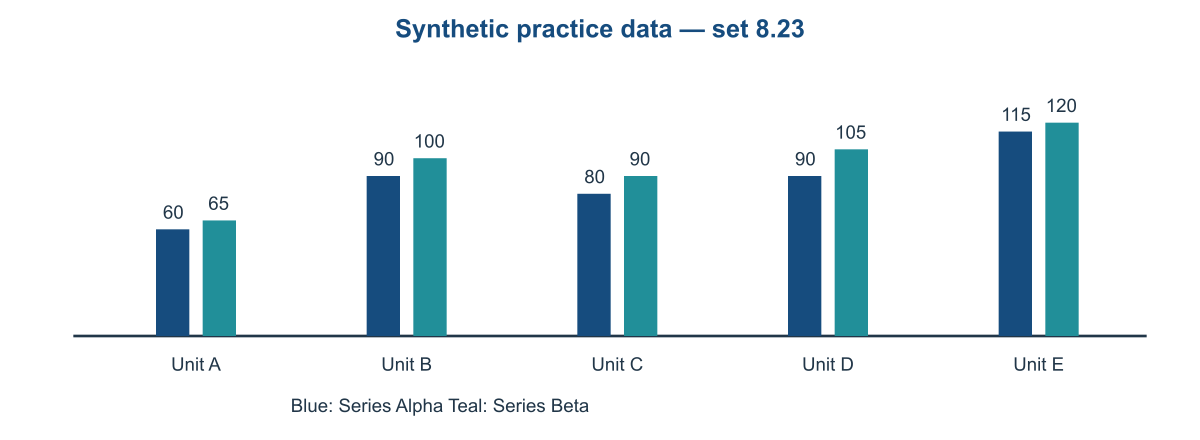
A. 435 B. 445 C. 430 D. 440
24. What is the highest teal value?
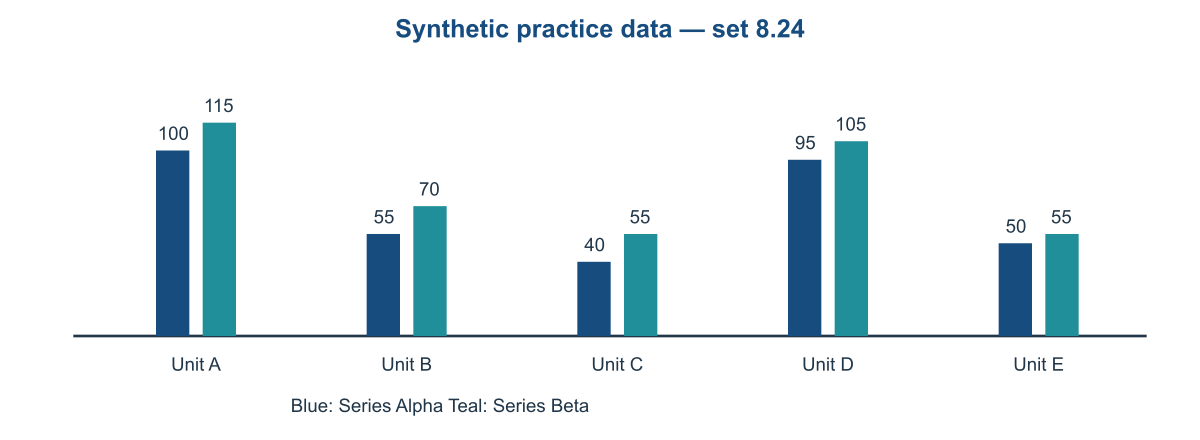
A. 110 B. 115 C. 125 D. 120
25. What is the combined value at Unit E?
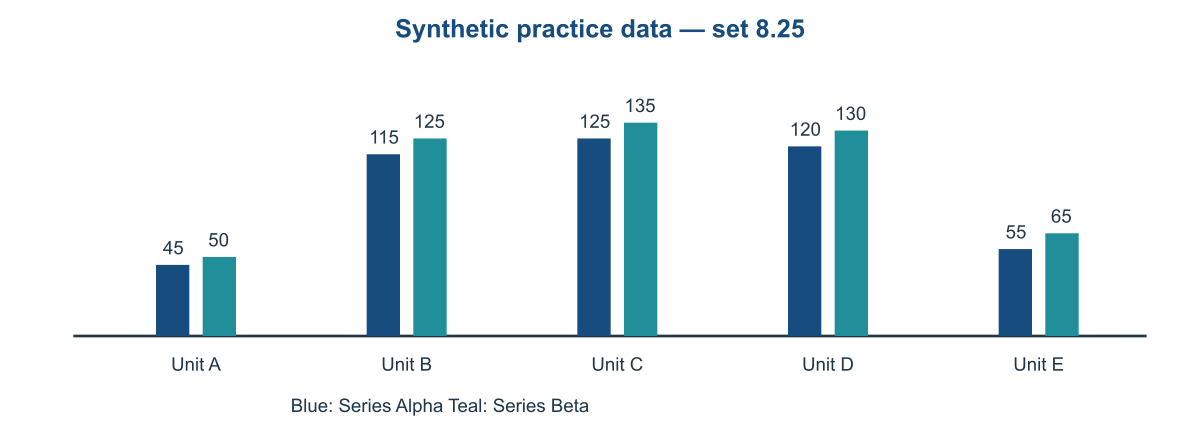
A. 125 B. 115 C. 120 D. 130
26. What is the combined value of the two series at Unit A?
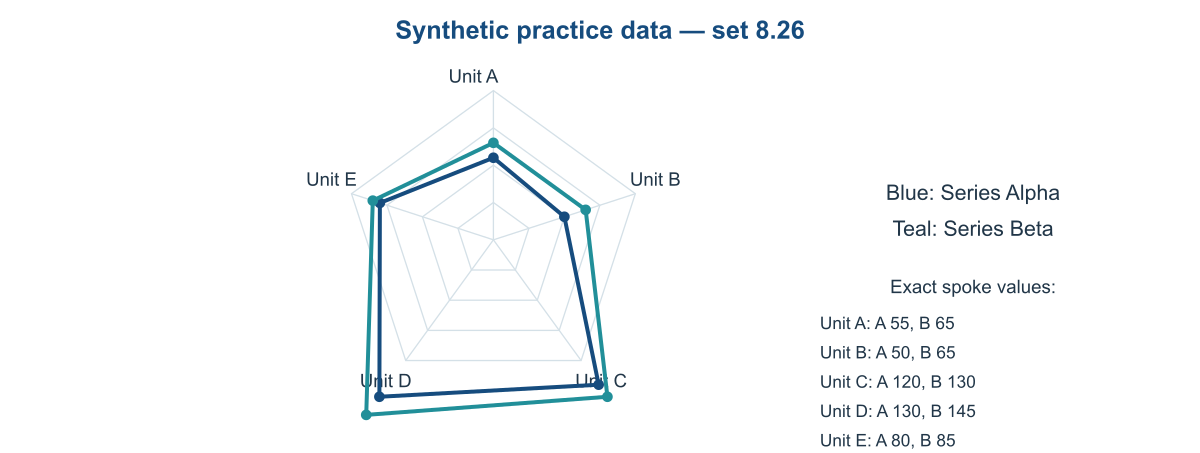
A. 125 B. 120 C. 130 D. 115
27. How much greater is the teal value than the blue value at Unit B?
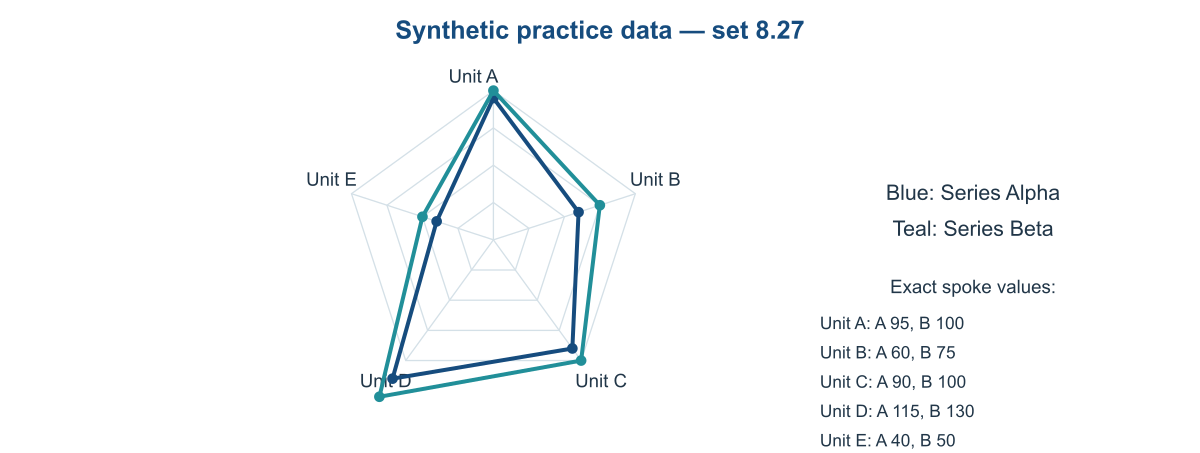
A. 25 B. 15 C. 10 D. 20
28. What is the total of the five blue values?
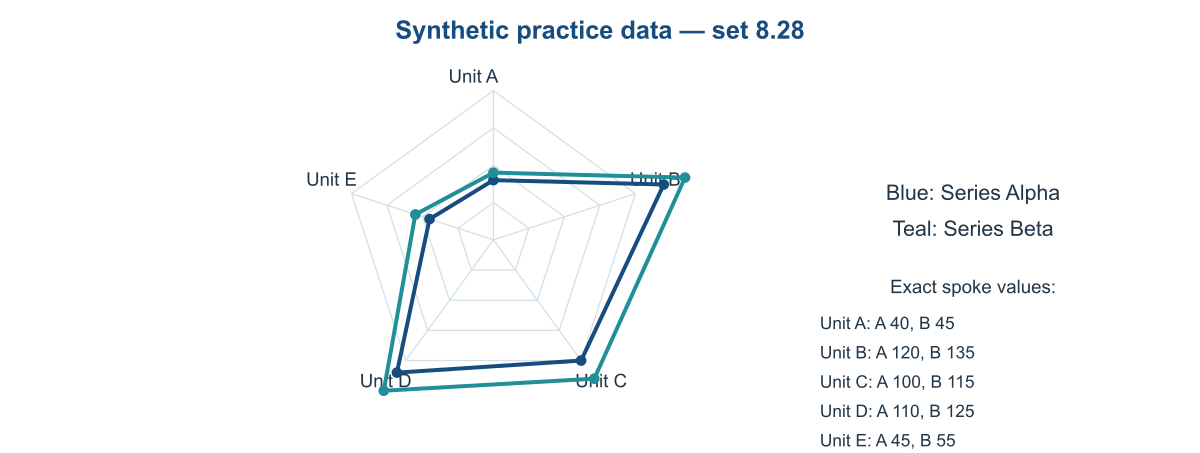
A. 410 B. 415 C. 425 D. 420
29. What is the highest teal value?
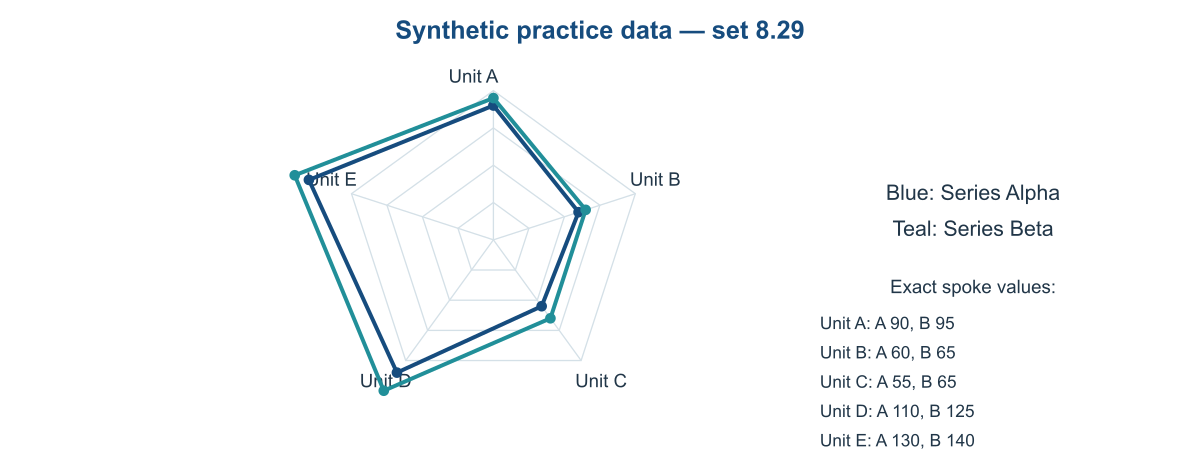
A. 150 B. 145 C. 140 D. 135
30. What is the combined value at Unit E?
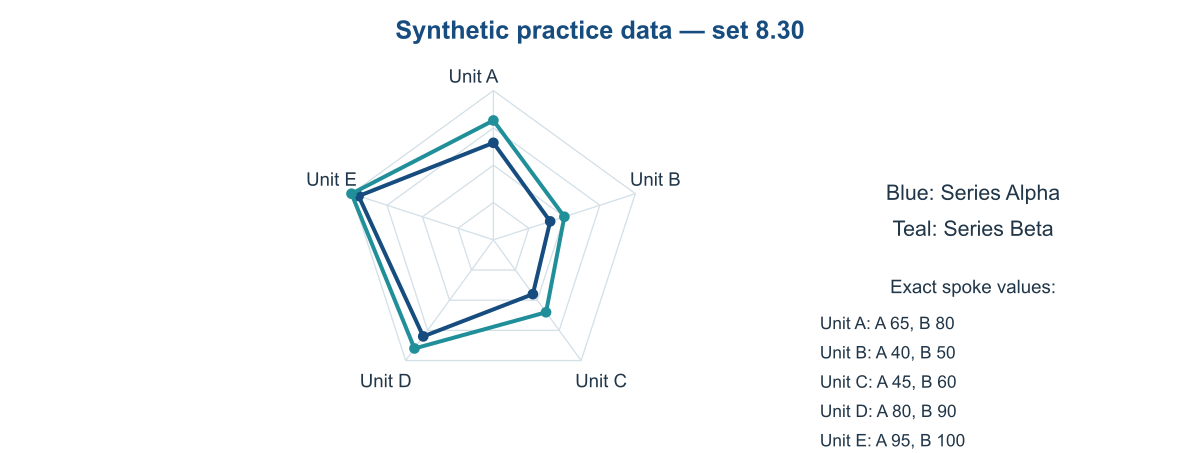
A. 200 B. 205 C. 190 D. 195
31. What is the combined value of the two series at Unit A?
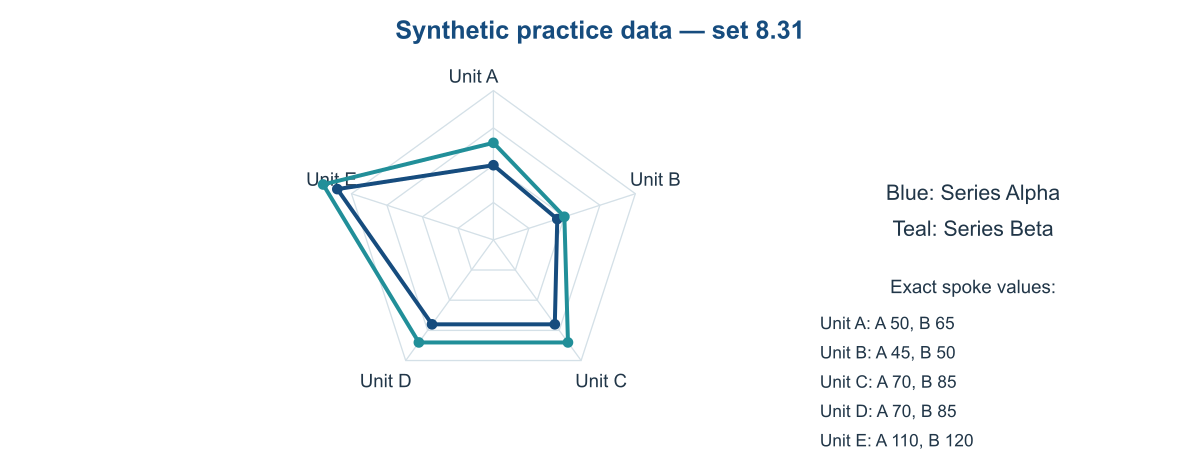
A. 115 B. 120 C. 110 D. 125
32. How much greater is the teal value than the blue value at Unit B?
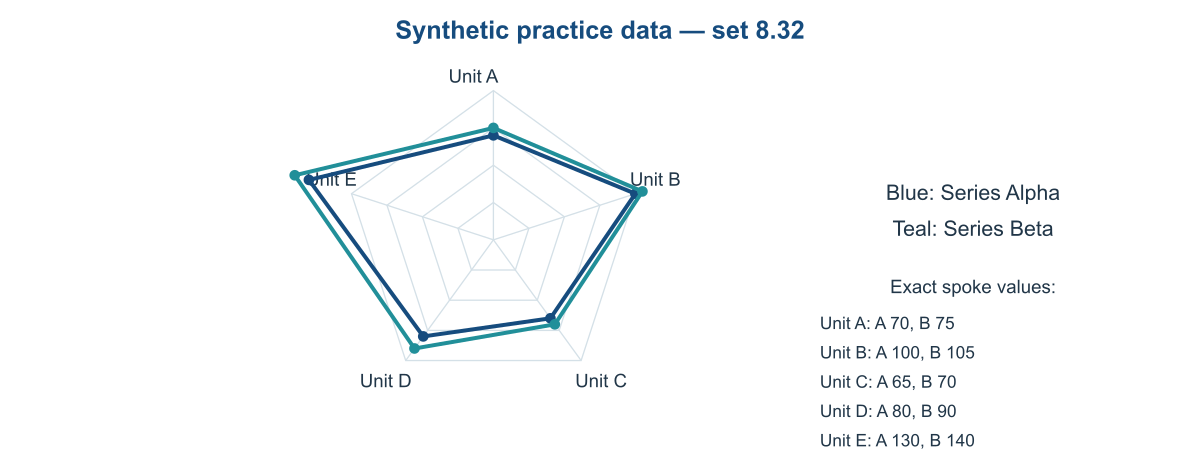
A. 15 B. 10 C. 5 D. 0
33. What is the total of the five blue values?
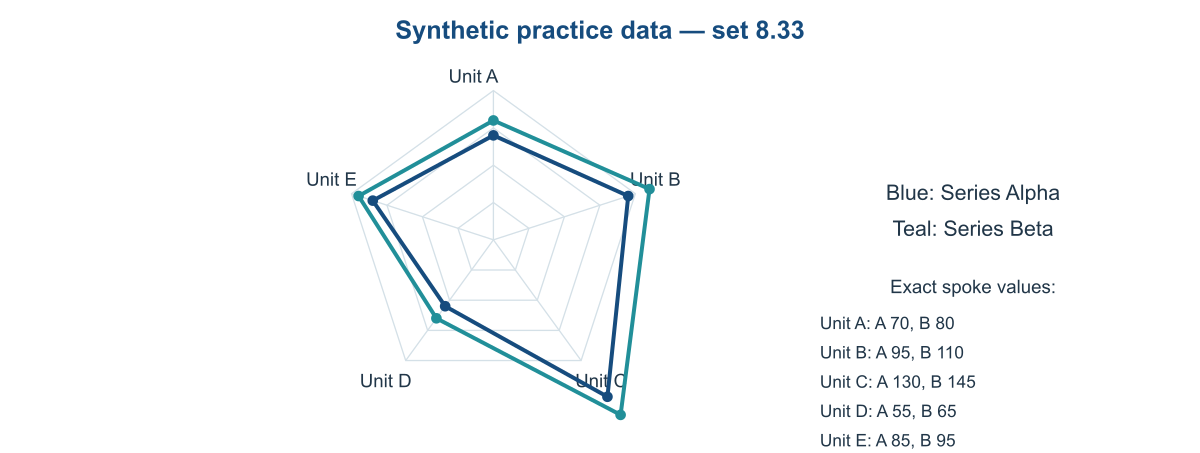
A. 430 B. 445 C. 440 D. 435
34. What is the highest teal value?
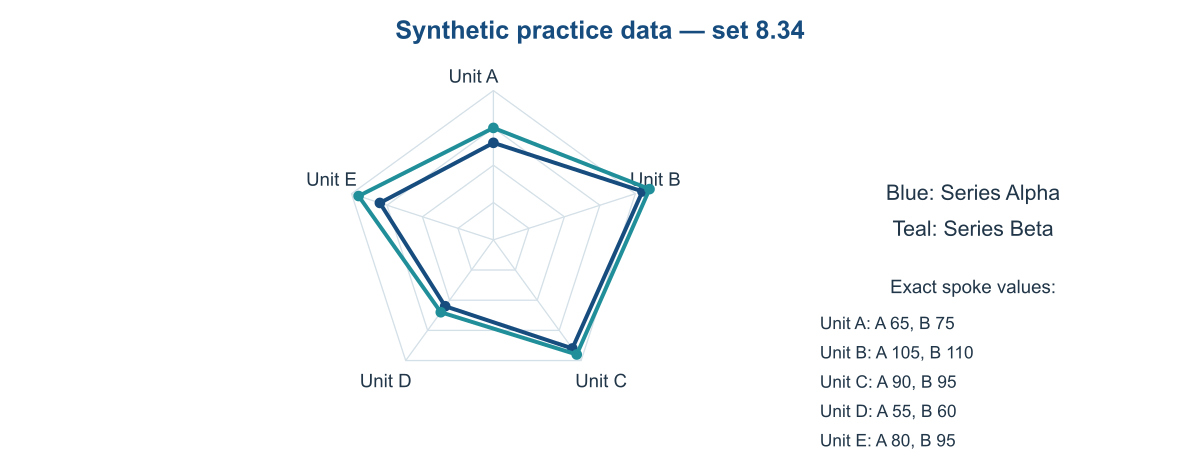
A. 120 B. 105 C. 110 D. 115
35. What is the combined value at Unit E?
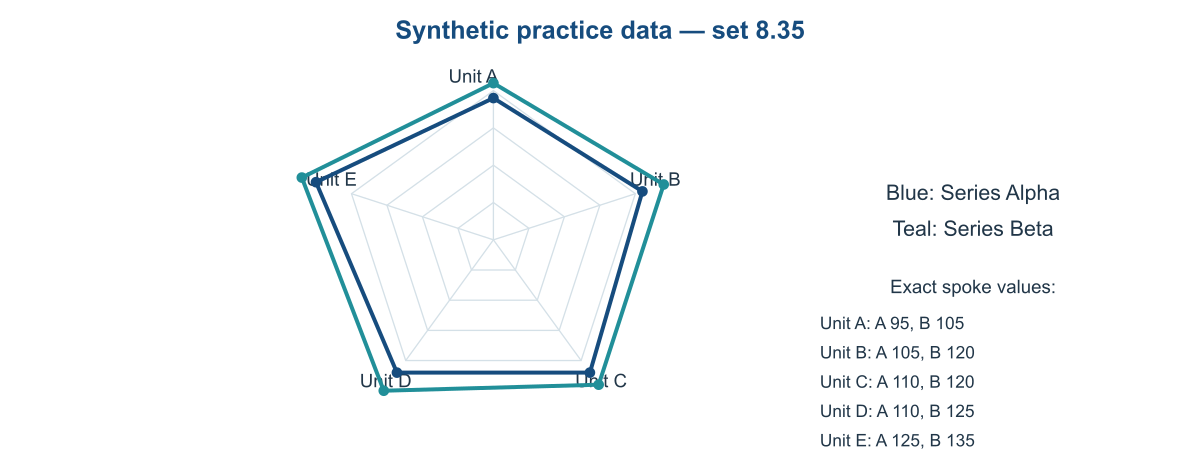
A. 270 B. 255 C. 265 D. 260
36. What is the combined value of the two series at Unit A?
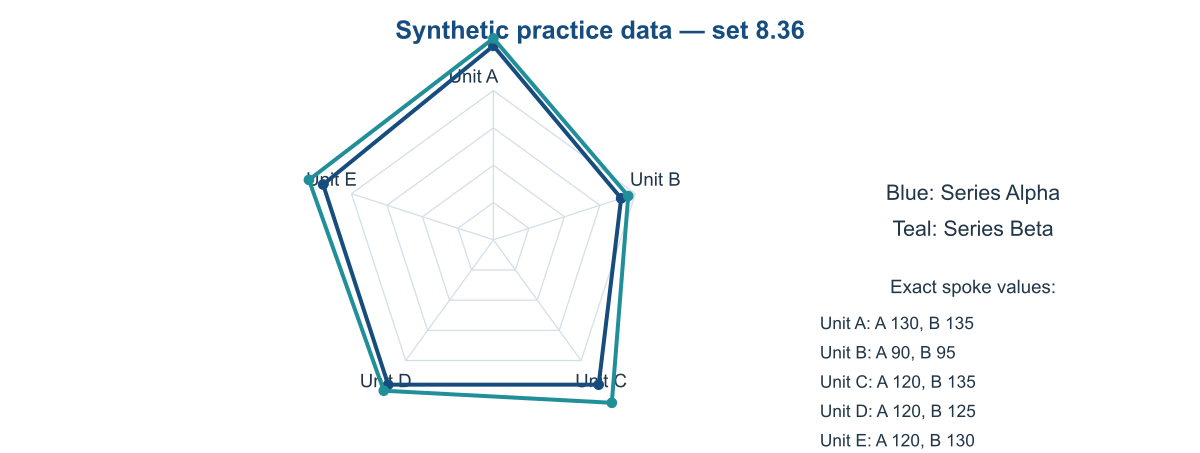
A. 265 B. 260 C. 275 D. 270
37. How much greater is the teal value than the blue value at Unit B?
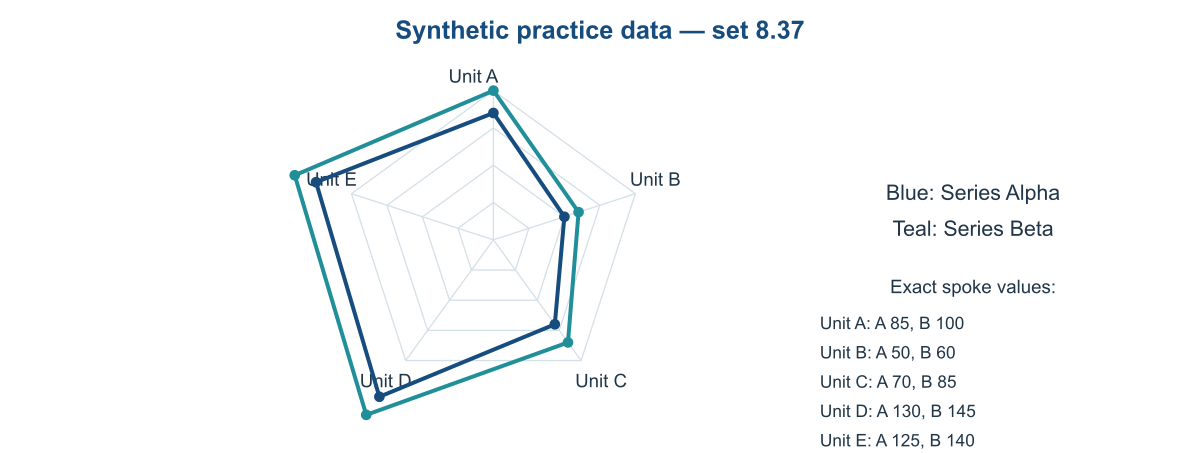
A. 10 B. 20 C. 5 D. 15
38. What is the total of the five blue values?
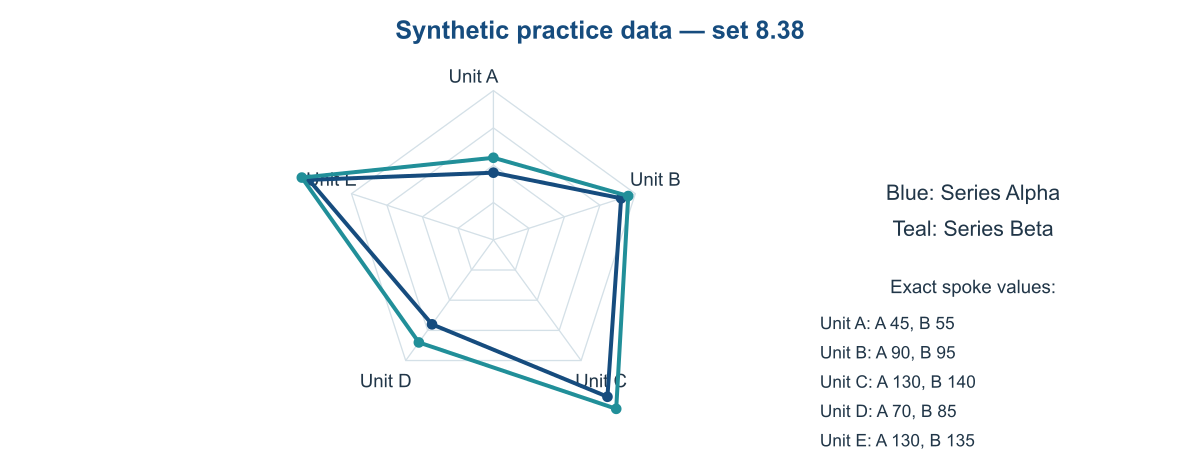
A. 460 B. 465 C. 475 D. 470
39. What is the highest teal value?
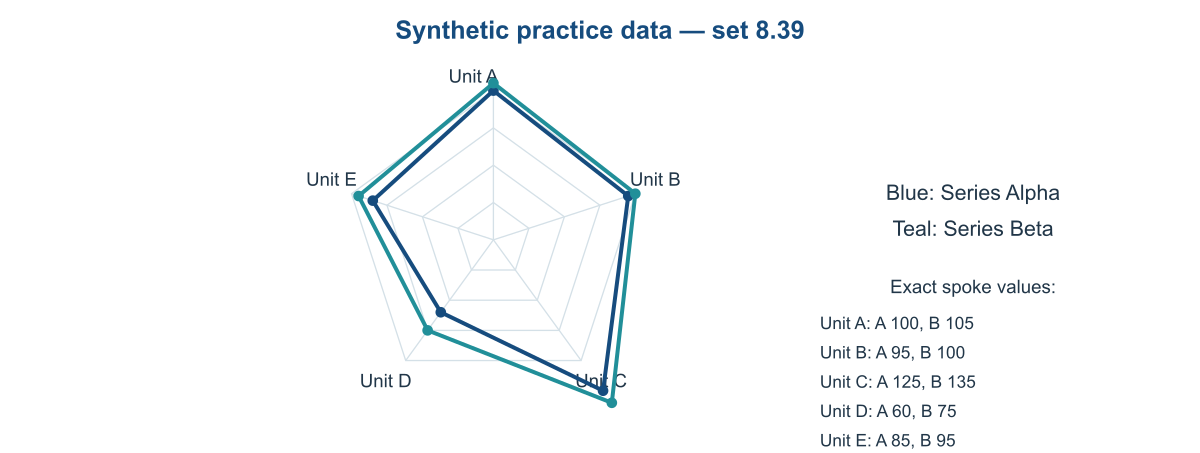
A. 135 B. 140 C. 130 D. 145
40. What is the combined value at Unit E?
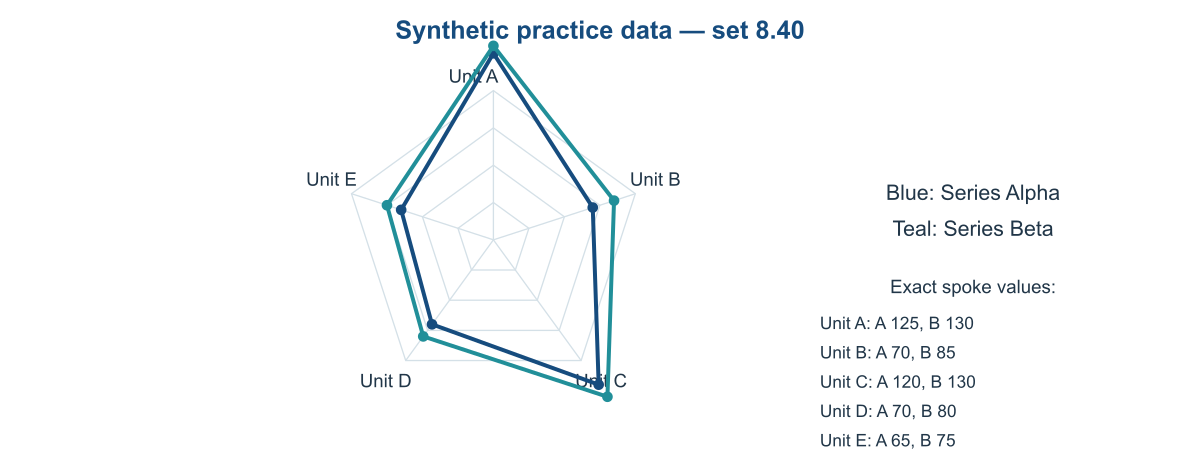
A. 140 B. 135 C. 145 D. 150
41. What is the combined value of the two series at Unit A?
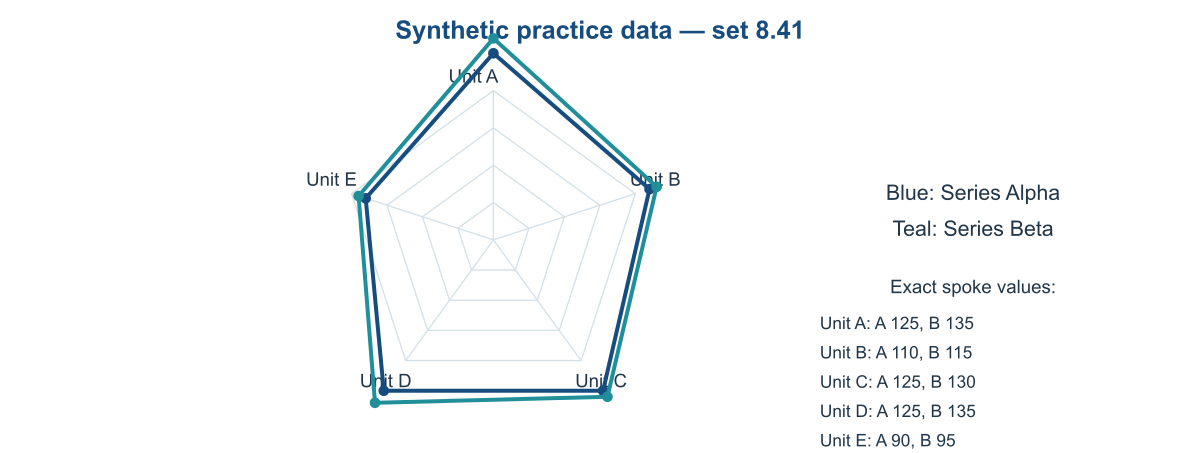
A. 255 B. 270 C. 265 D. 260
42. How much greater is the teal value than the blue value at Unit B?
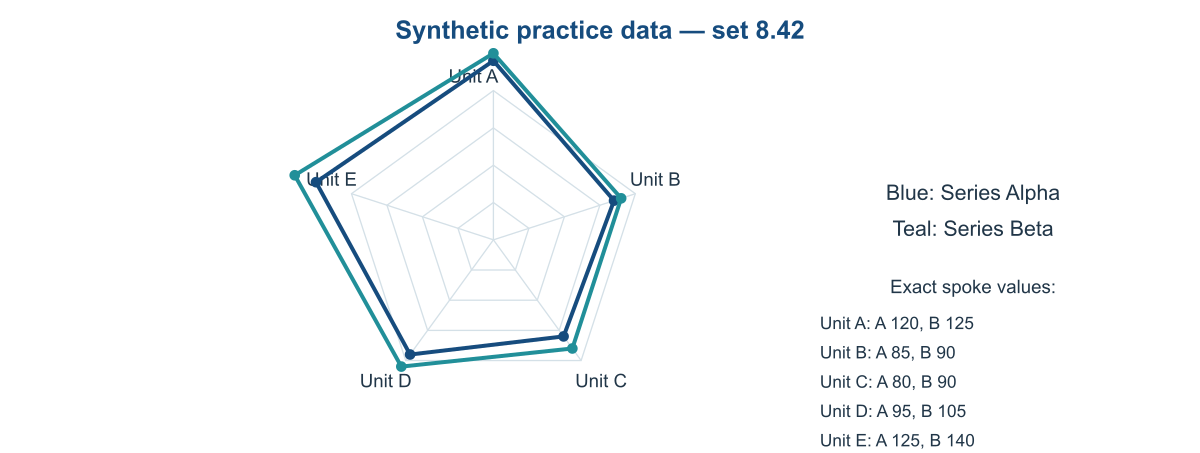
A. 10 B. 0 C. 5 D. 15
43. What is the total of the five blue values?
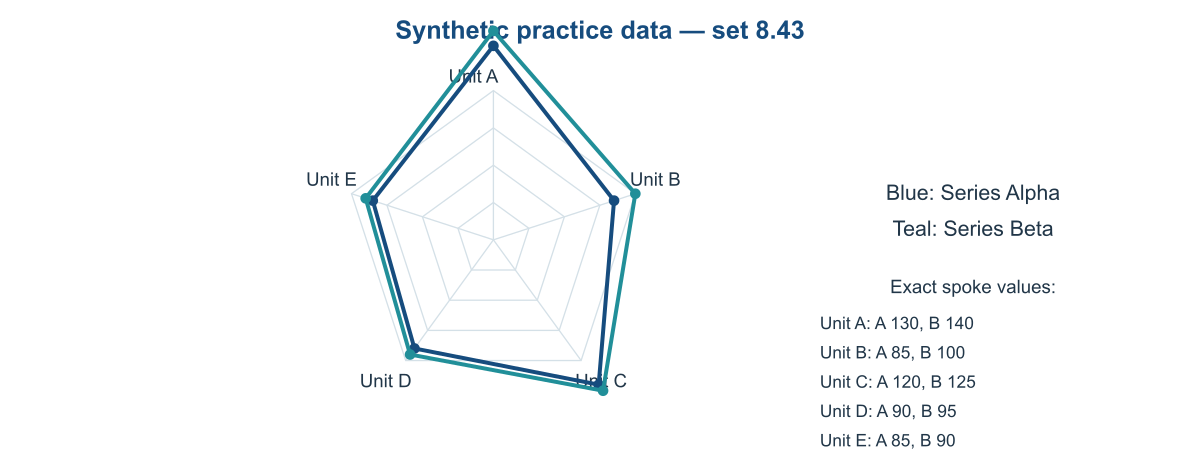
A. 510 B. 520 C. 505 D. 515
44. What is the highest teal value?
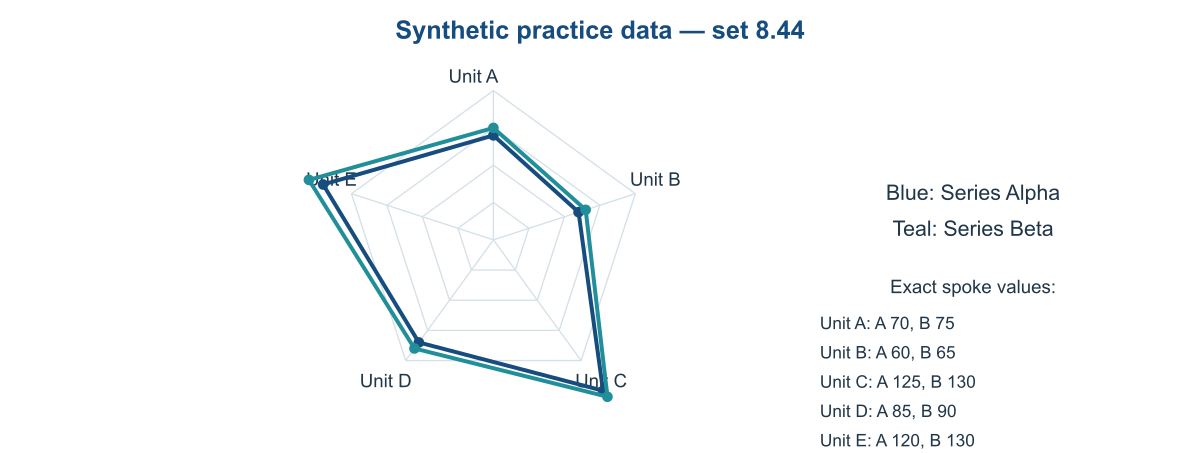
A. 130 B. 135 C. 140 D. 125
45. What is the combined value at Unit E?
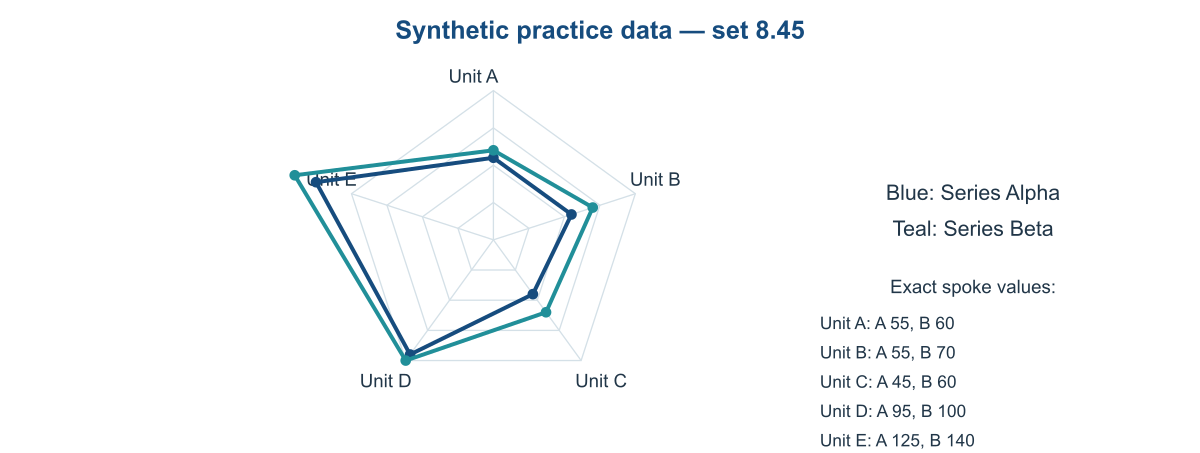
A. 275 B. 265 C. 260 D. 270
46. What is the combined value of the two series at Unit A?
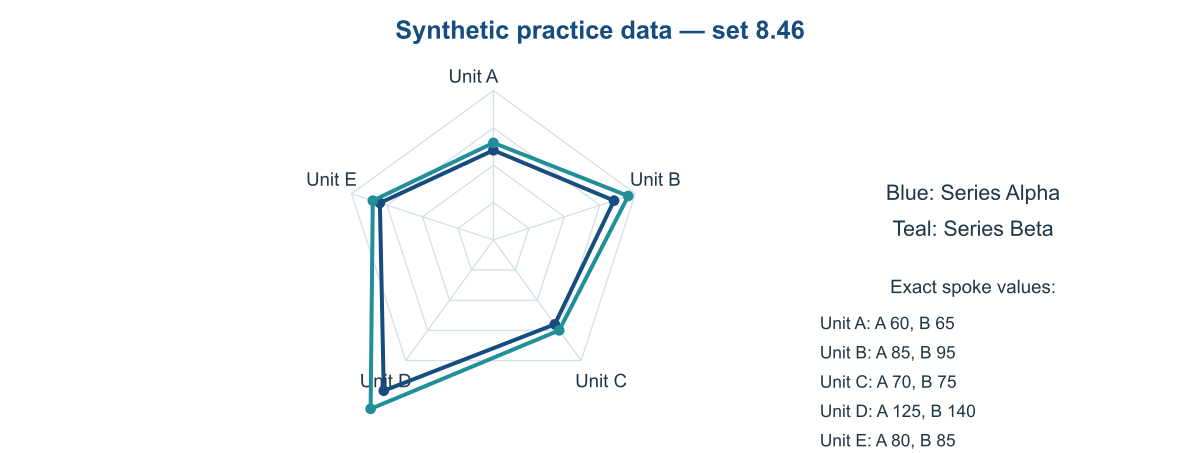
A. 130 B. 120 C. 135 D. 125
47. How much greater is the teal value than the blue value at Unit B?
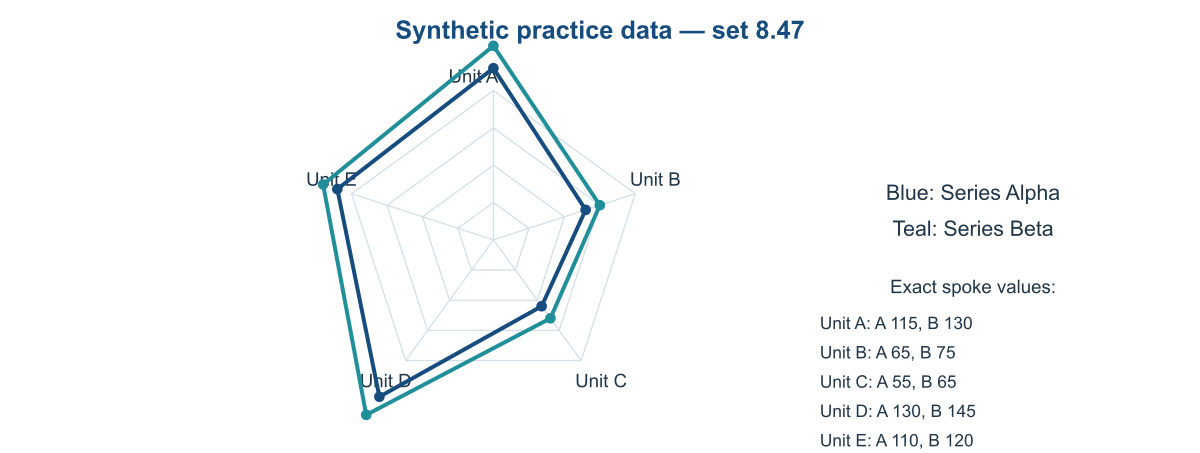
A. 5 B. 20 C. 15 D. 10
48. What is the total of the five blue values?
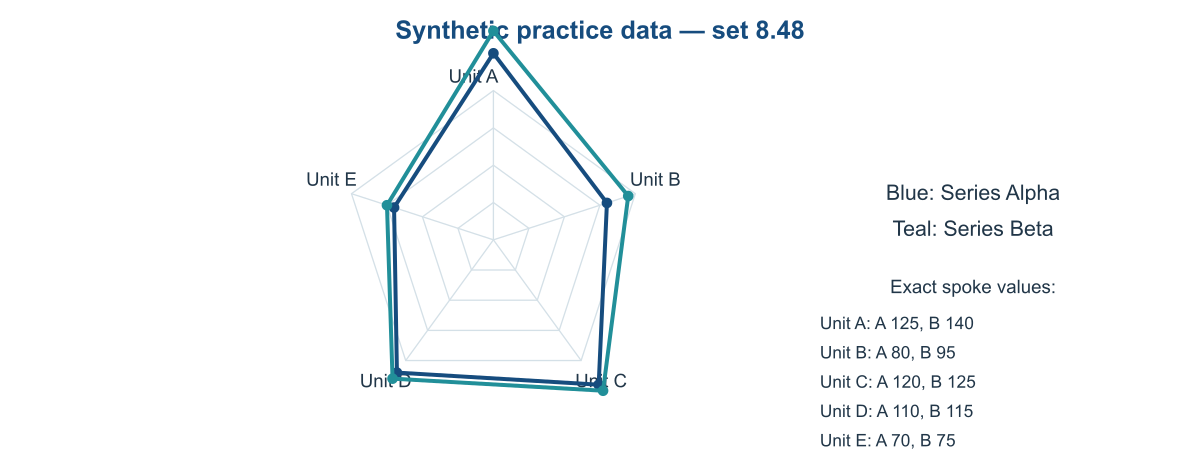
A. 505 B. 510 C. 500 D. 515
49. What is the highest teal value?
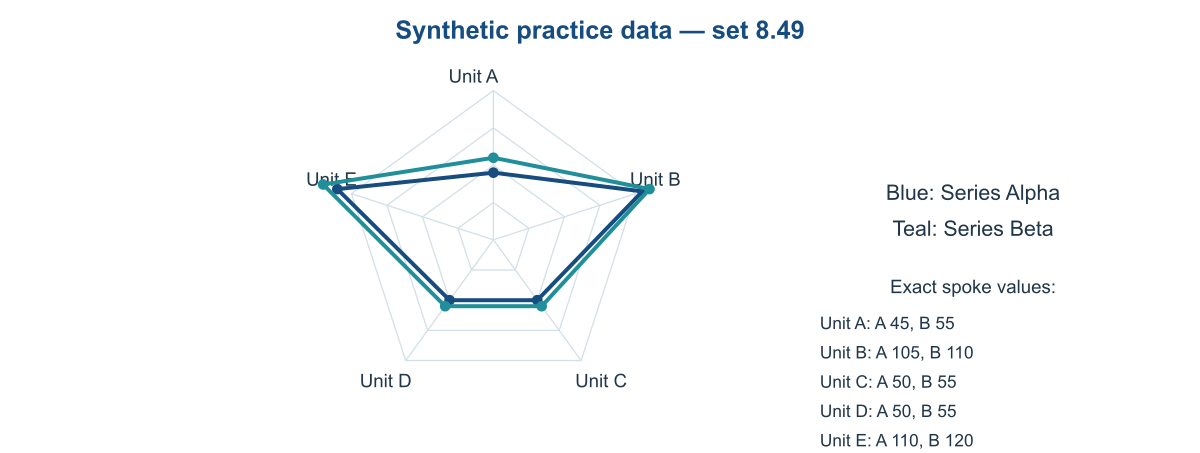
A. 125 B. 115 C. 120 D. 130
50. What is the combined value at Unit E?
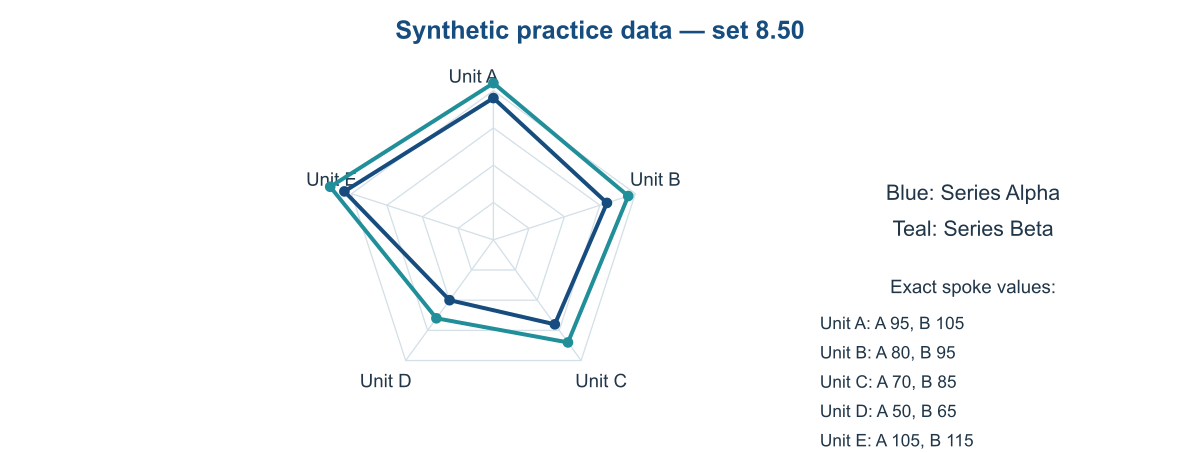
A. 225 B. 215 C. 220 D. 230
Answers and explanations
Check the value and the unit before comparing your working with the calculation.
1. A. At Unit A, blue=90 and teal=100; together 190.
APDI26-08-01 | mixed-combo-di | Easy
2. A. At Unit B, teal=140 and blue=125; difference 15.
APDI26-08-02 | mixed-combo-di | Easy
3. C. Add the blue values [45, 100, 125, 85, 55]; total 410.
APDI26-08-03 | mixed-combo-di | Easy
4. D. Compare the teal values [75, 75, 60, 110, 80]; highest 110.
APDI26-08-04 | mixed-combo-di | Easy
5. A. At Unit E, 125+135=260.
APDI26-08-05 | mixed-combo-di | Easy
6. D. At Unit A, blue=70 and teal=80; together 150.
APDI26-08-06 | mixed-combo-di | Easy
7. A. At Unit B, teal=130 and blue=120; difference 10.
APDI26-08-07 | mixed-combo-di | Easy
8. D. Add the blue values [120, 115, 70, 40, 90]; total 435.
APDI26-08-08 | mixed-combo-di | Easy
9. C. Compare the teal values [55, 85, 70, 85, 75]; highest 85.
APDI26-08-09 | mixed-combo-di | Medium
10. B. At Unit E, 75+80=155.
APDI26-08-10 | mixed-combo-di | Medium
11. C. At Unit A, blue=80 and teal=85; together 165.
APDI26-08-11 | mixed-combo-di | Medium
12. D. At Unit B, teal=55 and blue=45; difference 10.
APDI26-08-12 | mixed-combo-di | Medium
13. D. Add the blue values [100, 100, 105, 110, 75]; total 490.
APDI26-08-13 | mixed-combo-di | Medium
14. D. Compare the teal values [100, 50, 115, 50, 125]; highest 125.
APDI26-08-14 | mixed-combo-di | Medium
15. D. At Unit E, 65+75=140.
APDI26-08-15 | mixed-combo-di | Medium
16. B. At Unit A, blue=130 and teal=135; together 265.
APDI26-08-16 | mixed-combo-di | Medium
17. B. At Unit B, teal=95 and blue=90; difference 5.
APDI26-08-17 | mixed-combo-di | Medium
18. C. Add the blue values [105, 60, 85, 100, 85]; total 435.
APDI26-08-18 | mixed-combo-di | Medium
19. D. Compare the teal values [95, 65, 75, 90, 65]; highest 95.
APDI26-08-19 | mixed-combo-di | Medium
20. B. At Unit E, 90+105=195.
APDI26-08-20 | mixed-combo-di | Medium
21. A. At Unit A, blue=70 and teal=85; together 155.
APDI26-08-21 | mixed-combo-di | Medium
22. C. At Unit B, teal=70 and blue=60; difference 10.
APDI26-08-22 | mixed-combo-di | Difficult
23. A. Add the blue values [60, 90, 80, 90, 115]; total 435.
APDI26-08-23 | mixed-combo-di | Difficult
24. B. Compare the teal values [115, 70, 55, 105, 55]; highest 115.
APDI26-08-24 | mixed-combo-di | Difficult
25. C. At Unit E, 55+65=120.
APDI26-08-25 | mixed-combo-di | Difficult
26. B. At Unit A, blue=55 and teal=65; together 120.
APDI26-08-26 | radar-web | Easy
27. B. At Unit B, teal=75 and blue=60; difference 15.
APDI26-08-27 | radar-web | Easy
28. B. Add the blue values [40, 120, 100, 110, 45]; total 415.
APDI26-08-28 | radar-web | Easy
29. C. Compare the teal values [95, 65, 65, 125, 140]; highest 140.
APDI26-08-29 | radar-web | Easy
30. D. At Unit E, 95+100=195.
APDI26-08-30 | radar-web | Easy
31. A. At Unit A, blue=50 and teal=65; together 115.
APDI26-08-31 | radar-web | Easy
32. C. At Unit B, teal=105 and blue=100; difference 5.
APDI26-08-32 | radar-web | Easy
33. D. Add the blue values [70, 95, 130, 55, 85]; total 435.
APDI26-08-33 | radar-web | Easy
34. C. Compare the teal values [75, 110, 95, 60, 95]; highest 110.
APDI26-08-34 | radar-web | Medium
35. D. At Unit E, 125+135=260.
APDI26-08-35 | radar-web | Medium
36. A. At Unit A, blue=130 and teal=135; together 265.
APDI26-08-36 | radar-web | Medium
37. A. At Unit B, teal=60 and blue=50; difference 10.
APDI26-08-37 | radar-web | Medium
38. B. Add the blue values [45, 90, 130, 70, 130]; total 465.
APDI26-08-38 | radar-web | Medium
39. A. Compare the teal values [105, 100, 135, 75, 95]; highest 135.
APDI26-08-39 | radar-web | Medium
40. A. At Unit E, 65+75=140.
APDI26-08-40 | radar-web | Medium
41. D. At Unit A, blue=125 and teal=135; together 260.
APDI26-08-41 | radar-web | Medium
42. C. At Unit B, teal=90 and blue=85; difference 5.
APDI26-08-42 | radar-web | Medium
43. A. Add the blue values [130, 85, 120, 90, 85]; total 510.
APDI26-08-43 | radar-web | Medium
44. A. Compare the teal values [75, 65, 130, 90, 130]; highest 130.
APDI26-08-44 | radar-web | Medium
45. B. At Unit E, 125+140=265.
APDI26-08-45 | radar-web | Medium
46. D. At Unit A, blue=60 and teal=65; together 125.
APDI26-08-46 | radar-web | Medium
47. D. At Unit B, teal=75 and blue=65; difference 10.
APDI26-08-47 | radar-web | Difficult
48. A. Add the blue values [125, 80, 120, 110, 70]; total 505.
APDI26-08-48 | radar-web | Difficult
49. C. Compare the teal values [55, 110, 55, 55, 120]; highest 120.
APDI26-08-49 | radar-web | Difficult
50. C. At Unit E, 105+115=220.
APDI26-08-50 | radar-web | Difficult