Recover a missing value from a constraint
Missing-data questions supply a total, an average, a percentage or another relationship that determines an unseen cell. If five entries average 18, their sum is 90. If four visible entries total 68, the missing entry is 22. A row total and a column total may offer two paths; use the second as a check. Do not assume a blank means zero.
Compare like with like
A valid comparison uses the same unit, time span and base. If two charts report rupees and thousands of rupees, convert first. If one group has 120 cases out of 600 people and another has 150 out of 1,000, the larger count is not the higher rate. Their rates are 20% and 15% respectively. “Difference” asks for subtraction; “how many times” asks for division; “percent more” asks for the difference divided by the comparison base.
Choose an efficient route
Write the target expression before collecting all values. If the expression is a ratio, common scale factors may cancel. If only one missing value matters, do not solve the entire table. Check boundary words such as “at least” and “more than”, especially when comparing rounded data. In review, note whether a miss came from a wrong unit, a wrong denominator or a missing constraint.
One missing cell, one constraint
Five category counts are 40, 55, an unknown value, 65 and 70, with a stated total of 300. The visible counts sum to 230, so the unknown is 70. Notice that another category is also 70; missing values need not be unique among categories, only uniquely determined by the constraints. Check by summing all five values back to 300. A blank in the chart means unknown, not zero.
If the stated mean of five values is 60 instead of a stated total, first convert mean to total: 5×60=300. Then subtract the visible 230. If the chart gives only a percentage share for another category, convert that percentage using the same total before subtraction. These paths are mathematically equivalent when all statements describe the same population. Do not mix a Period 1 total with Period 2 cells.
Count versus rate
Consider Unit A with 120 successes out of 600 attempts and Unit B with 150 out of 1,000. B has 30 more successes, but A's success rate is 20% versus B's 15%. The answer to “which has more?” depends on whether the noun is successes or success rate. Keep a unit label on each number in your working. If a question asks percentage points, subtract the two rates: 20%−15%=5 points. If it asks how much higher A's rate is relative to B's, compute 5/15≈33.3%.
Constraint audit
Before solving, identify what fixes the blank: a grand total, a row total, a mean, a ratio, or a percentage. If no stated constraint fixes it, the correct response may be “cannot be determined” in a reasoning item. The practice tables here provide the needed constraint visibly, often in the title. After finding the value, inspect the chart again to confirm that the hidden cell belongs to the same row and unit as the total used.
Practice — 50 questions
Attempt every item before reading the answers. Use the chart or caselet printed with the question.
1. The chart hides Unit C. What is its value from the stated total?
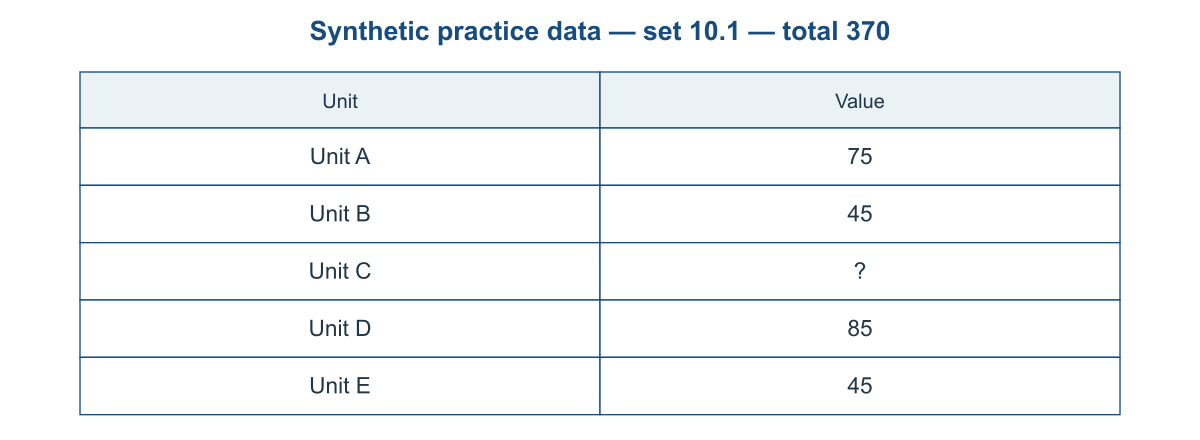
A. 125 B. 120 C. 115 D. 130
2. What is the absolute difference between Unit A and Unit B?
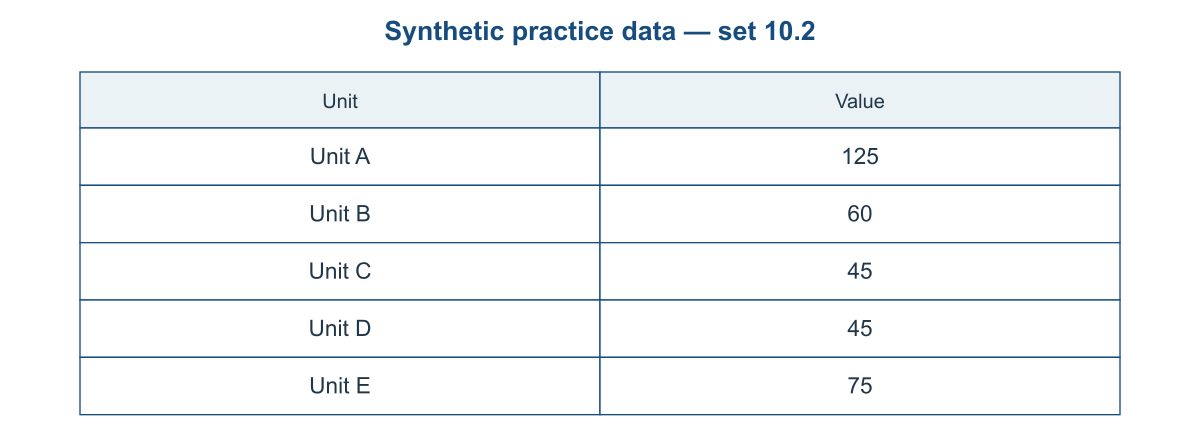
A. 70 B. 65 C. 75 D. 60
3. What is the total excluding Unit E?
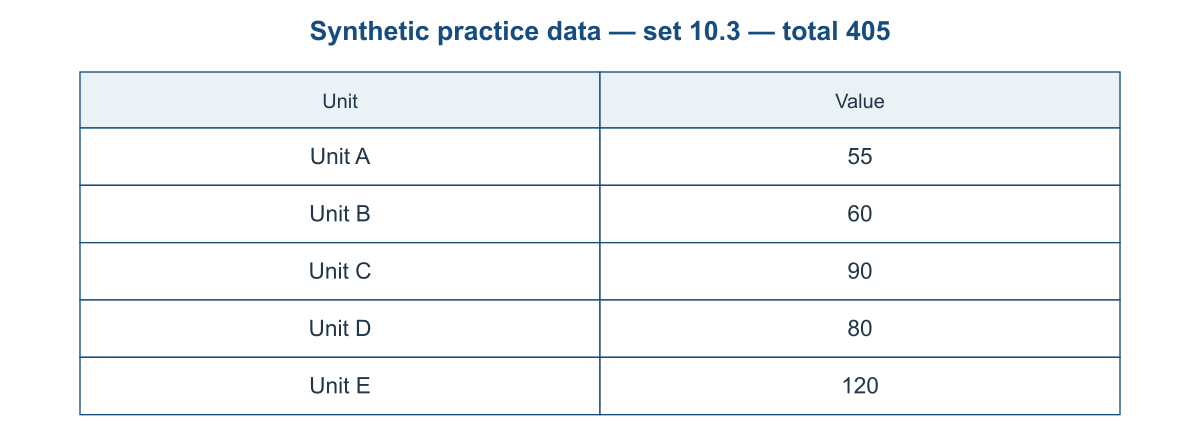
A. 290 B. 285 C. 295 D. 280
4. What is the range of the five values?
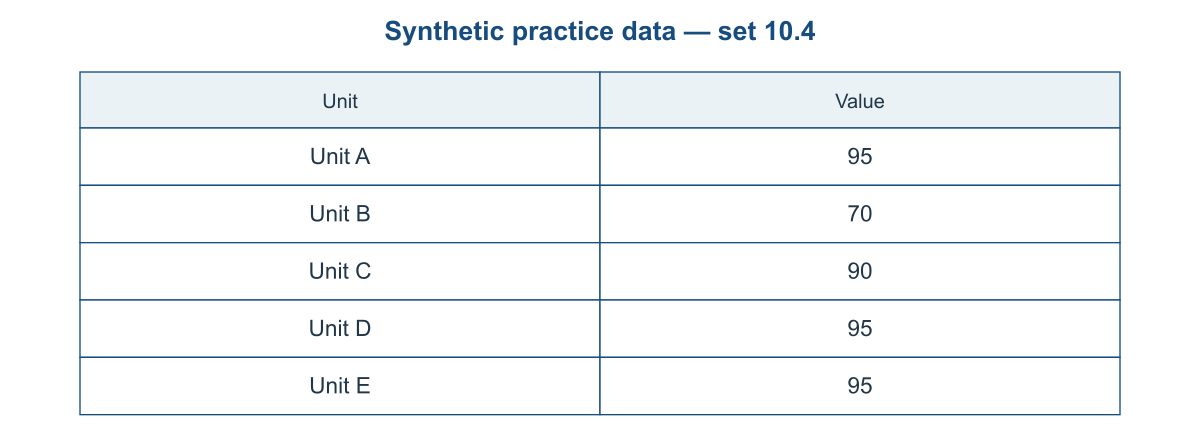
A. 30 B. 35 C. 20 D. 25
5. What is the combined value of Unit D and Unit E?
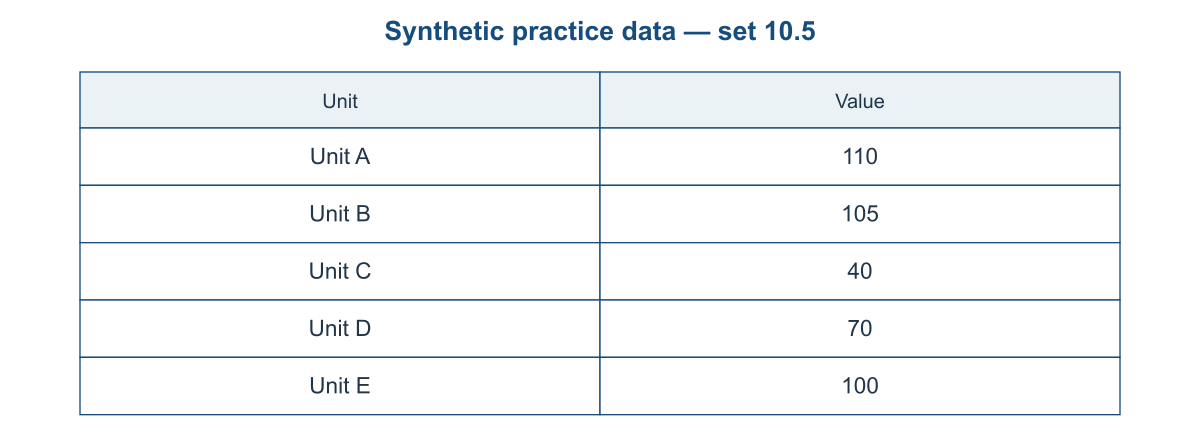
A. 180 B. 175 C. 165 D. 170
6. The chart hides Unit C. What is its value from the stated total?
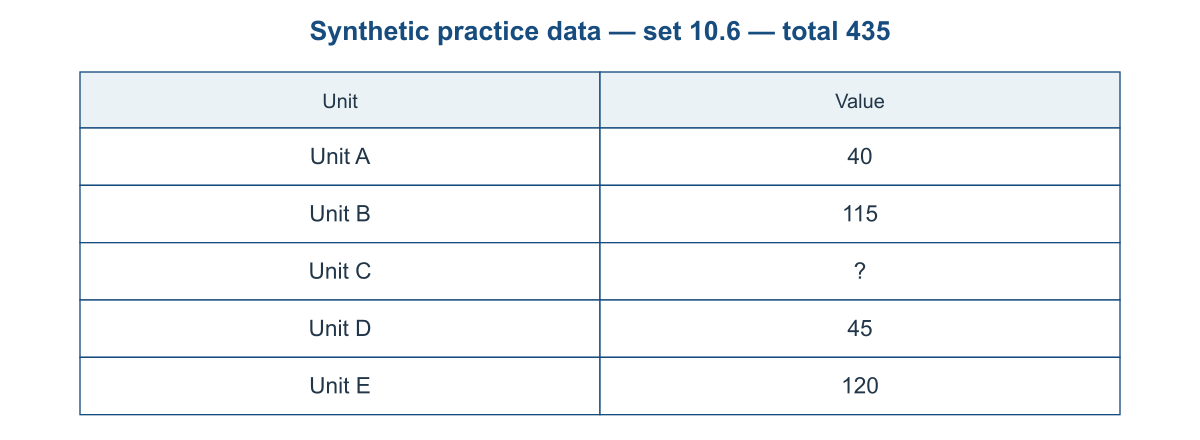
A. 120 B. 110 C. 115 D. 125
7. What is the absolute difference between Unit A and Unit B?
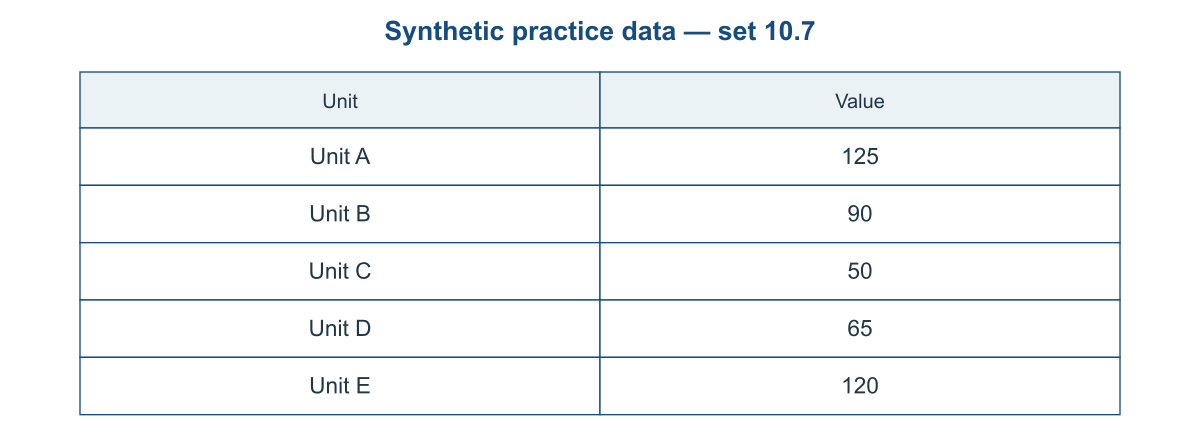
A. 30 B. 45 C. 35 D. 40
8. What is the total excluding Unit E?
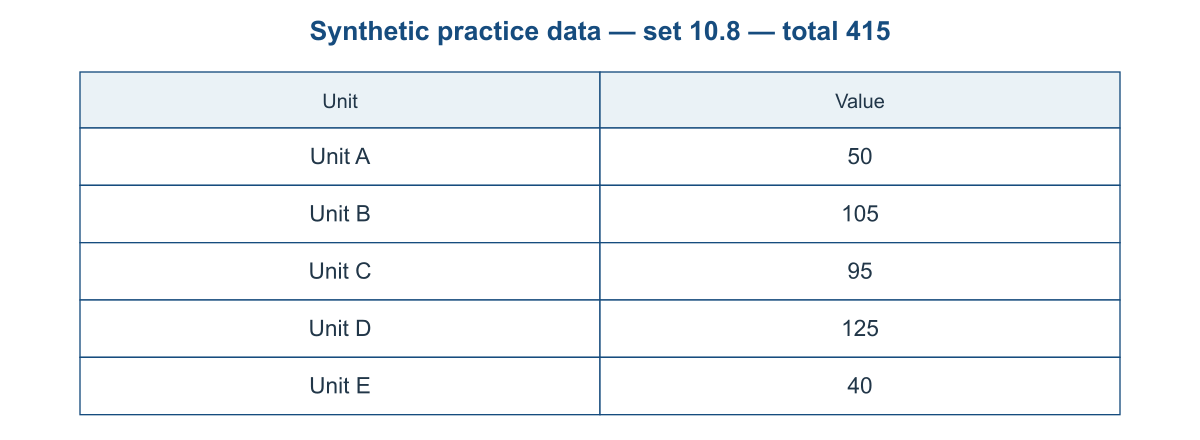
A. 375 B. 380 C. 385 D. 370
9. What is the range of the five values?
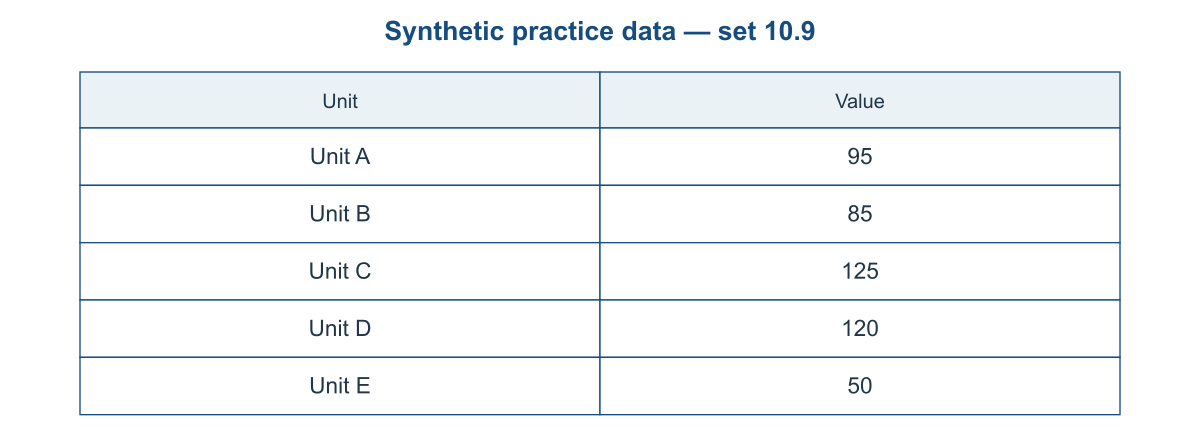
A. 70 B. 85 C. 80 D. 75
10. What is the combined value of Unit D and Unit E?
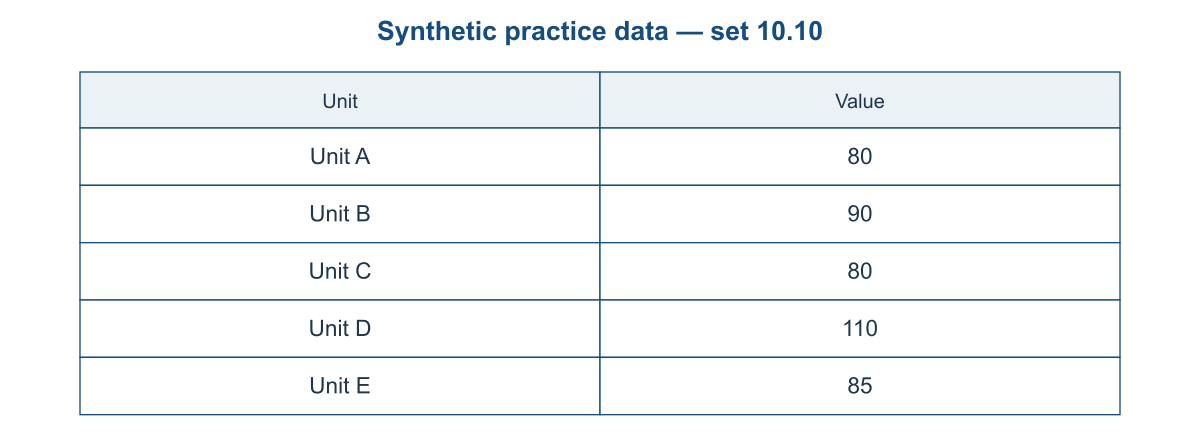
A. 195 B. 200 C. 190 D. 205
11. The chart hides Unit C. What is its value from the stated total?
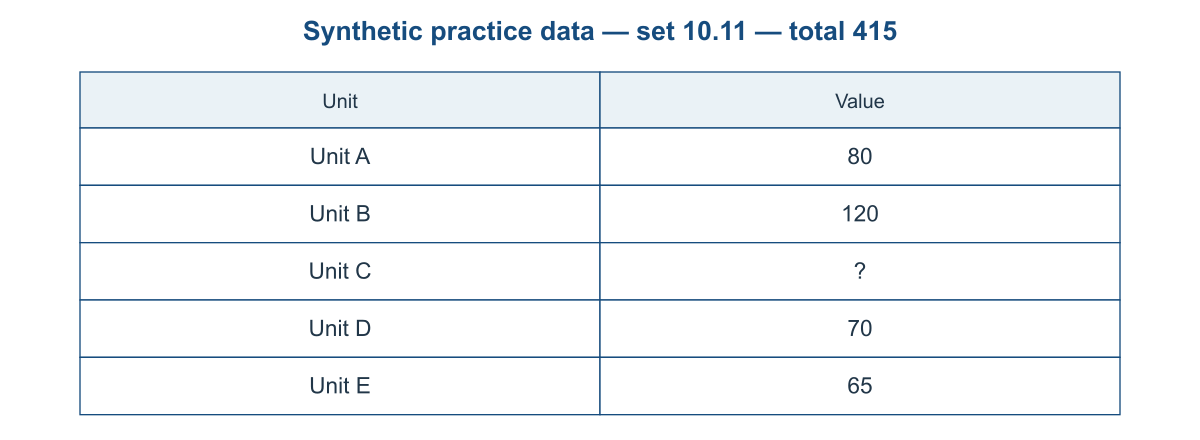
A. 90 B. 80 C. 85 D. 75
12. What is the absolute difference between Unit A and Unit B?
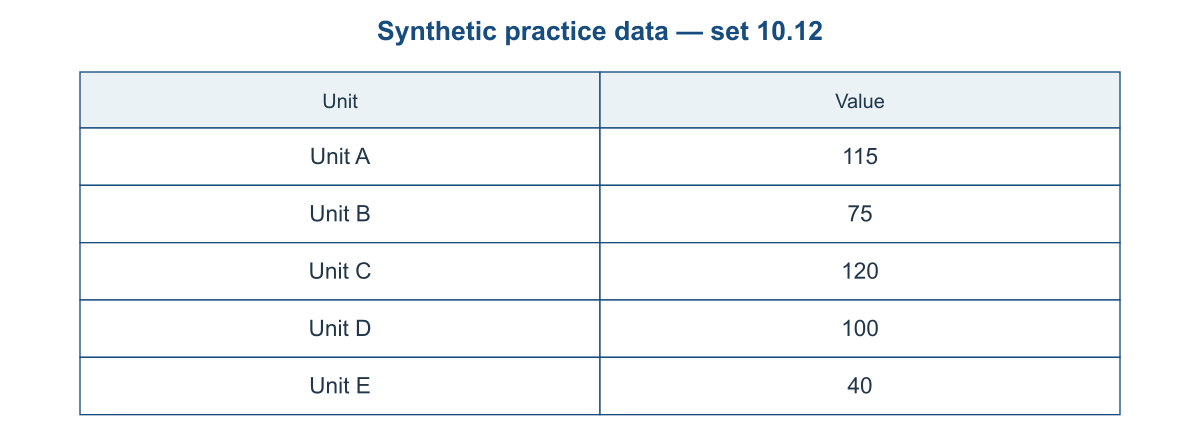
A. 45 B. 35 C. 40 D. 50
13. What is the total excluding Unit E?
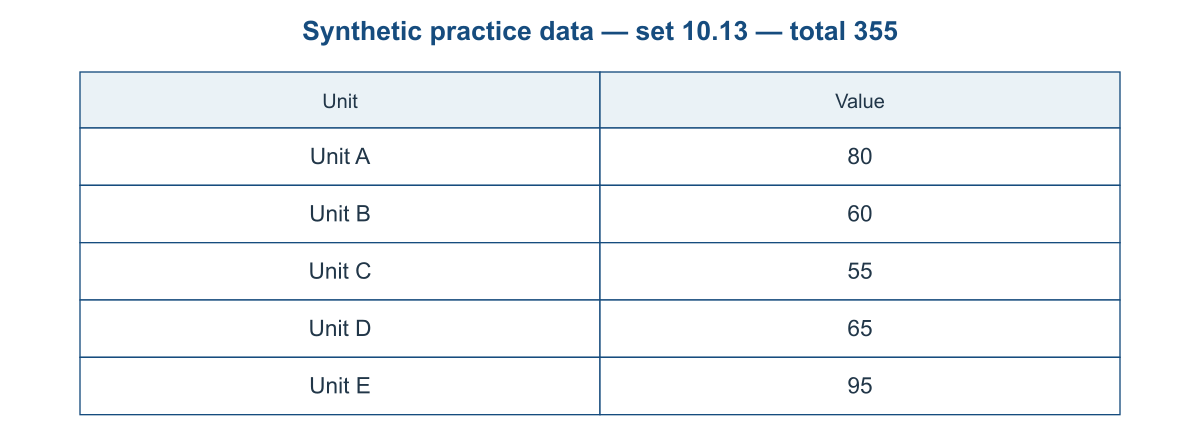
A. 260 B. 265 C. 270 D. 255
14. What is the range of the five values?
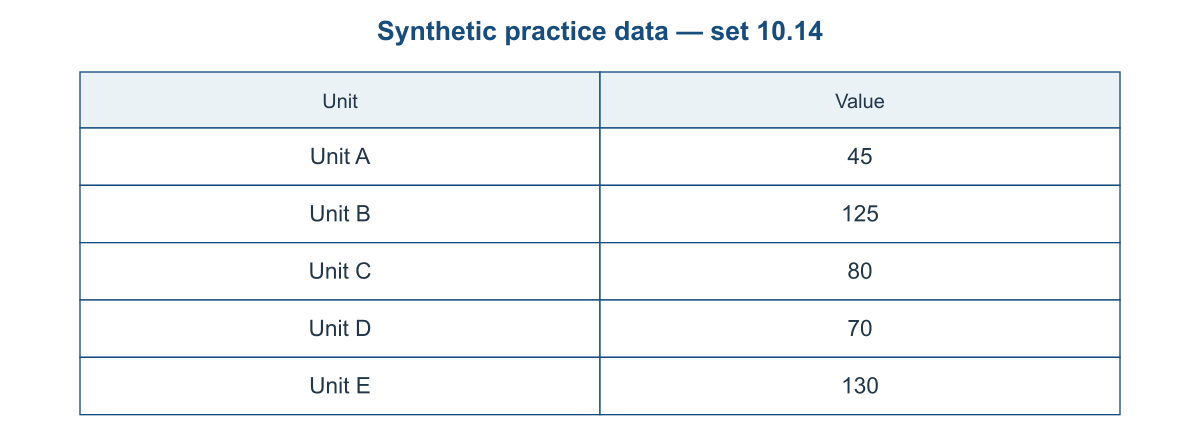
A. 90 B. 95 C. 80 D. 85
15. What is the combined value of Unit D and Unit E?
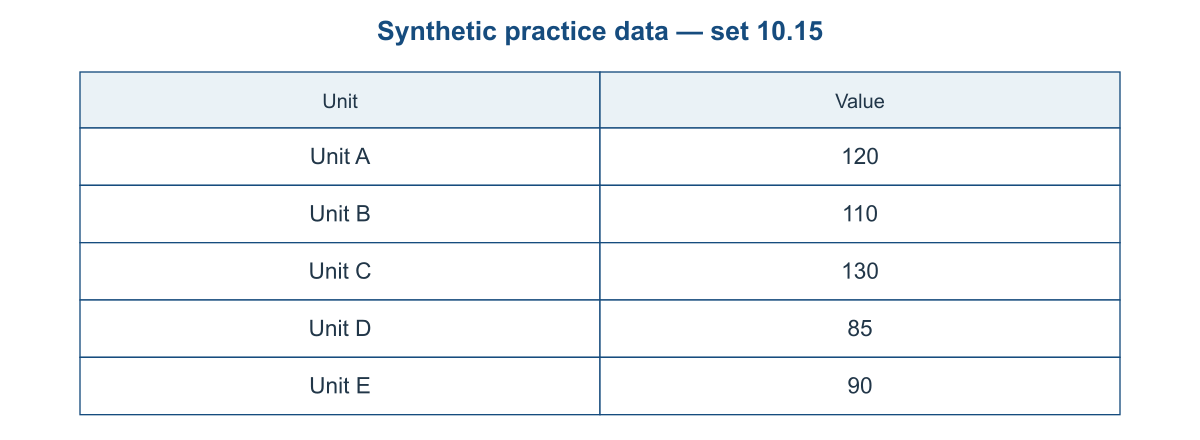
A. 170 B. 185 C. 180 D. 175
16. The chart hides Unit C. What is its value from the stated total?
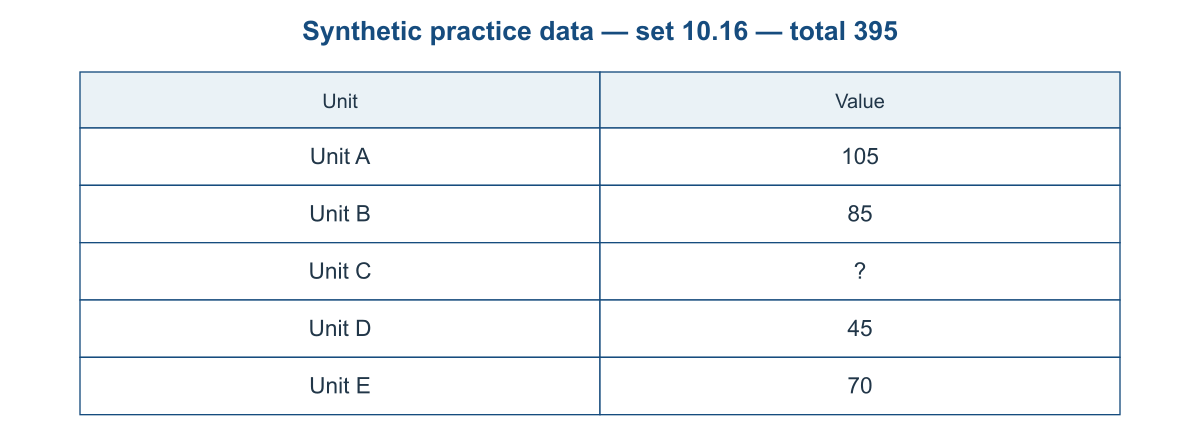
A. 100 B. 90 C. 85 D. 95
17. What is the absolute difference between Unit A and Unit B?
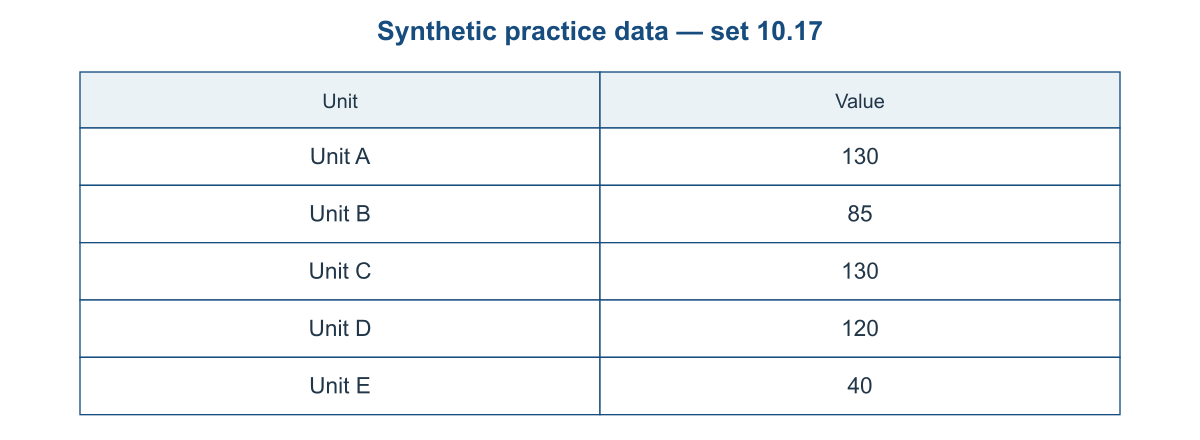
A. 40 B. 50 C. 45 D. 55
18. What is the total excluding Unit E?
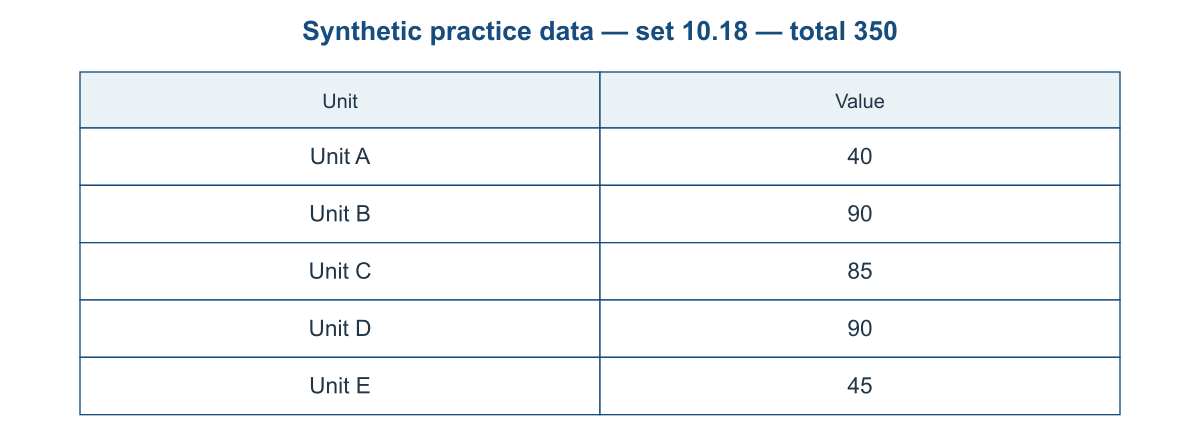
A. 315 B. 310 C. 300 D. 305
19. What is the range of the five values?
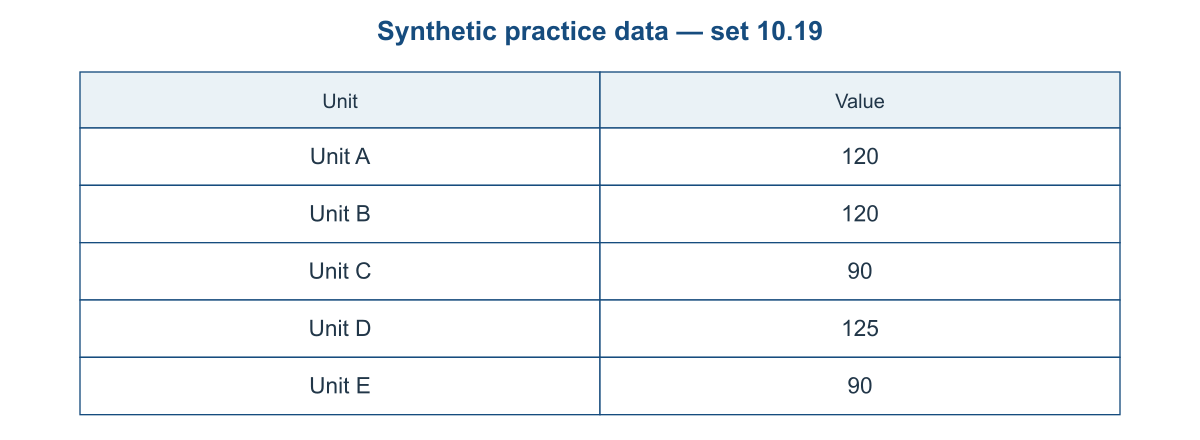
A. 45 B. 40 C. 35 D. 30
20. What is the combined value of Unit D and Unit E?
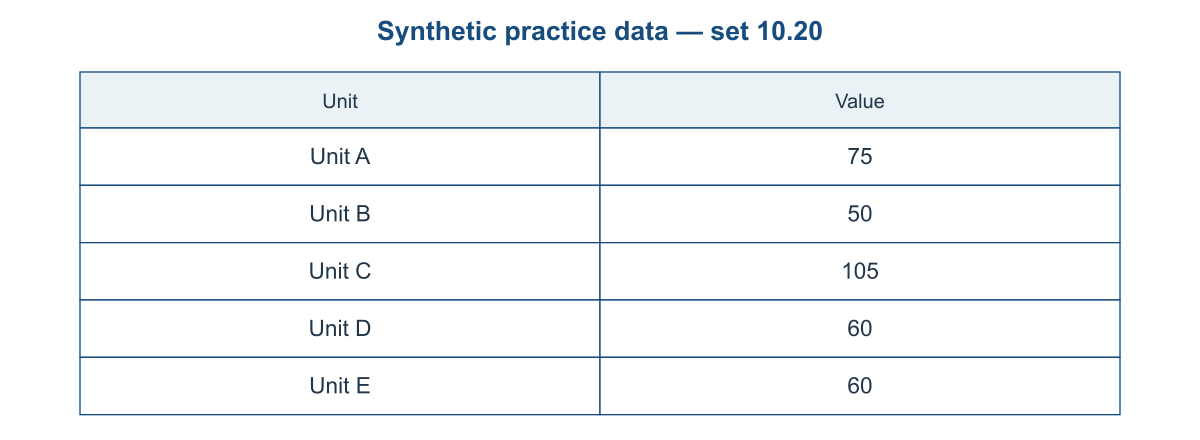
A. 130 B. 115 C. 125 D. 120
21. The chart hides Unit C. What is its value from the stated total?
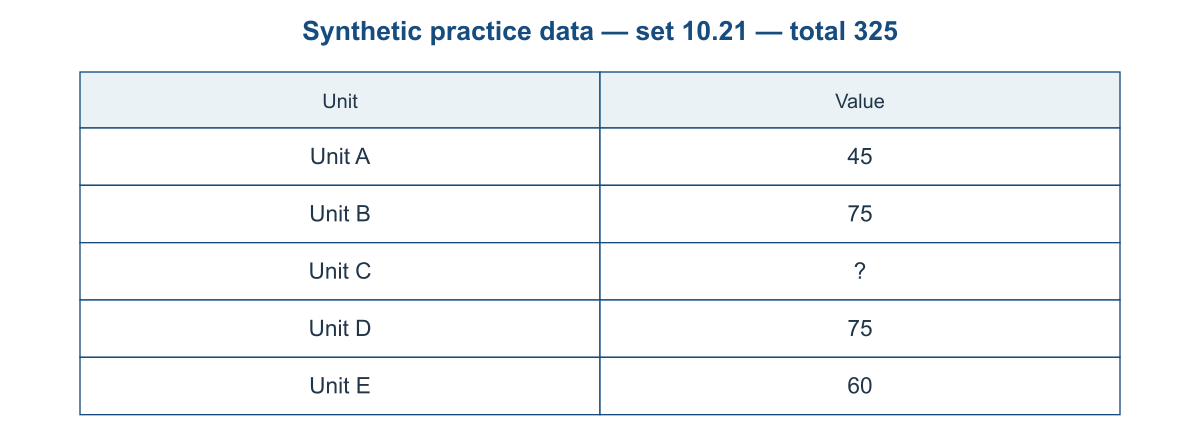
A. 65 B. 75 C. 70 D. 80
22. What is the absolute difference between Unit A and Unit B?
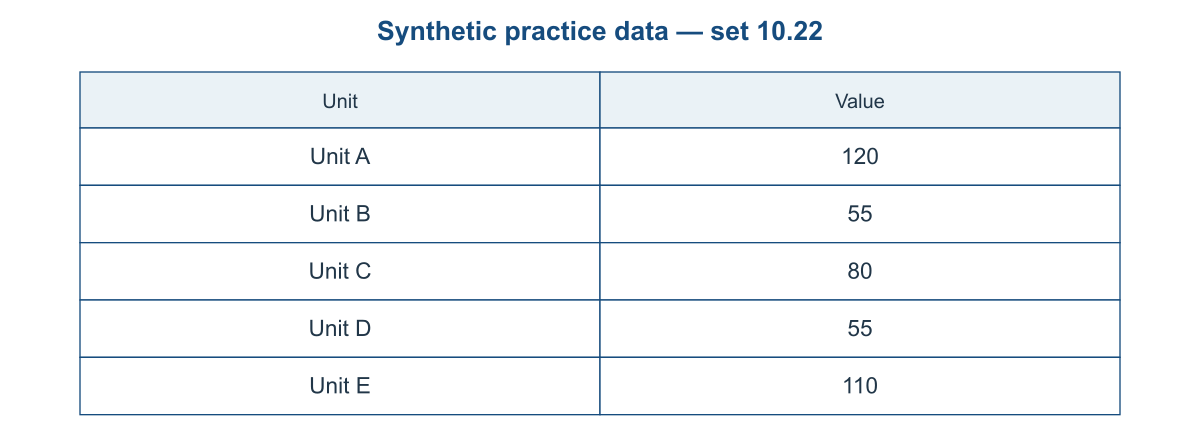
A. 75 B. 65 C. 70 D. 60
23. What is the total excluding Unit E?
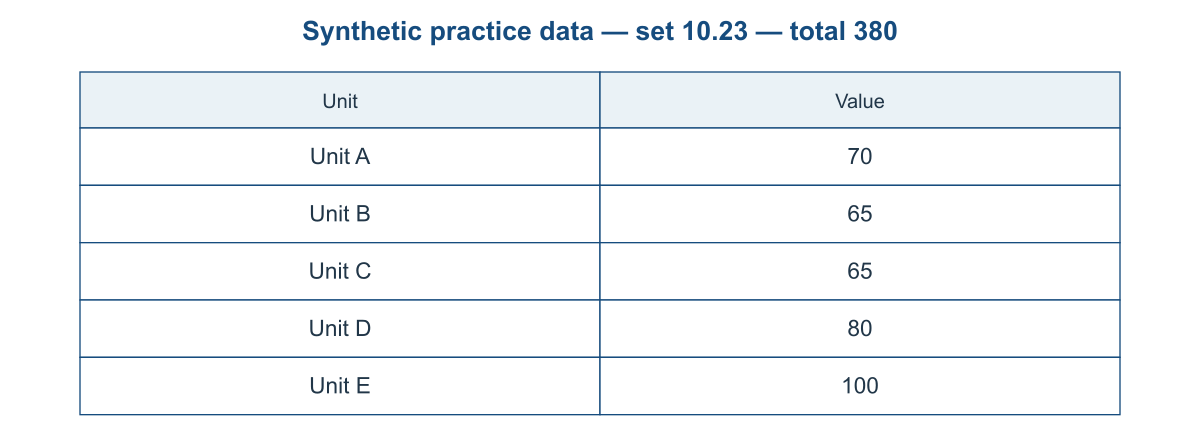
A. 290 B. 275 C. 285 D. 280
24. What is the range of the five values?
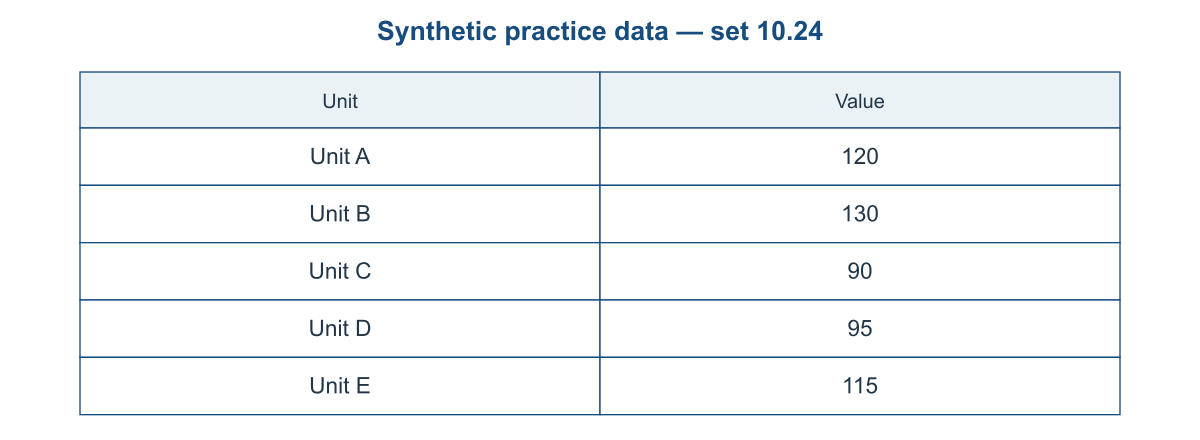
A. 45 B. 40 C. 35 D. 50
25. What is the combined value of Unit D and Unit E?
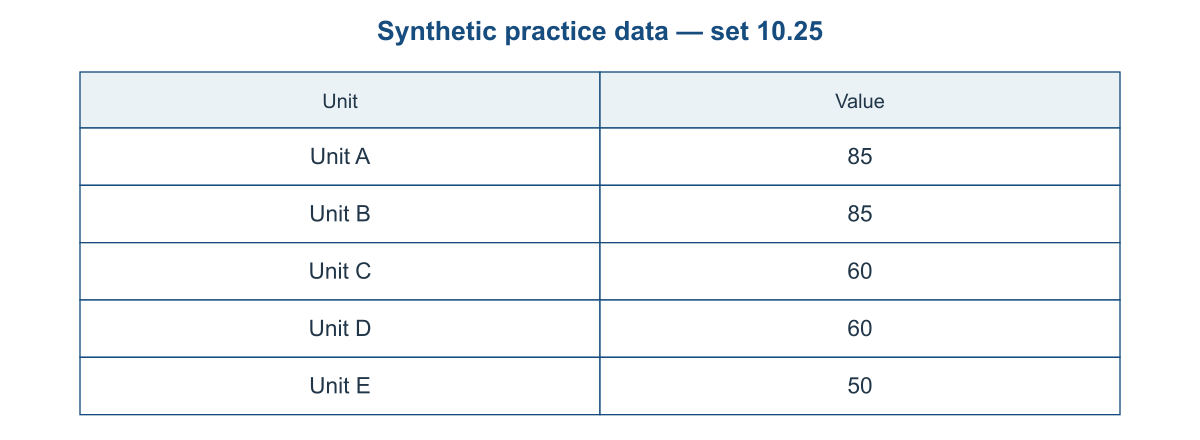
A. 120 B. 115 C. 110 D. 105
26. The chart hides Unit C. What is its value from the stated total?
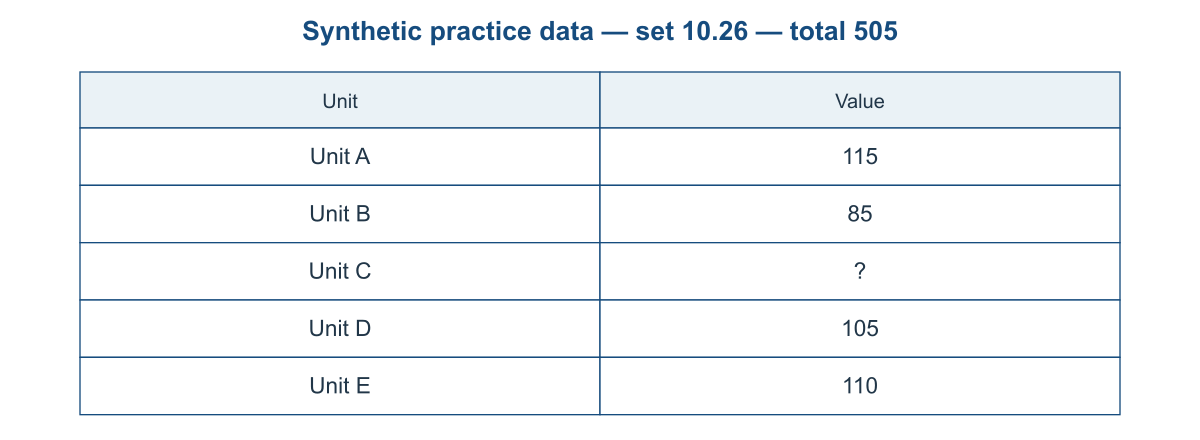
A. 85 B. 90 C. 100 D. 95
27. What is the absolute difference between Unit A and Unit B?
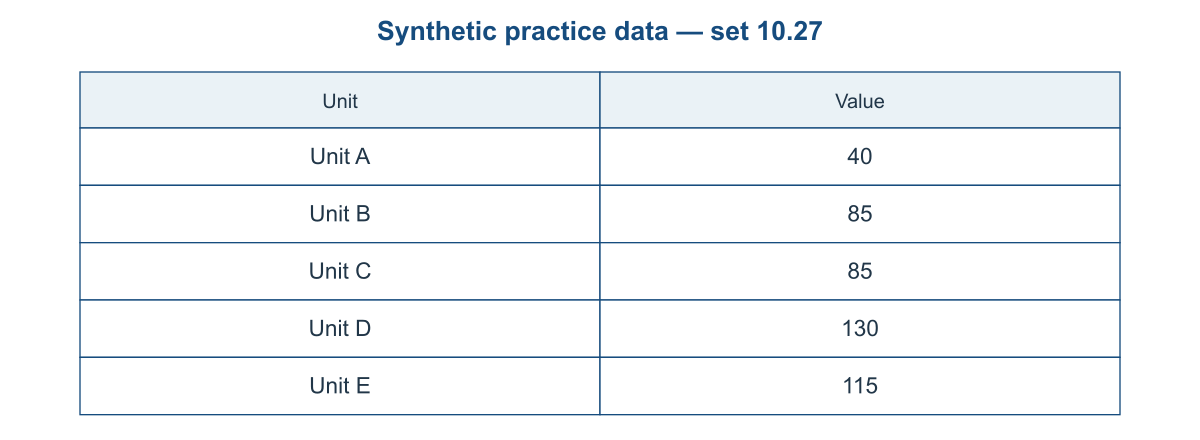
A. 45 B. 55 C. 40 D. 50
28. What is the total excluding Unit E?
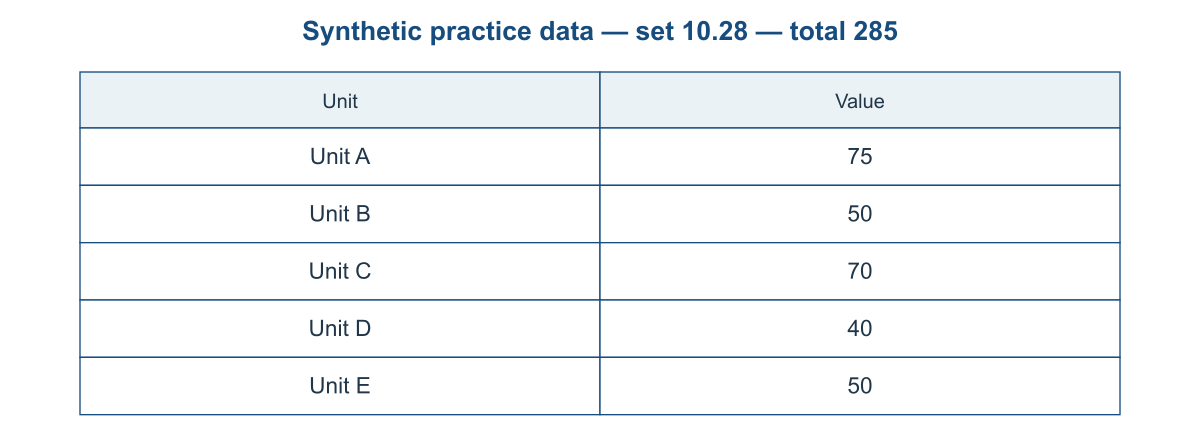
A. 235 B. 230 C. 240 D. 245
29. What is the range of the five values?
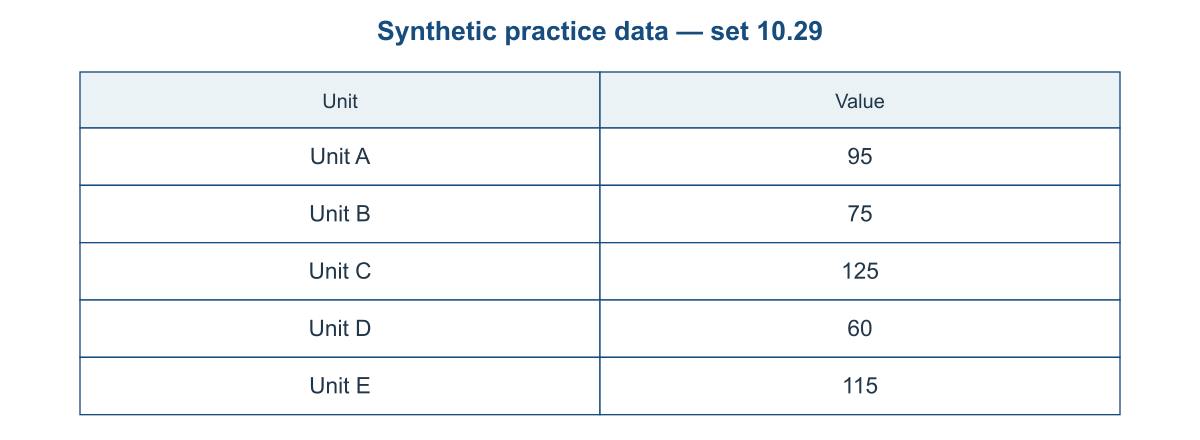
A. 70 B. 65 C. 75 D. 60
30. What is the combined value of Unit D and Unit E?
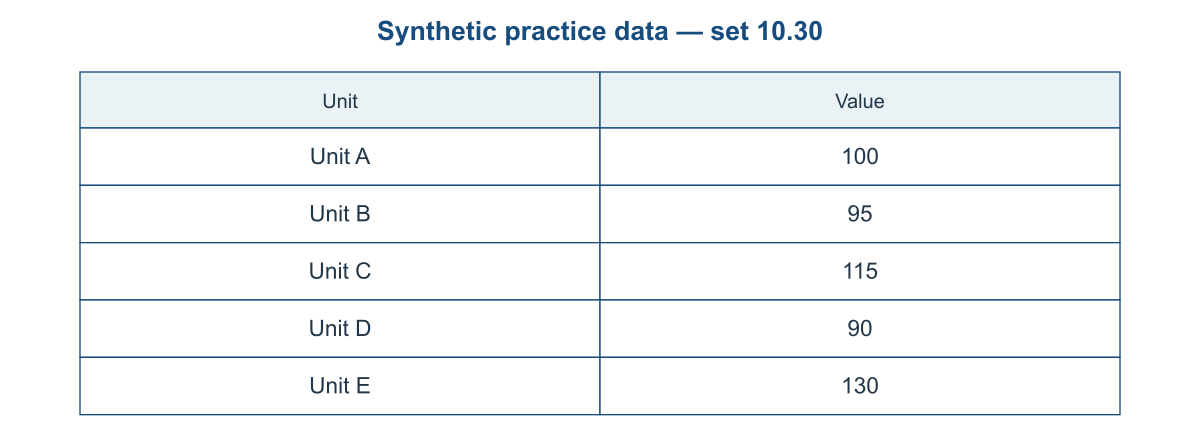
A. 220 B. 215 C. 225 D. 230
31. The chart hides Unit C. What is its value from the stated total?
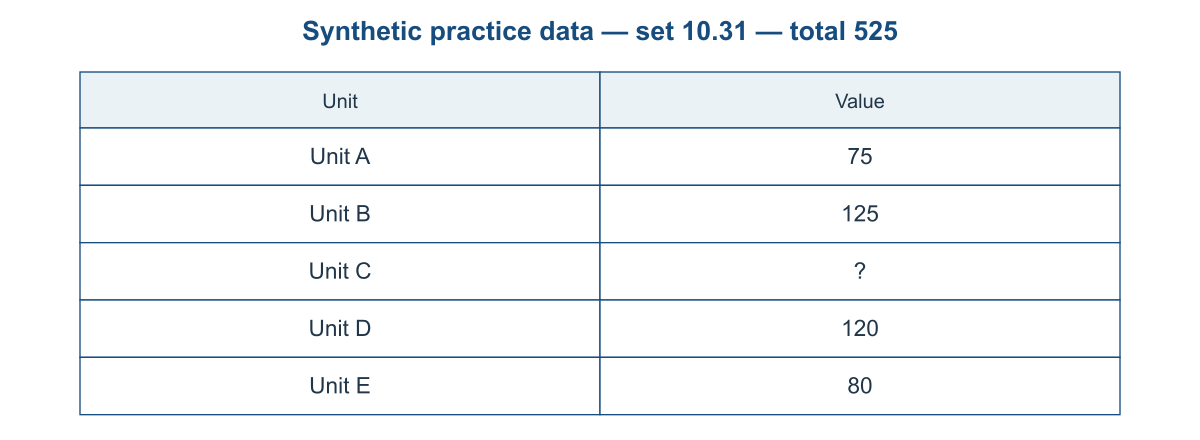
A. 120 B. 135 C. 125 D. 130
32. What is the absolute difference between Unit A and Unit B?
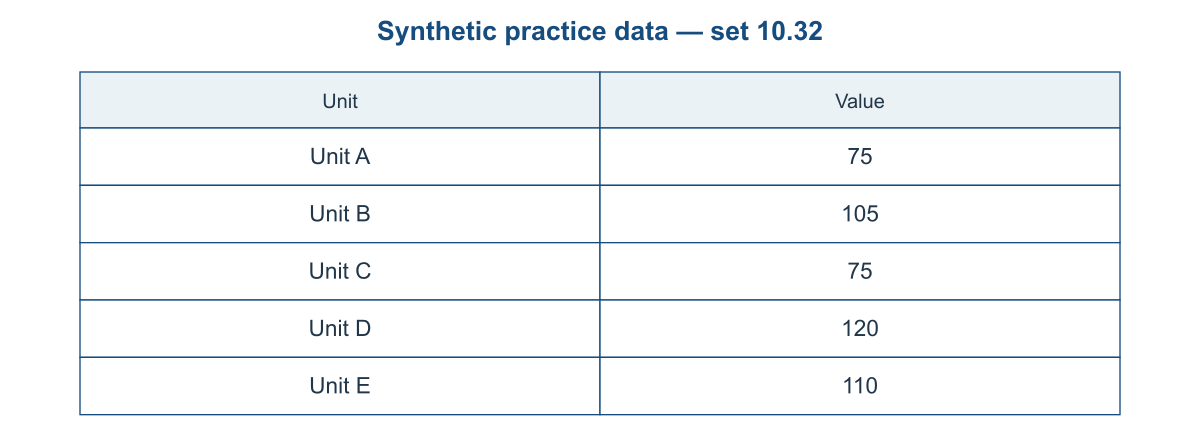
A. 30 B. 35 C. 40 D. 25
33. What is the total excluding Unit E?
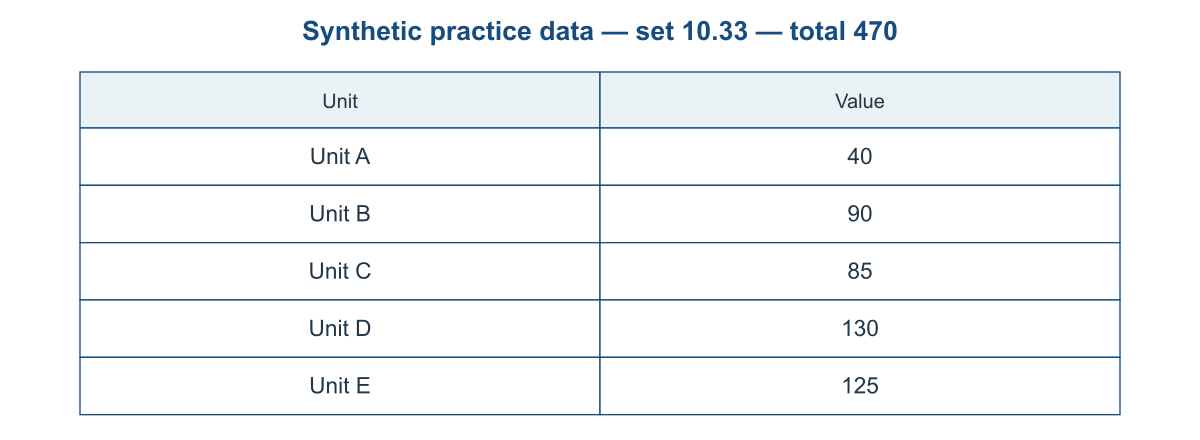
A. 340 B. 345 C. 350 D. 355
34. What is the range of the five values?
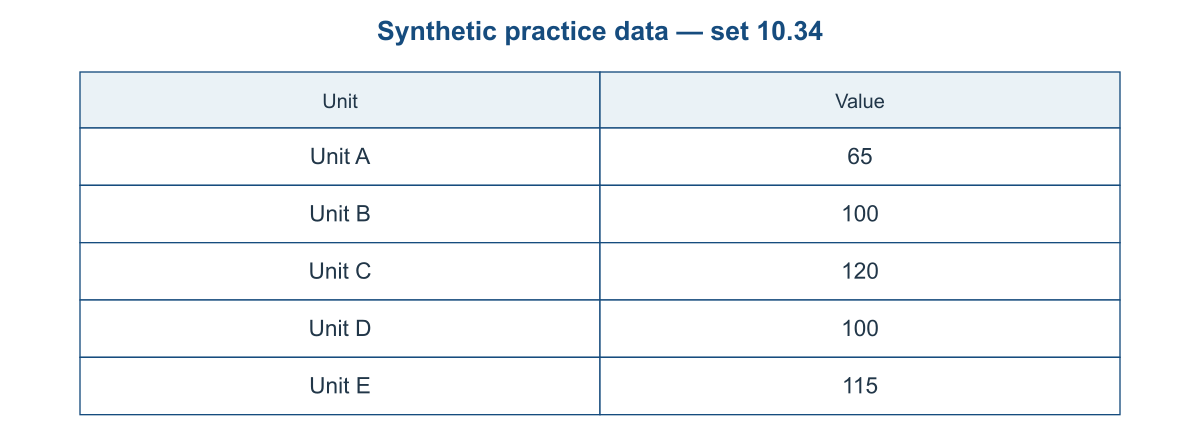
A. 55 B. 50 C. 65 D. 60
35. What is the combined value of Unit D and Unit E?
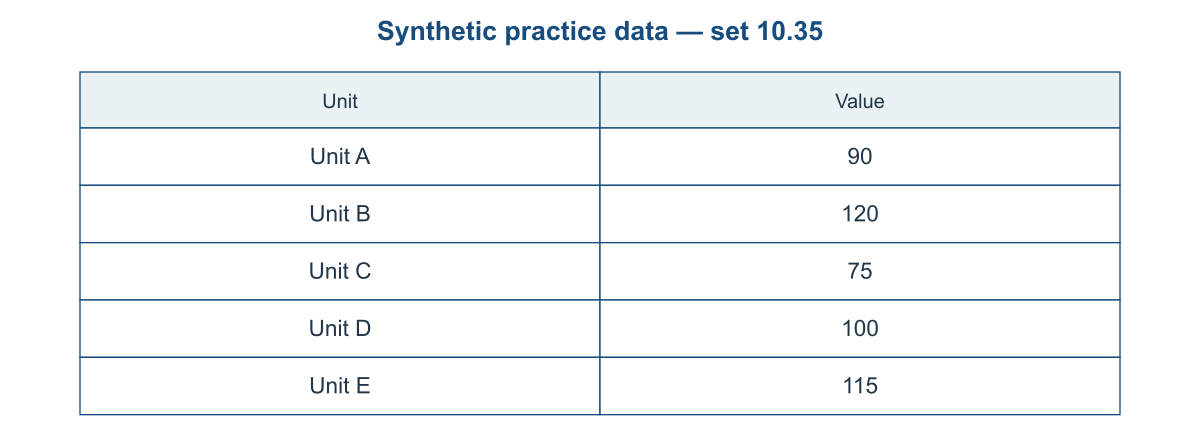
A. 220 B. 225 C. 210 D. 215
36. The chart hides Unit C. What is its value from the stated total?
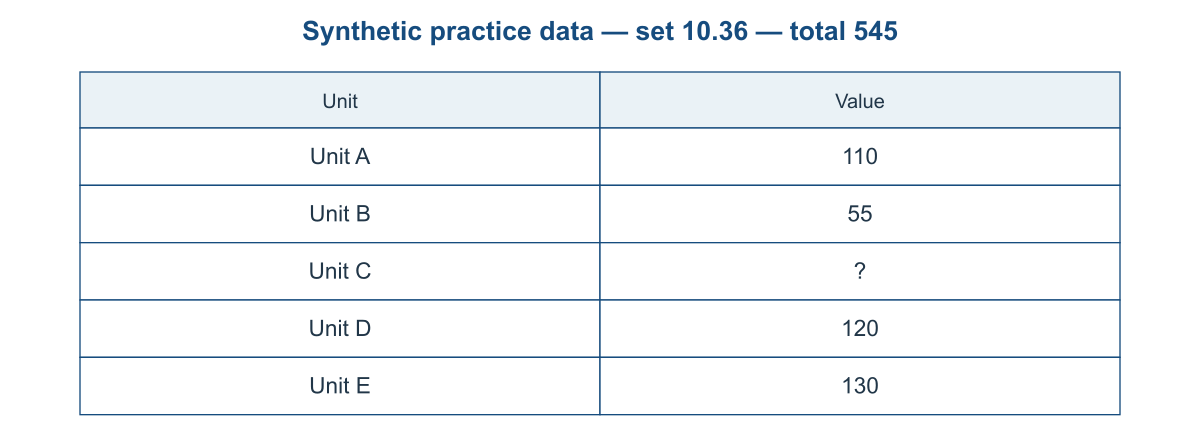
A. 140 B. 135 C. 130 D. 125
37. What is the absolute difference between Unit A and Unit B?
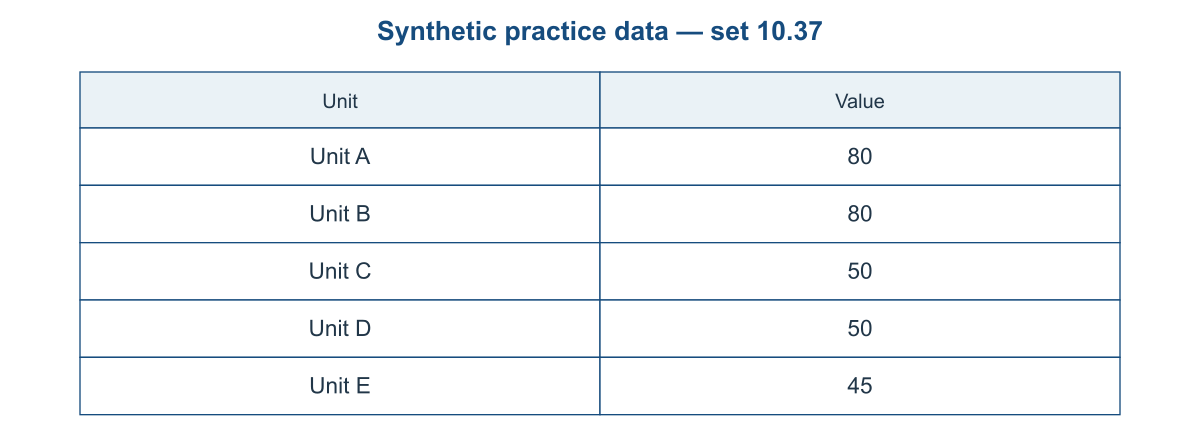
A. 0 B. 5 C. 20 D. 10
38. What is the total excluding Unit E?
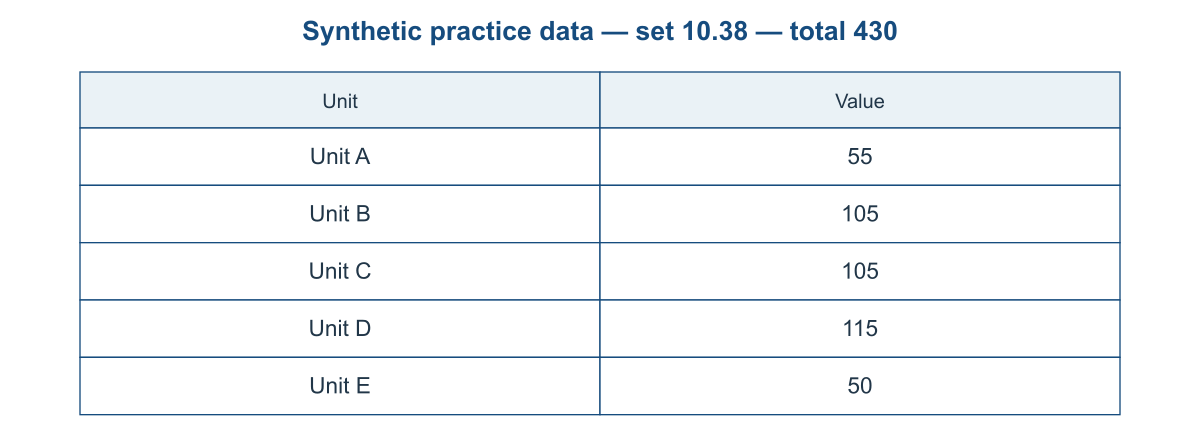
A. 375 B. 380 C. 385 D. 390
39. What is the range of the five values?
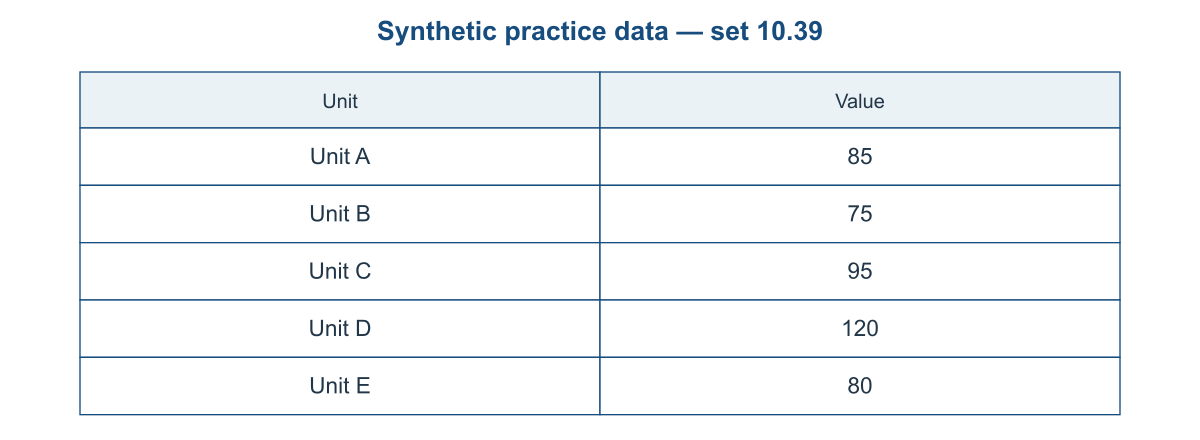
A. 40 B. 55 C. 50 D. 45
40. What is the combined value of Unit D and Unit E?
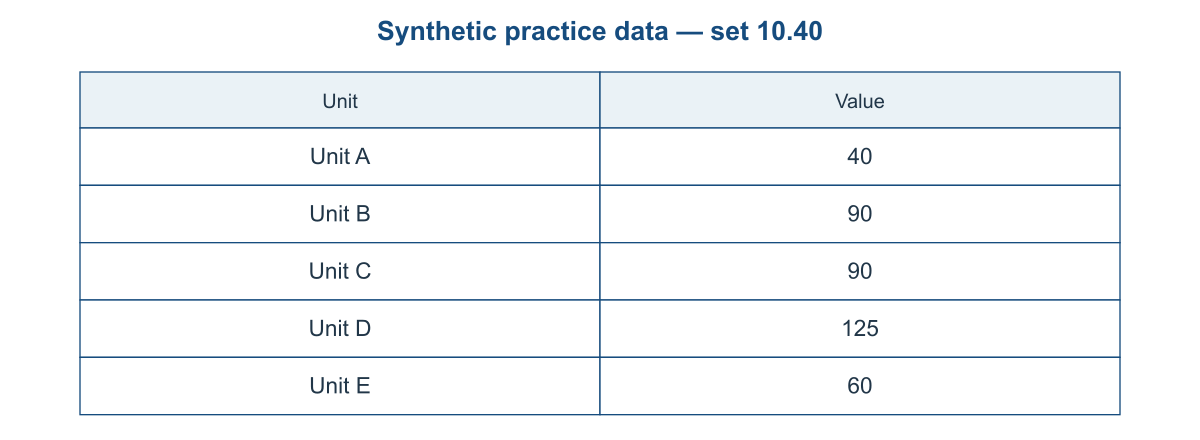
A. 195 B. 180 C. 185 D. 190
41. The chart hides Unit C. What is its value from the stated total?
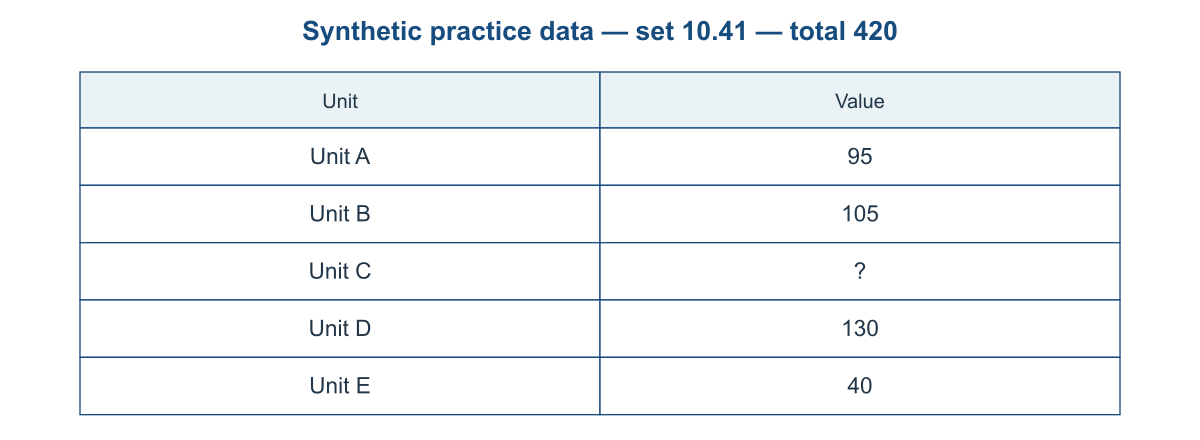
A. 55 B. 45 C. 60 D. 50
42. What is the absolute difference between Unit A and Unit B?
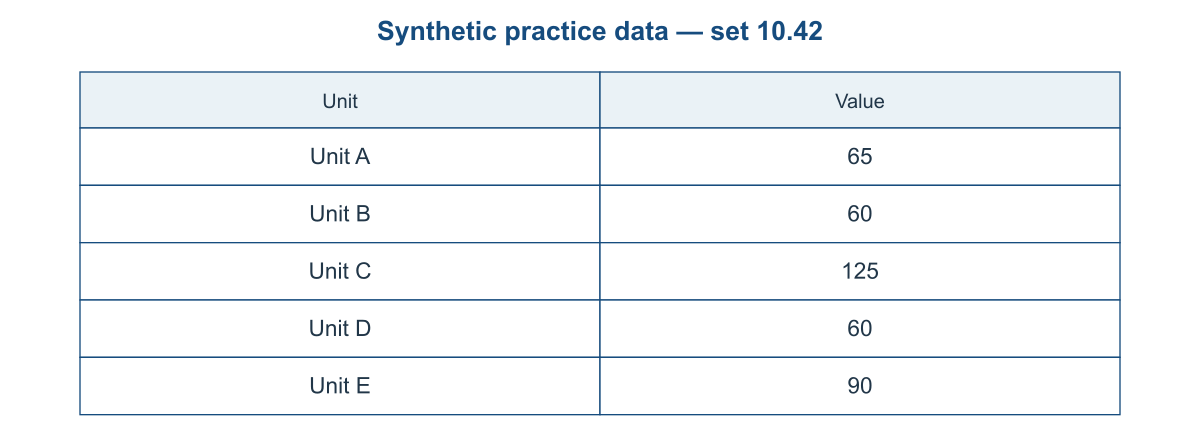
A. 5 B. 15 C. 10 D. 0
43. What is the total excluding Unit E?
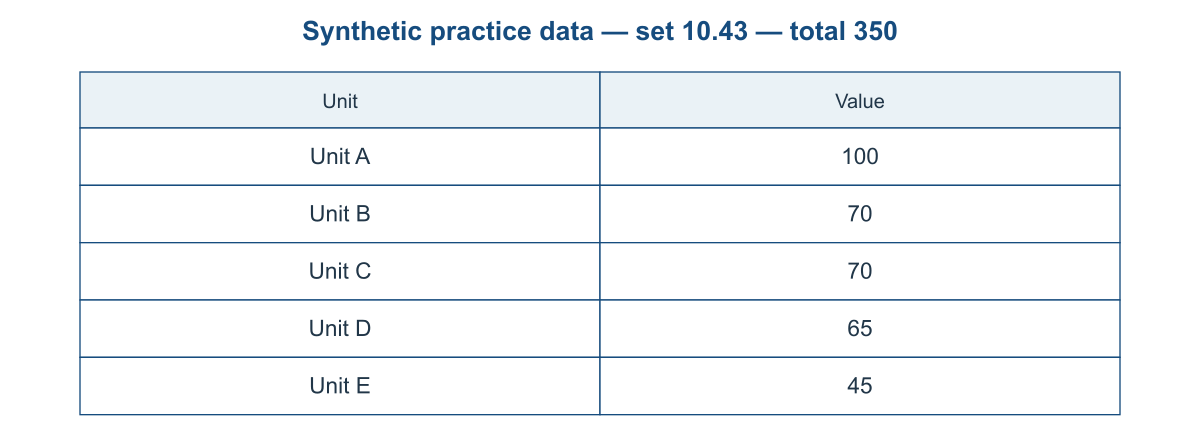
A. 305 B. 310 C. 300 D. 315
44. What is the range of the five values?
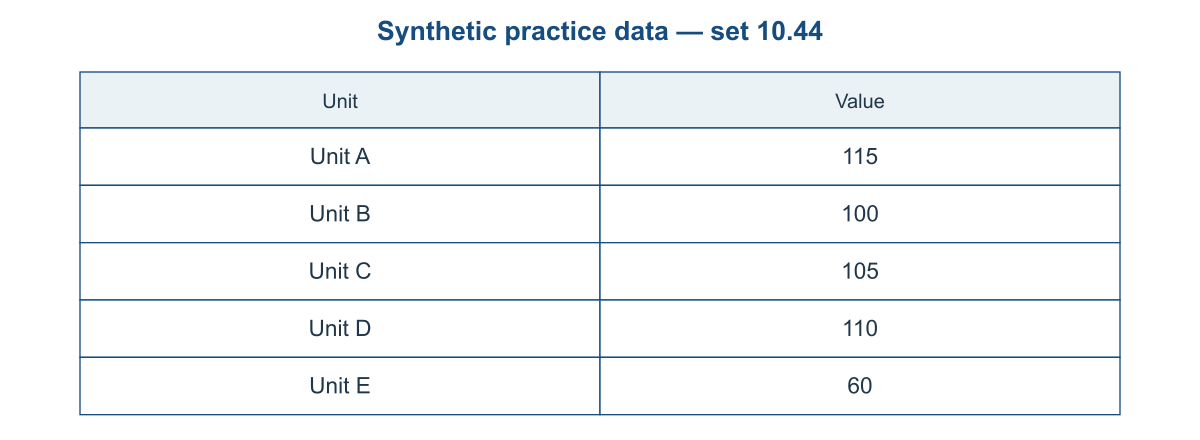
A. 60 B. 55 C. 50 D. 65
45. What is the combined value of Unit D and Unit E?
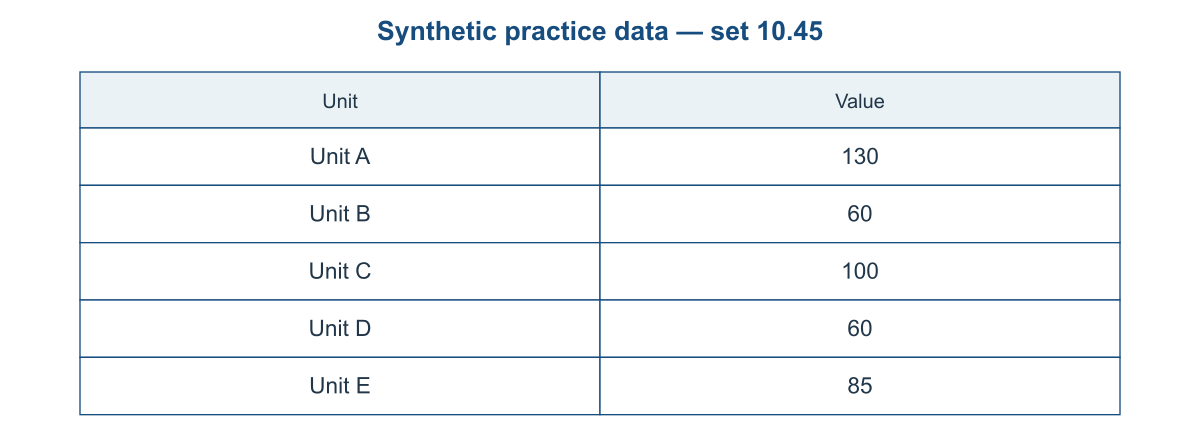
A. 145 B. 140 C. 150 D. 155
46. The chart hides Unit C. What is its value from the stated total?
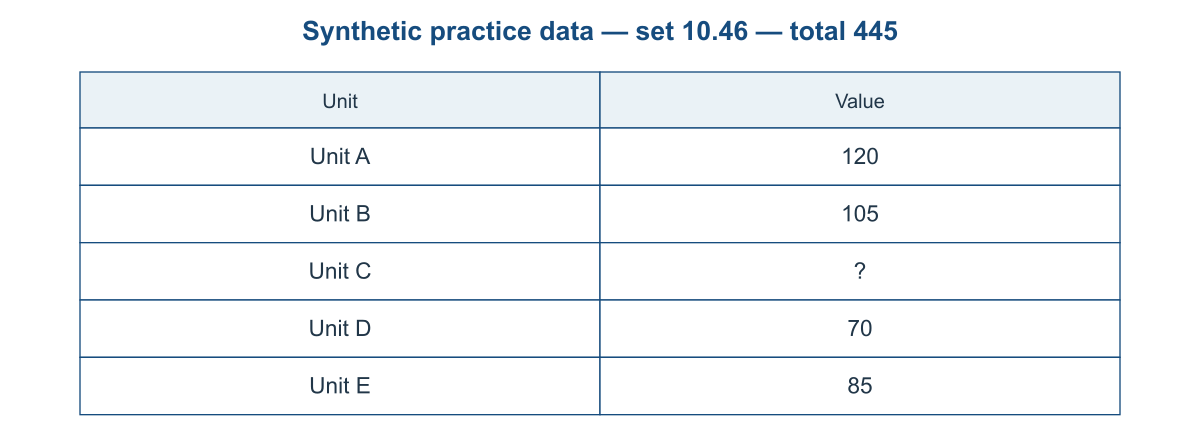
A. 65 B. 75 C. 60 D. 70
47. What is the absolute difference between Unit A and Unit B?
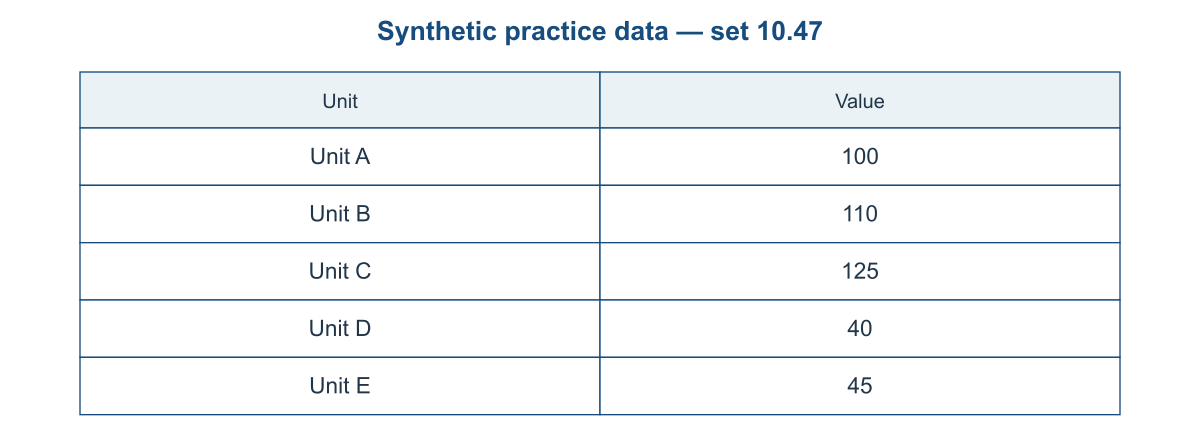
A. 15 B. 10 C. 5 D. 20
48. What is the total excluding Unit E?
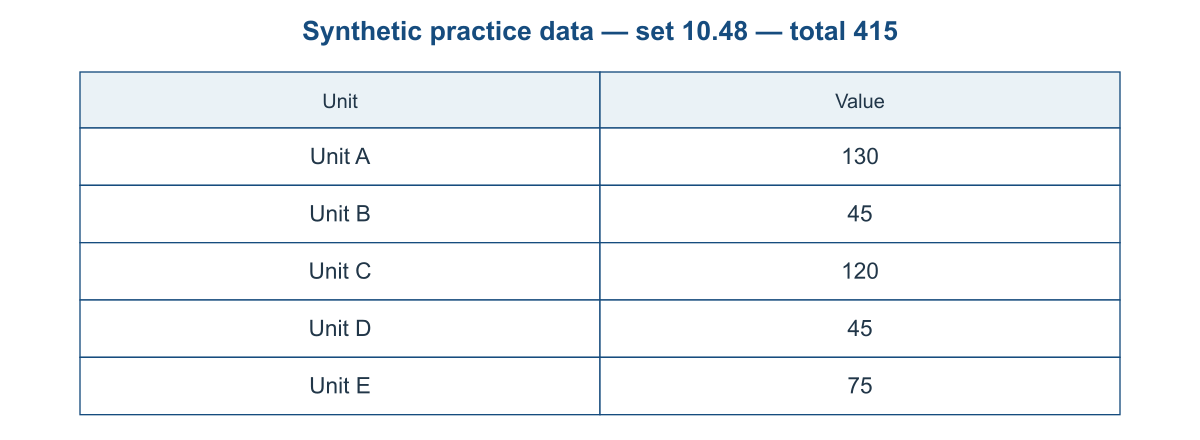
A. 340 B. 345 C. 350 D. 335
49. What is the range of the five values?
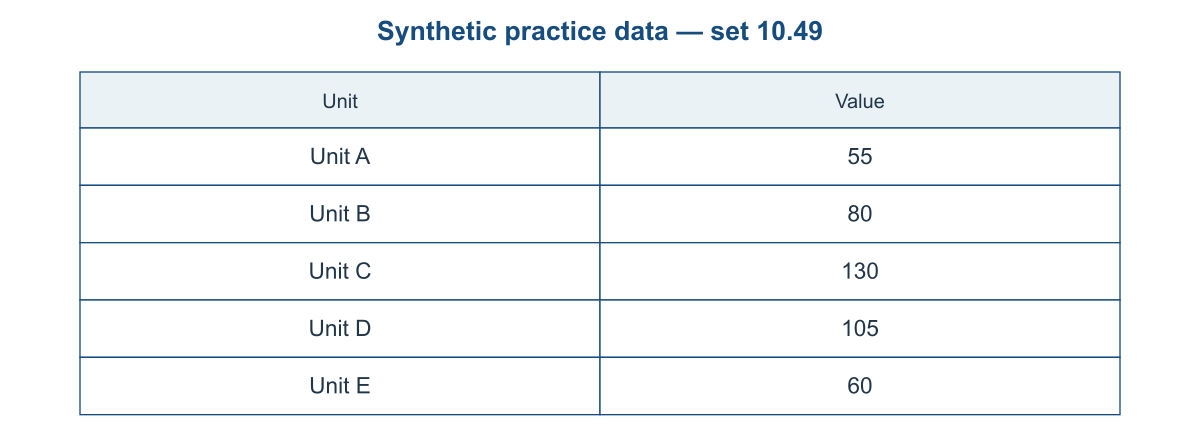
A. 80 B. 85 C. 75 D. 70
50. What is the combined value of Unit D and Unit E?
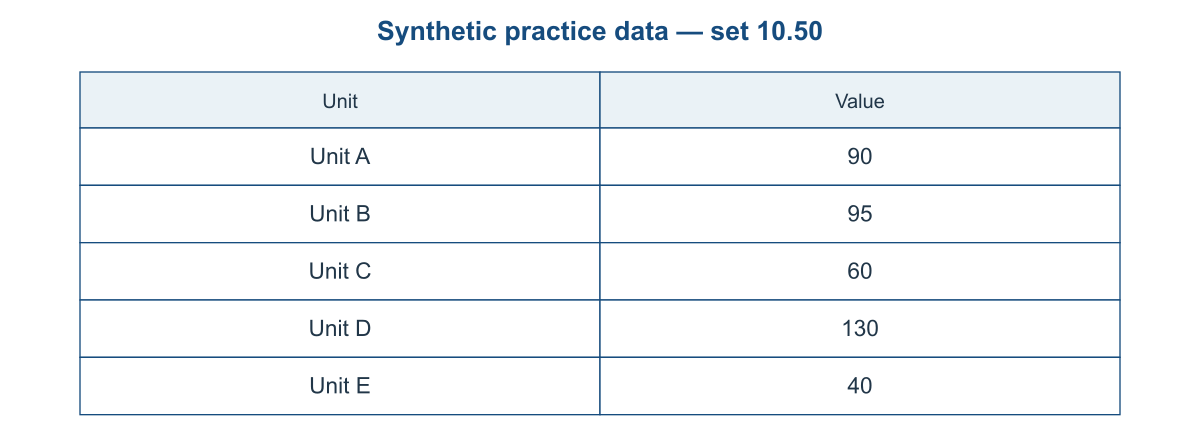
A. 180 B. 175 C. 165 D. 170
Answers and explanations
Check the value and the unit before comparing your working with the calculation.
1. B. Subtract the four visible values from the total 370: 370−(75+45+85+45)=120.
APDI26-10-01 | missing-di | Easy
2. B. Compare 125 and 60; difference 65.
APDI26-10-02 | missing-di | Easy
3. B. Overall total 405 minus Unit E 120 = 285.
APDI26-10-03 | missing-di | Easy
4. D. Maximum 95 minus minimum 70 = 25.
APDI26-10-04 | missing-di | Easy
5. D. Unit D=70, E=100; sum 170.
APDI26-10-05 | missing-di | Easy
6. C. Subtract the four visible values from the total 435: 435−(40+115+45+120)=115.
APDI26-10-06 | missing-di | Easy
7. C. Compare 125 and 90; difference 35.
APDI26-10-07 | missing-di | Easy
8. A. Overall total 415 minus Unit E 40 = 375.
APDI26-10-08 | missing-di | Easy
9. D. Maximum 125 minus minimum 50 = 75.
APDI26-10-09 | missing-di | Medium
10. A. Unit D=110, E=85; sum 195.
APDI26-10-10 | missing-di | Medium
11. B. Subtract the four visible values from the total 415: 415−(80+120+70+65)=80.
APDI26-10-11 | missing-di | Medium
12. C. Compare 115 and 75; difference 40.
APDI26-10-12 | missing-di | Medium
13. A. Overall total 355 minus Unit E 95 = 260.
APDI26-10-13 | missing-di | Medium
14. D. Maximum 130 minus minimum 45 = 85.
APDI26-10-14 | missing-di | Medium
15. D. Unit D=85, E=90; sum 175.
APDI26-10-15 | missing-di | Medium
16. B. Subtract the four visible values from the total 395: 395−(105+85+45+70)=90.
APDI26-10-16 | missing-di | Medium
17. C. Compare 130 and 85; difference 45.
APDI26-10-17 | missing-di | Medium
18. D. Overall total 350 minus Unit E 45 = 305.
APDI26-10-18 | missing-di | Medium
19. C. Maximum 125 minus minimum 90 = 35.
APDI26-10-19 | missing-di | Medium
20. D. Unit D=60, E=60; sum 120.
APDI26-10-20 | missing-di | Medium
21. C. Subtract the four visible values from the total 325: 325−(45+75+75+60)=70.
APDI26-10-21 | missing-di | Medium
22. B. Compare 120 and 55; difference 65.
APDI26-10-22 | missing-di | Difficult
23. D. Overall total 380 minus Unit E 100 = 280.
APDI26-10-23 | missing-di | Difficult
24. B. Maximum 130 minus minimum 90 = 40.
APDI26-10-24 | missing-di | Difficult
25. C. Unit D=60, E=50; sum 110.
APDI26-10-25 | missing-di | Difficult
26. B. Subtract the four visible values from the total 505: 505−(115+85+105+110)=90.
APDI26-10-26 | data-comparison | Easy
27. A. Compare 40 and 85; difference 45.
APDI26-10-27 | data-comparison | Easy
28. A. Overall total 285 minus Unit E 50 = 235.
APDI26-10-28 | data-comparison | Easy
29. B. Maximum 125 minus minimum 60 = 65.
APDI26-10-29 | data-comparison | Easy
30. A. Unit D=90, E=130; sum 220.
APDI26-10-30 | data-comparison | Easy
31. C. Subtract the four visible values from the total 525: 525−(75+125+120+80)=125.
APDI26-10-31 | data-comparison | Easy
32. A. Compare 75 and 105; difference 30.
APDI26-10-32 | data-comparison | Easy
33. B. Overall total 470 minus Unit E 125 = 345.
APDI26-10-33 | data-comparison | Easy
34. A. Maximum 120 minus minimum 65 = 55.
APDI26-10-34 | data-comparison | Medium
35. D. Unit D=100, E=115; sum 215.
APDI26-10-35 | data-comparison | Medium
36. C. Subtract the four visible values from the total 545: 545−(110+55+120+130)=130.
APDI26-10-36 | data-comparison | Medium
37. A. Compare 80 and 80; difference 0.
APDI26-10-37 | data-comparison | Medium
38. B. Overall total 430 minus Unit E 50 = 380.
APDI26-10-38 | data-comparison | Medium
39. D. Maximum 120 minus minimum 75 = 45.
APDI26-10-39 | data-comparison | Medium
40. C. Unit D=125, E=60; sum 185.
APDI26-10-40 | data-comparison | Medium
41. D. Subtract the four visible values from the total 420: 420−(95+105+130+40)=50.
APDI26-10-41 | data-comparison | Medium
42. A. Compare 65 and 60; difference 5.
APDI26-10-42 | data-comparison | Medium
43. A. Overall total 350 minus Unit E 45 = 305.
APDI26-10-43 | data-comparison | Medium
44. B. Maximum 115 minus minimum 60 = 55.
APDI26-10-44 | data-comparison | Medium
45. A. Unit D=60, E=85; sum 145.
APDI26-10-45 | data-comparison | Medium
46. A. Subtract the four visible values from the total 445: 445−(120+105+70+85)=65.
APDI26-10-46 | data-comparison | Medium
47. B. Compare 100 and 110; difference 10.
APDI26-10-47 | data-comparison | Difficult
48. A. Overall total 415 minus Unit E 75 = 340.
APDI26-10-48 | data-comparison | Difficult
49. C. Maximum 130 minus minimum 55 = 75.
APDI26-10-49 | data-comparison | Difficult
50. D. Unit D=130, E=40; sum 170.
APDI26-10-50 | data-comparison | Difficult