Track independent features
A figure series may change position, rotation, reflection, shade, count or shape. Separate these features: write R for rotation, S for shade, N for number and P for position if the sequence is complex. If a triangle turns 90 degrees each step while a dot alternates black and white, both rules must hold in the next figure. A distractor may get one rule right and one wrong.
Rotation versus reflection
Rotation preserves clockwise order of marked features; reflection reverses it. Draw an asymmetrical symbol or mark one corner to distinguish them. A 90-degree clockwise rotation sends the top point to the right; a mirror placed on the right swaps left and right but leaves top and bottom. After two 90-degree turns, the shape is rotated 180 degrees, not necessarily reflected. Symmetric shapes can hide the difference, so track an off-centre mark.
Matrices use row and column rules
In a 3×3 matrix, test whether the same operation takes the first cell to the second and third within each row, or the top to middle to bottom within each column. Common operations include addition or removal of one element, superposition, cancellation of matching marks, and alternation of fill. Do not assume a rule from the first row alone. The rule must also work in the second completed row and the relevant columns.
Decide systematically
Before viewing the four option figures, predict at least one necessary feature of the missing figure. Cross out candidates that fail it, then test remaining features. If two choices look equivalent, check a tiny asymmetry: direction of a notch, dot placement or clockwise order. In a timed paper, do not redraw the whole complex figure; annotate the changing feature. Review wrong answers by specifying exactly which transition you misread.
Practice — 50 questions
Attempt every item before reading the answers below. Figure questions require the printed or on-screen diagram.
1. A series of figures is shown, each formed from the previous one by applying the same rule. Which figure comes next in the series?
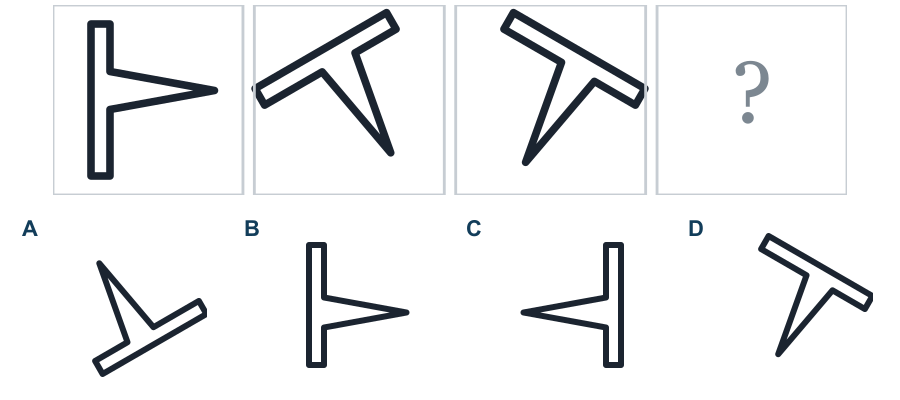
2. A series of figures is shown, each formed from the previous one by applying the same rule. Which figure comes next in the series?
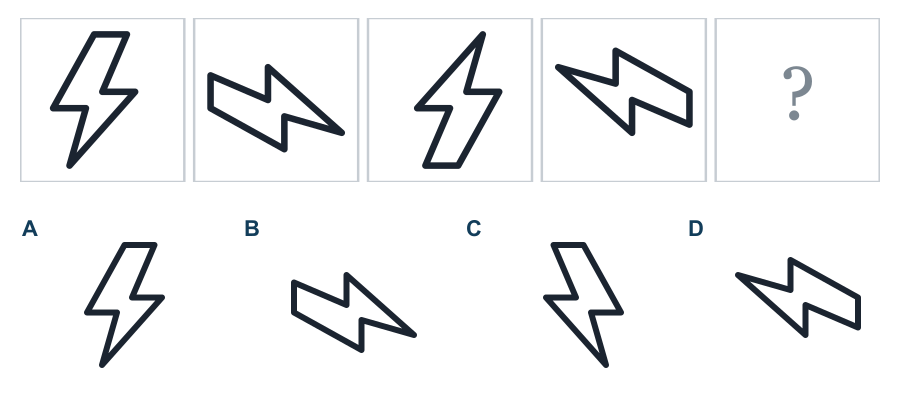
3. A series of figures is shown, each formed from the previous one by applying the same rule. Which figure comes next in the series?
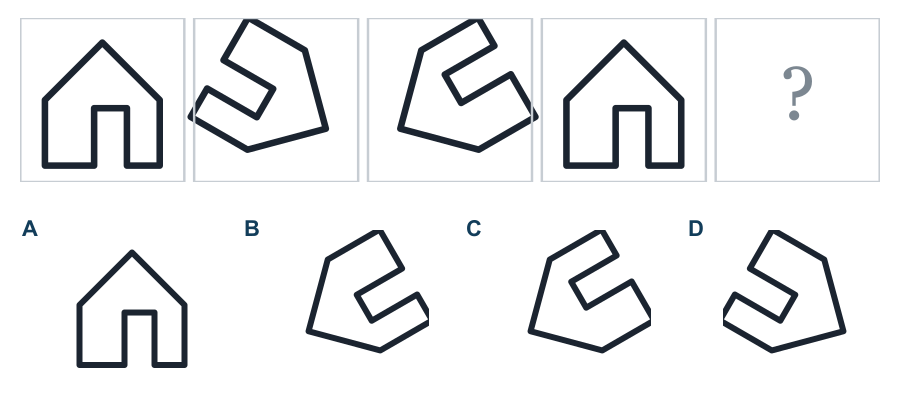
4. A series of figures is shown, each formed from the previous one by applying the same rule. Which figure comes next in the series?
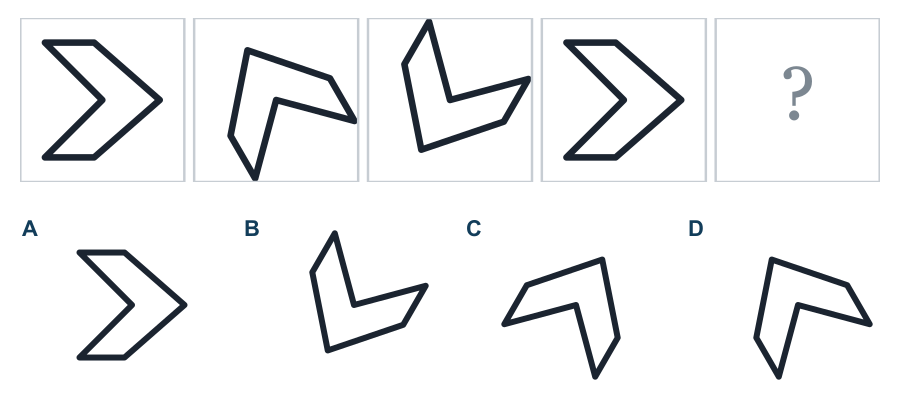
5. A series of figures is shown, each formed from the previous one by applying the same rule. Which figure comes next in the series?
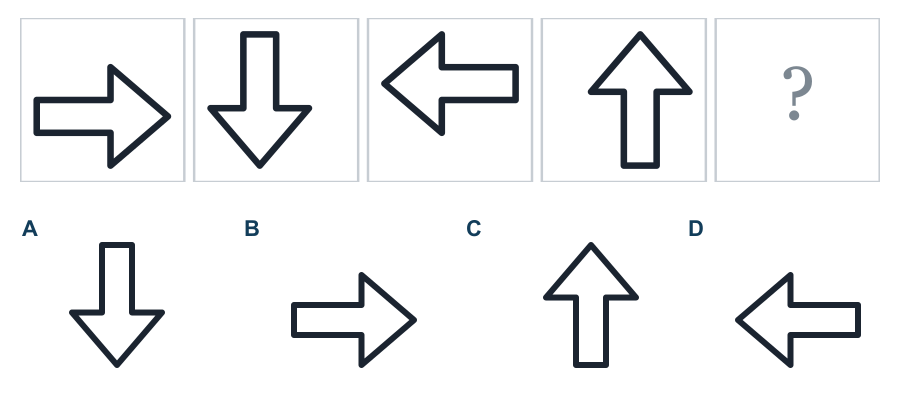
6. A series of figures is shown, each formed from the previous one by applying the same rule. Which figure comes next in the series?
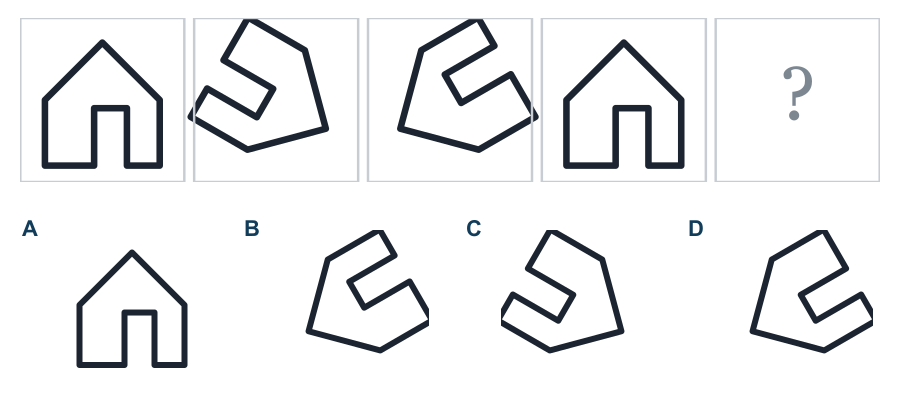
7. A series of figures is shown, each formed from the previous one by applying the same rule. Which figure comes next in the series?
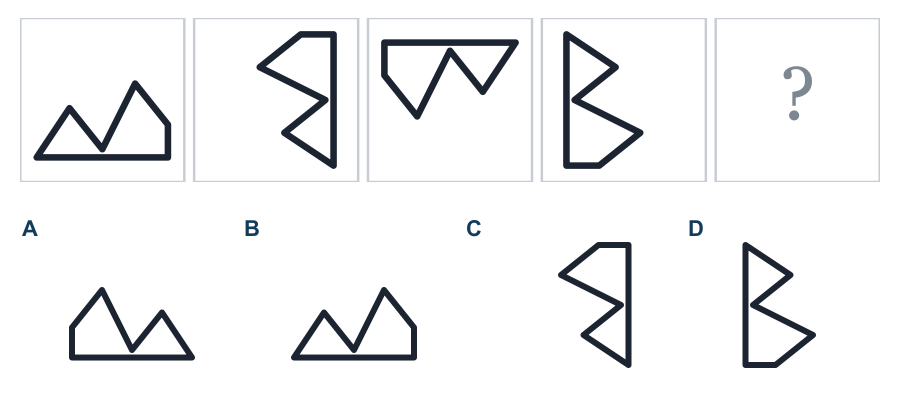
8. A series of figures is shown, each formed from the previous one by applying the same rule. Which figure comes next in the series?
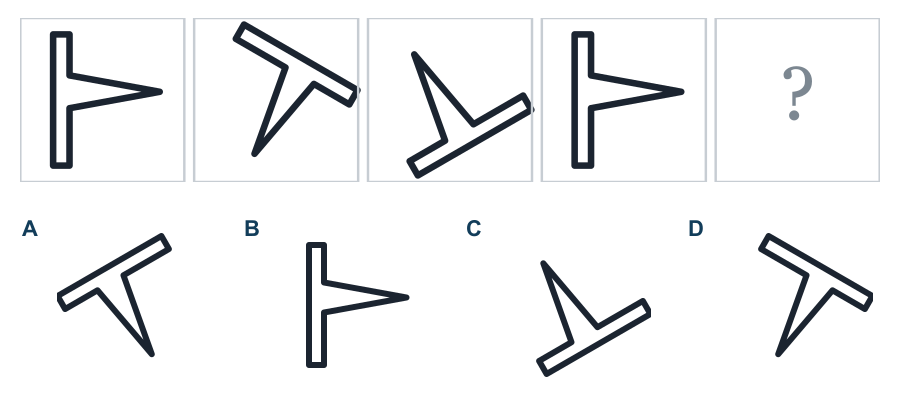
9. A series of figures is shown, each formed from the previous one by applying the same rule. Which figure comes next in the series?
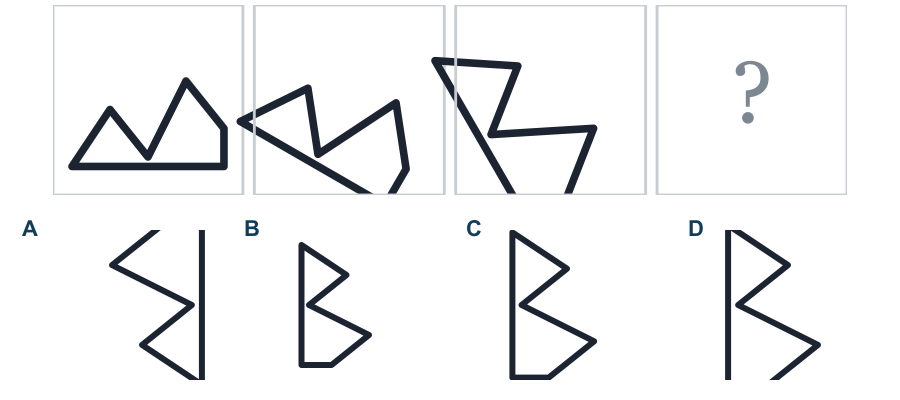
10. A series of figures is shown, each formed from the previous one by applying the same rule. Which figure comes next in the series?
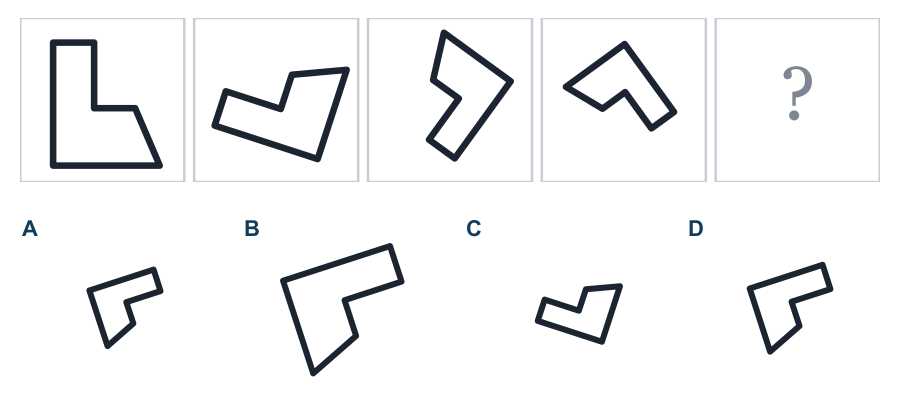
11. A series of figures is shown, each formed from the previous one by applying the same rule. Which figure comes next in the series?
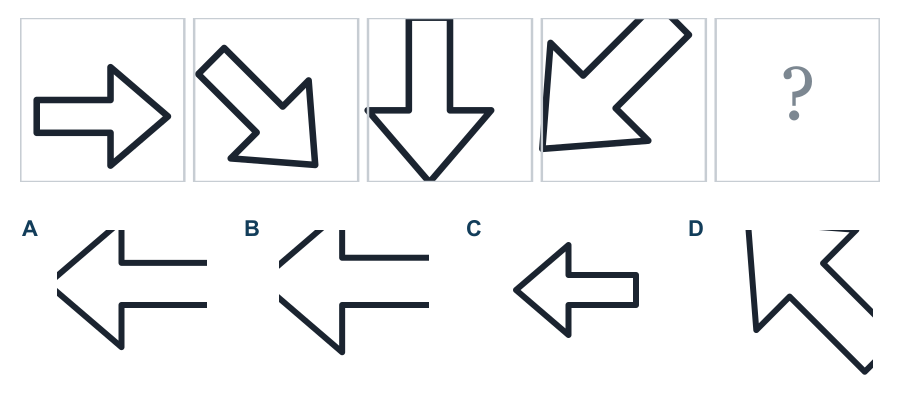
12. A series of figures is shown, each formed from the previous one by applying the same rule. Which figure comes next in the series?
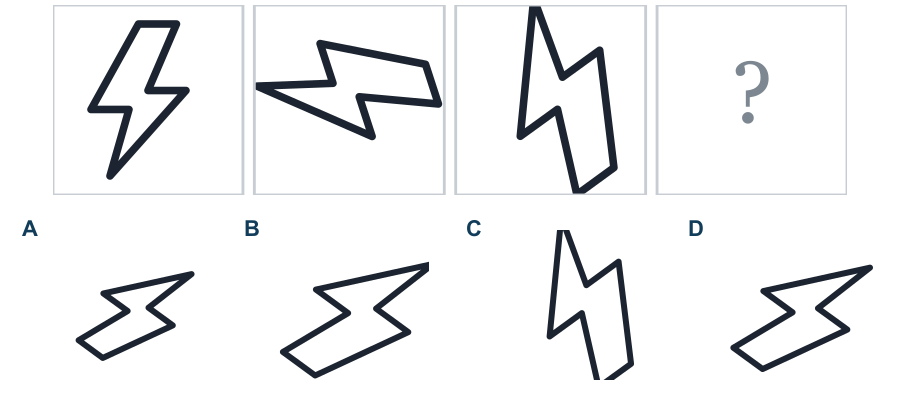
13. A series of figures is shown, each formed from the previous one by applying the same rule. Which figure comes next in the series?
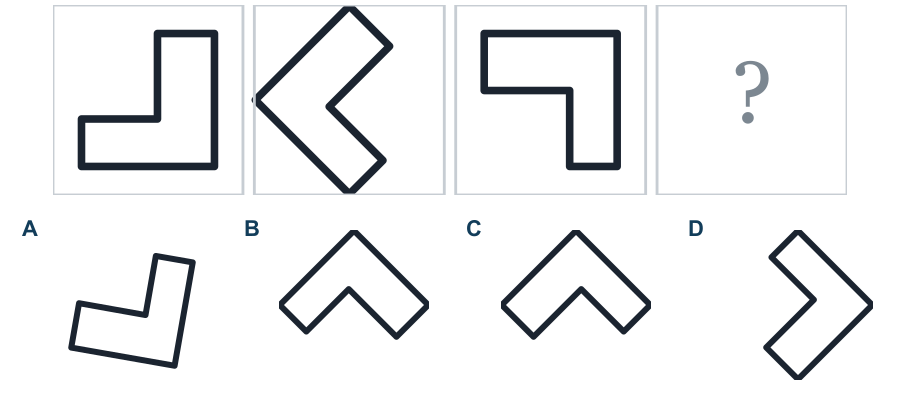
14. A series of figures is shown, each formed from the previous one by applying the same rule. Which figure comes next in the series?
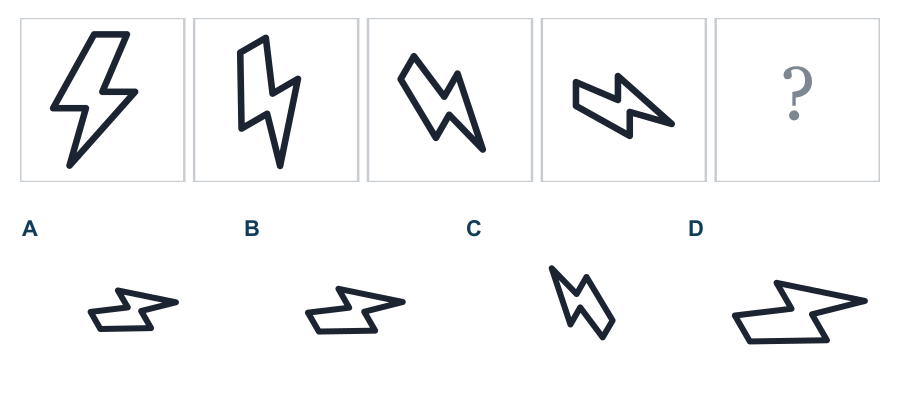
15. A series of figures is shown, each formed from the previous one by applying the same rule. Which figure comes next in the series?
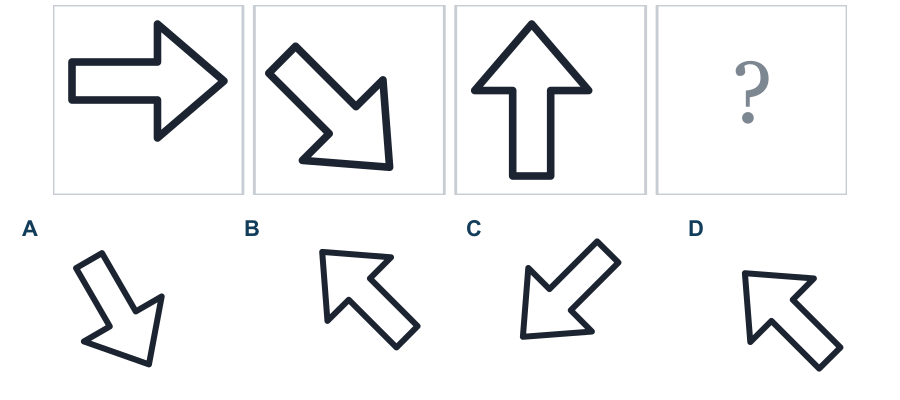
16. A series of figures is shown, each formed from the previous one by applying the same rule. Which figure comes next in the series?
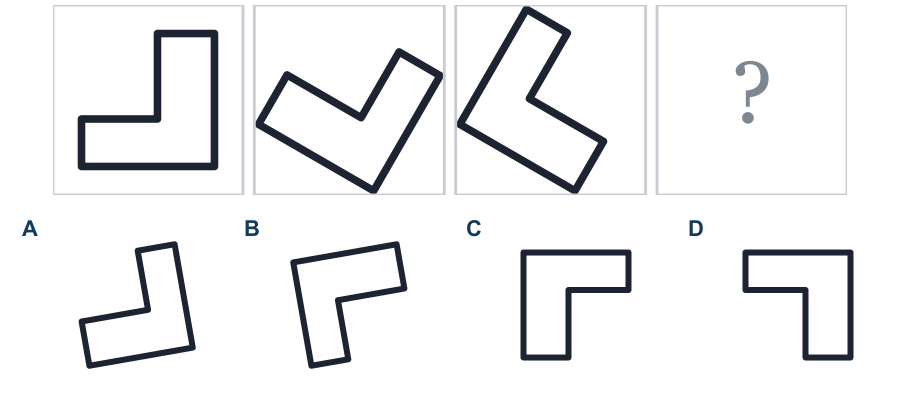
17. A series of figures is shown, each formed from the previous one by applying the same rule. Which figure comes next in the series?
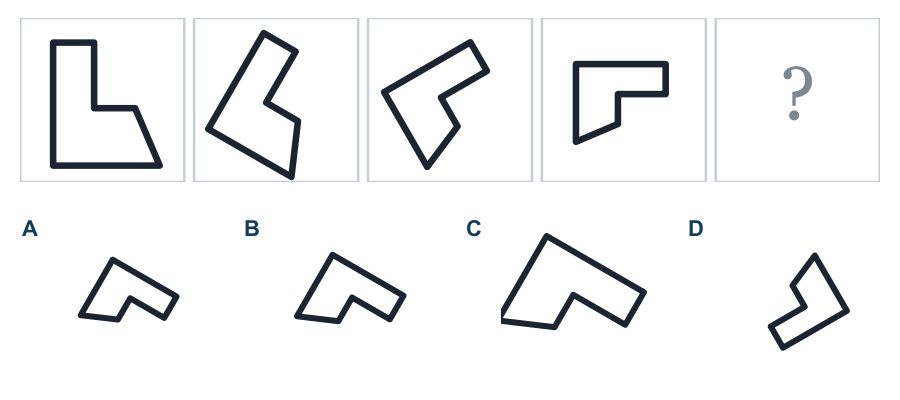
18. A series of figures is shown, each formed from the previous one by applying the same rule. Which figure comes next in the series?
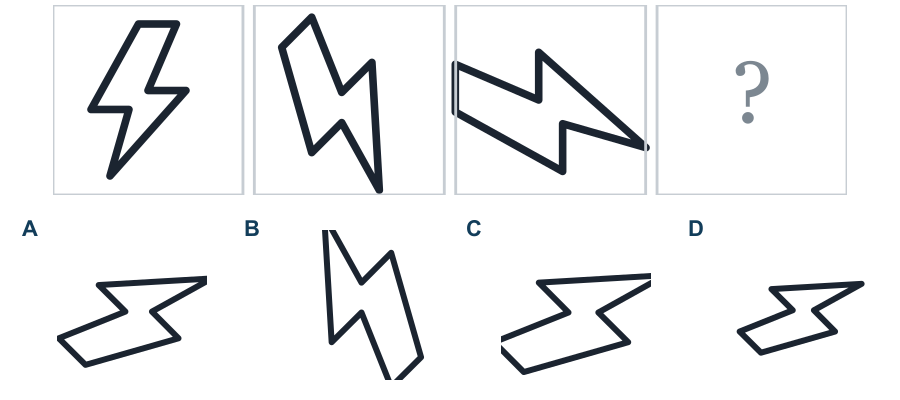
19. A series of figures is shown, each formed from the previous one by applying the same rule. Which figure comes next in the series?
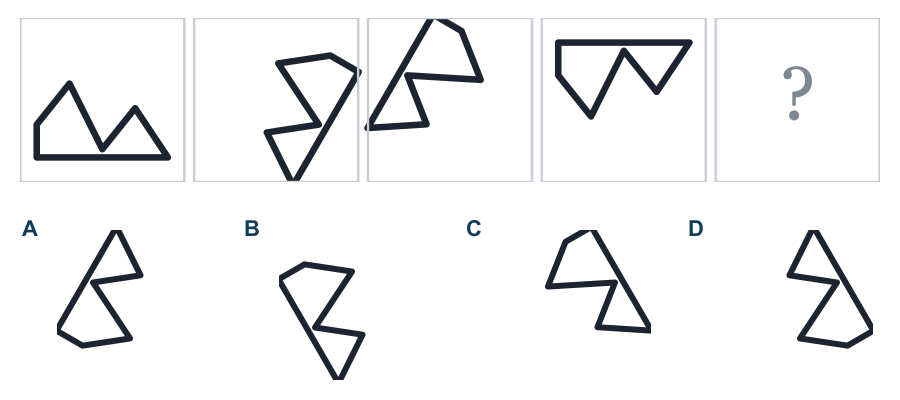
20. A series of figures is shown, each formed from the previous one by applying the same rule. Which figure comes next in the series?
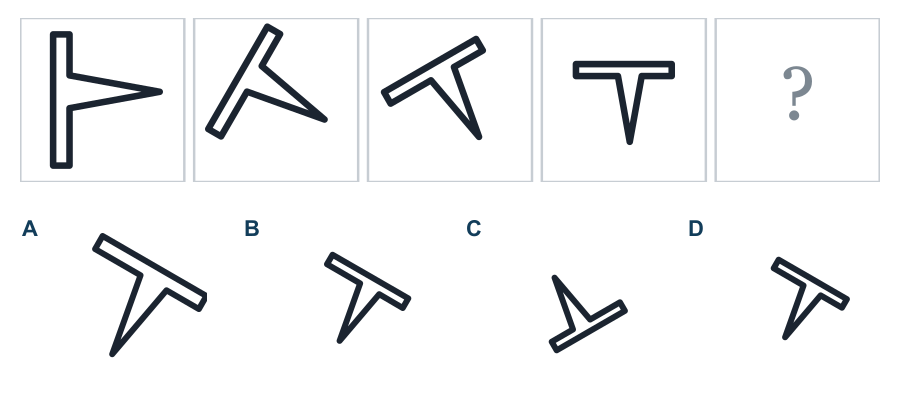
21. A series of figures is shown, each formed from the previous one by applying the same rule. Which figure comes next in the series?
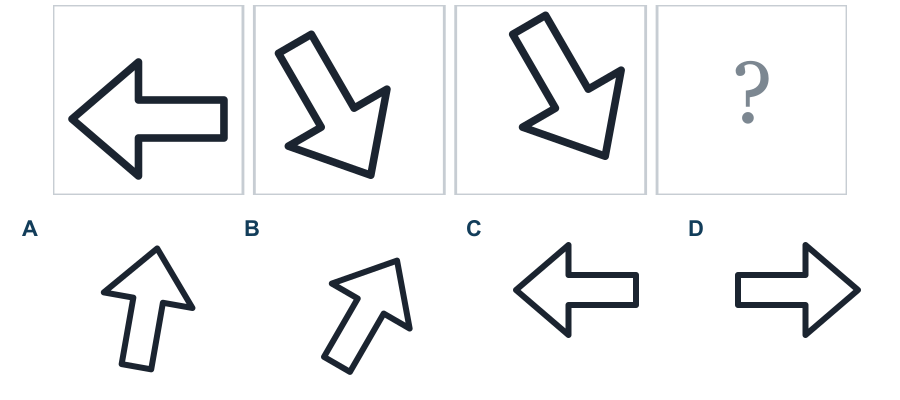
22. A series of figures is shown, each formed from the previous one by applying the same rule. Which figure comes next in the series?
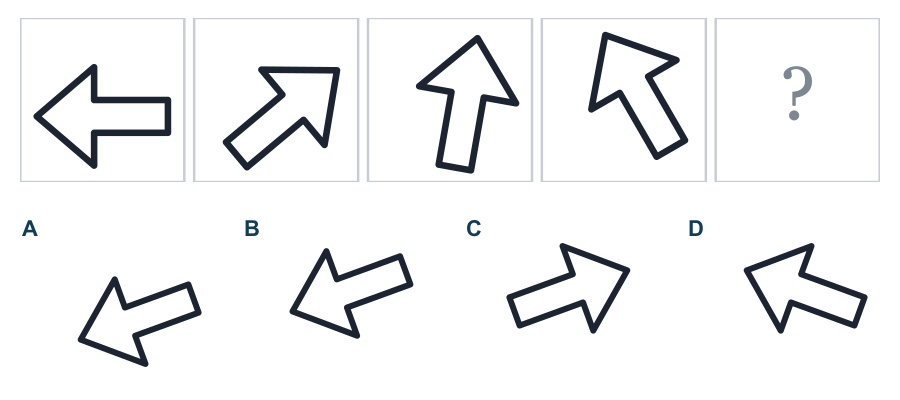
23. A series of figures is shown, each formed from the previous one by applying the same rule. Which figure comes next in the series?
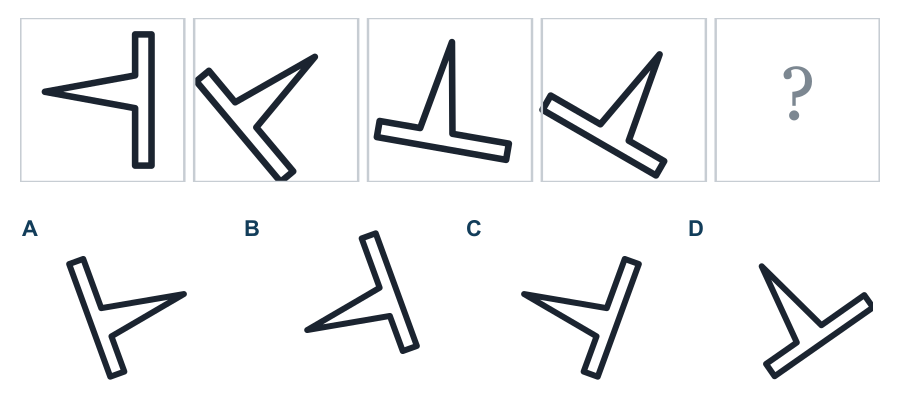
24. A series of figures is shown, each formed from the previous one by applying the same rule. Which figure comes next in the series?
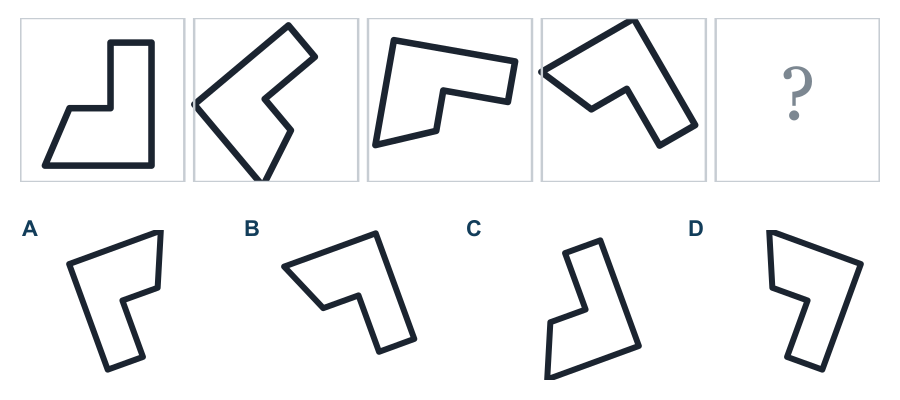
25. A series of figures is shown, each formed from the previous one by applying the same rule. Which figure comes next in the series?
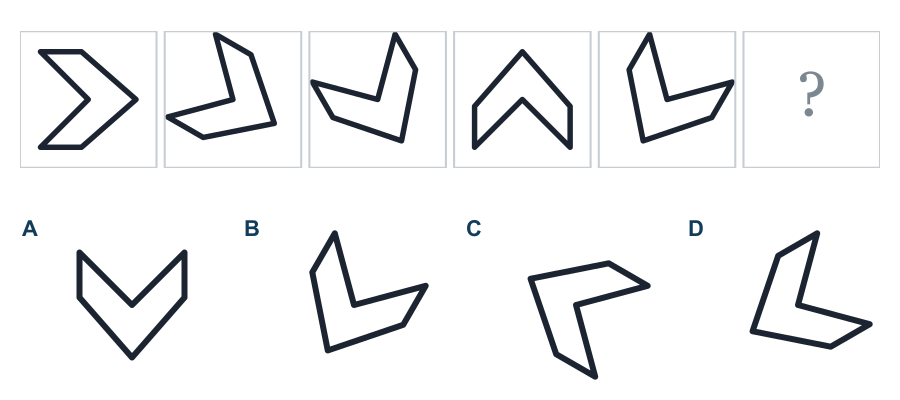
26. A 3x3 grid of figures follows a fixed rule across each row and down each column, with one cell left blank. Which figure completes the matrix?
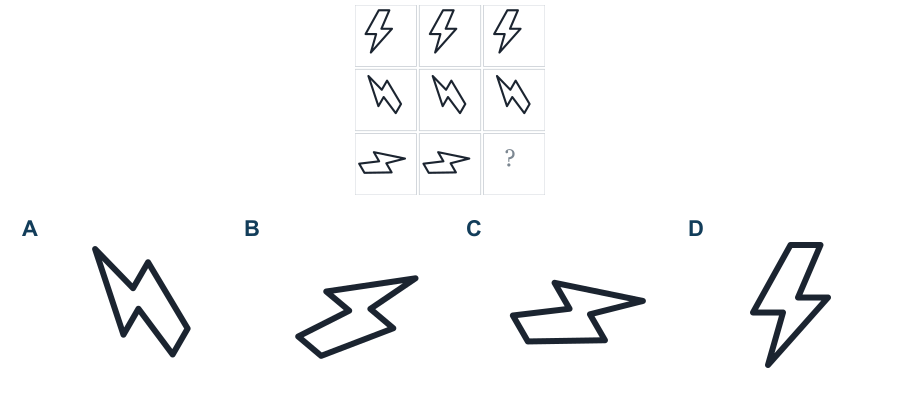
27. A 3x3 grid of figures follows a fixed rule across each row and down each column, with one cell left blank. Which figure completes the matrix?
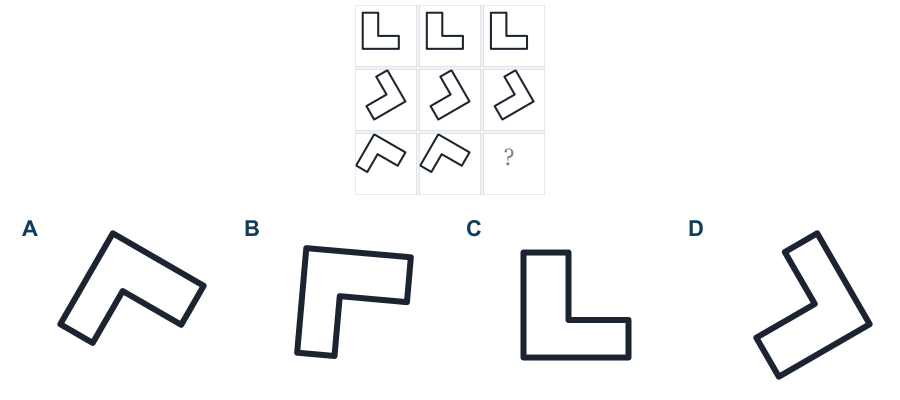
28. A 3x3 grid of figures follows a fixed rule across each row and down each column, with one cell left blank. Which figure completes the matrix?
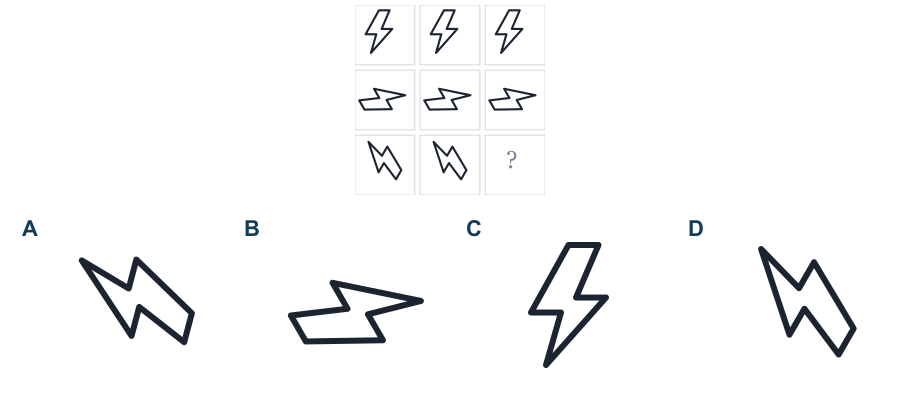
29. A 3x3 grid of figures follows a fixed rule across each row and down each column, with one cell left blank. Which figure completes the matrix?
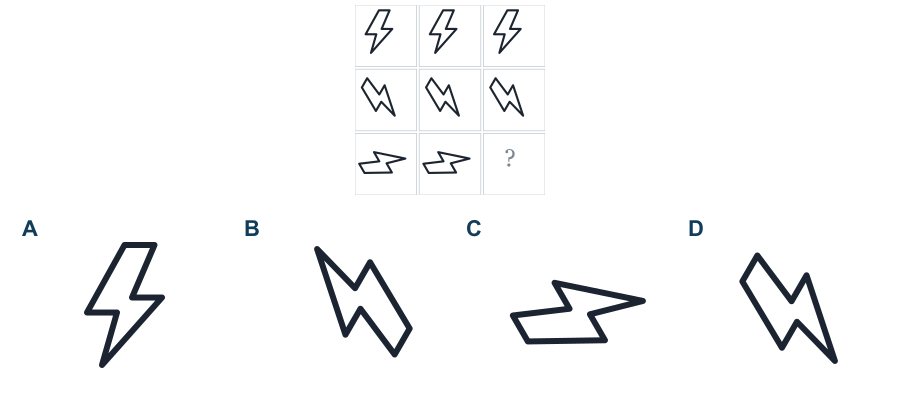
30. A 3x3 grid of figures follows a fixed rule across each row and down each column, with one cell left blank. Which figure completes the matrix?
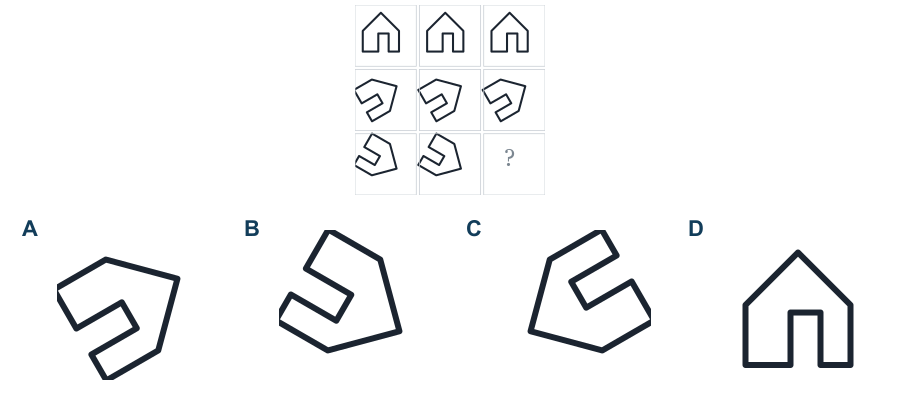
31. A 3x3 grid of figures follows a fixed rule across each row and down each column, with one cell left blank. Which figure completes the matrix?
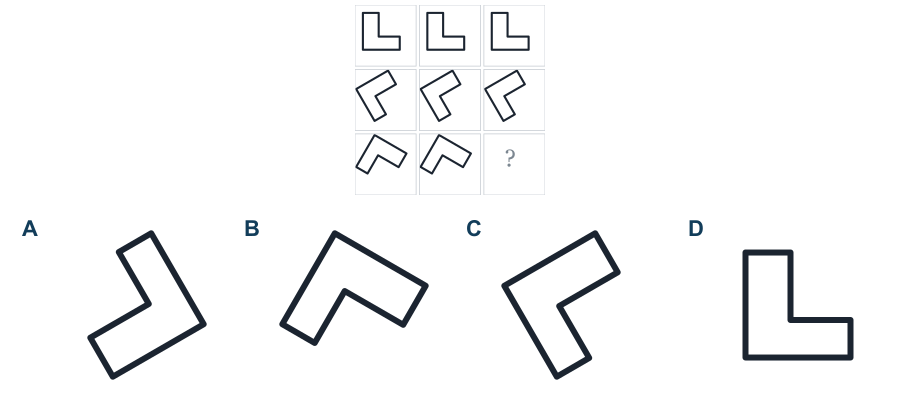
32. A 3x3 grid of figures follows a fixed rule across each row and down each column, with one cell left blank. Which figure completes the matrix?
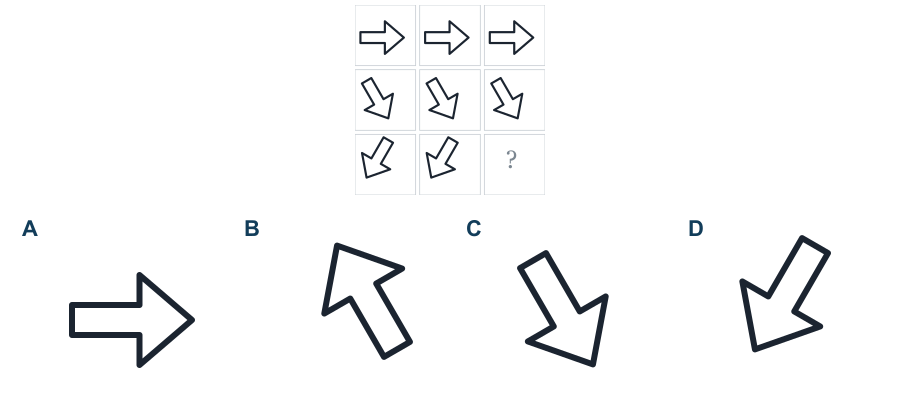
33. A 3x3 grid of figures follows a fixed rule across each row and down each column, with one cell left blank. Which figure completes the matrix?
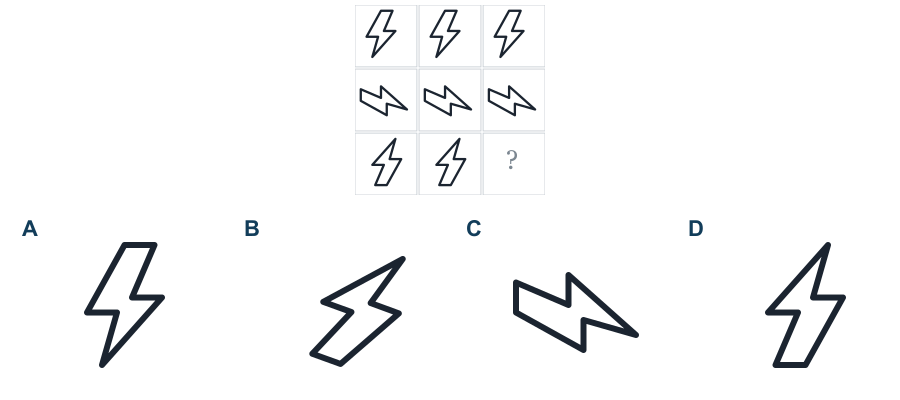
34. A 3x3 grid of figures follows a fixed rule across each row and down each column, with one cell left blank. Which figure completes the matrix?
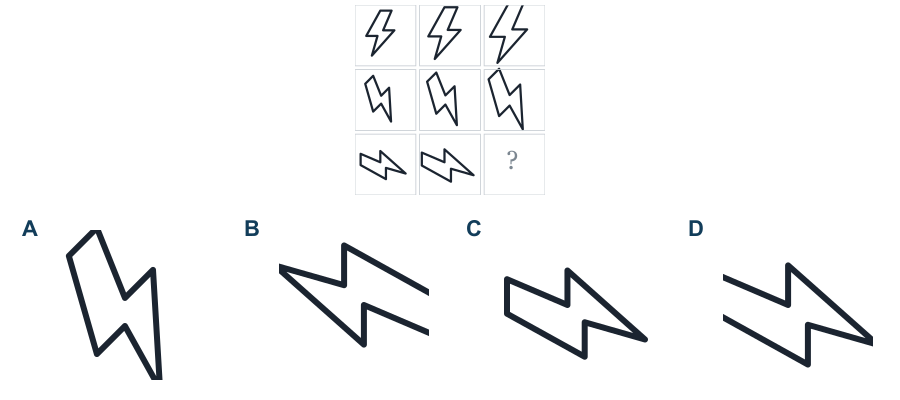
35. A 3x3 grid of figures follows a fixed rule across each row and down each column, with one cell left blank. Which figure completes the matrix?
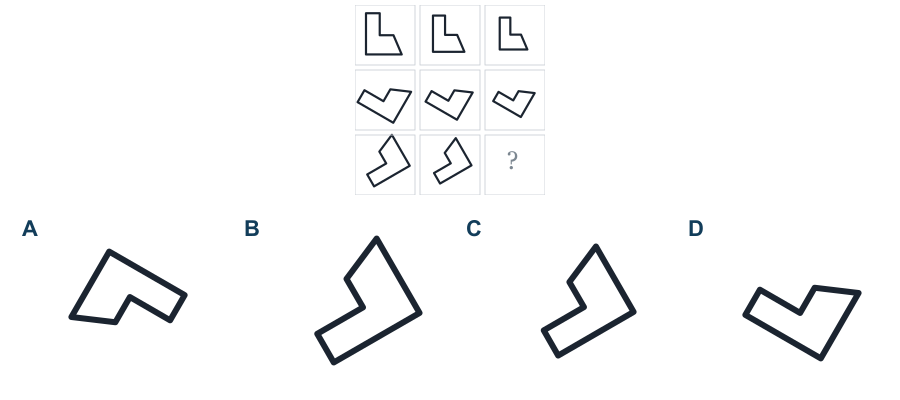
36. A 3x3 grid of figures follows a fixed rule across each row and down each column, with one cell left blank. Which figure completes the matrix?
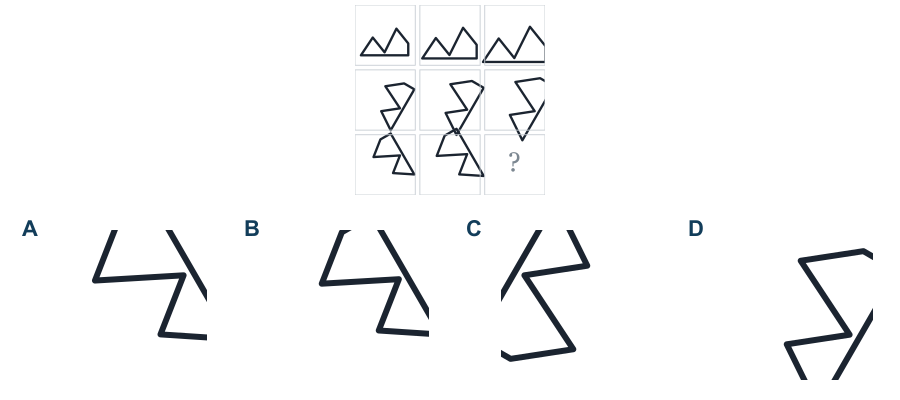
37. A 3x3 grid of figures follows a fixed rule across each row and down each column, with one cell left blank. Which figure completes the matrix?
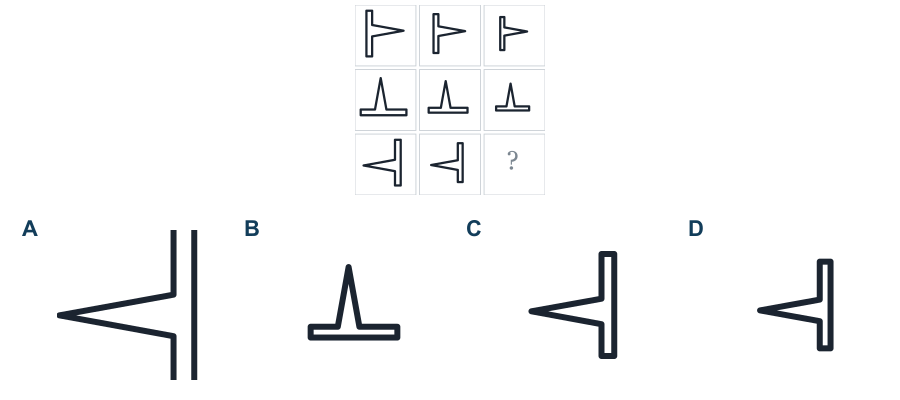
38. A 3x3 grid of figures follows a fixed rule across each row and down each column, with one cell left blank. Which figure completes the matrix?
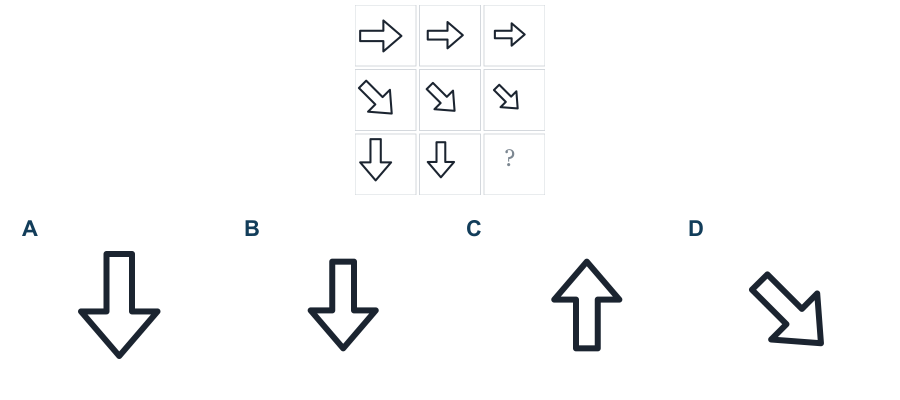
39. A 3x3 grid of figures follows a fixed rule across each row and down each column, with one cell left blank. Which figure completes the matrix?
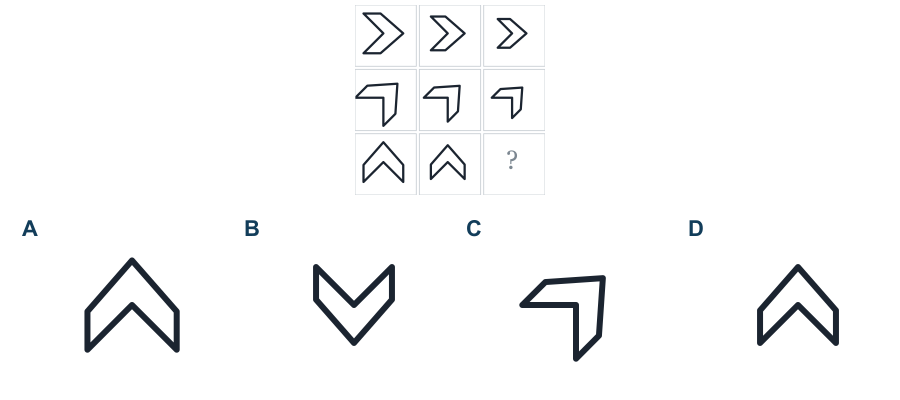
40. A 3x3 grid of figures follows a fixed rule across each row and down each column, with one cell left blank. Which figure completes the matrix?
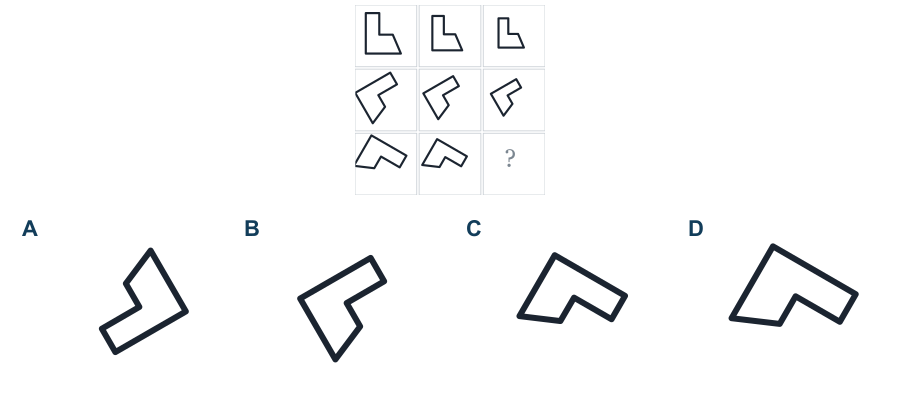
41. A 3x3 grid of figures follows a fixed rule across each row and down each column, with one cell left blank. Which figure completes the matrix?
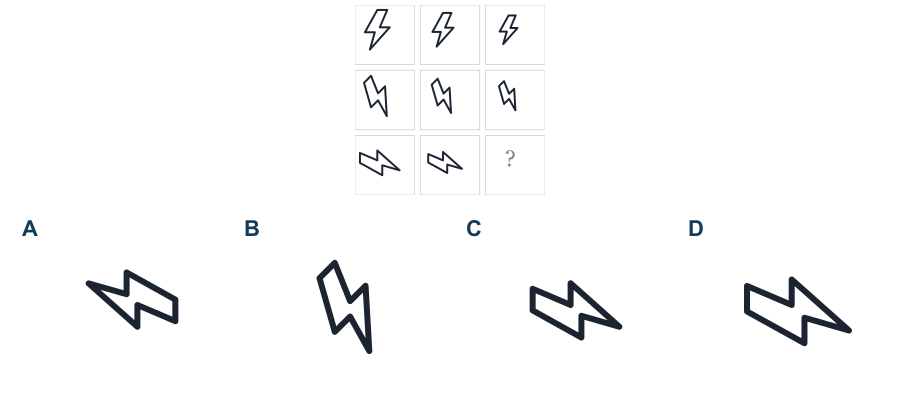
42. A 3x3 grid of figures follows a fixed rule across each row and down each column, with one cell left blank. Which figure completes the matrix?
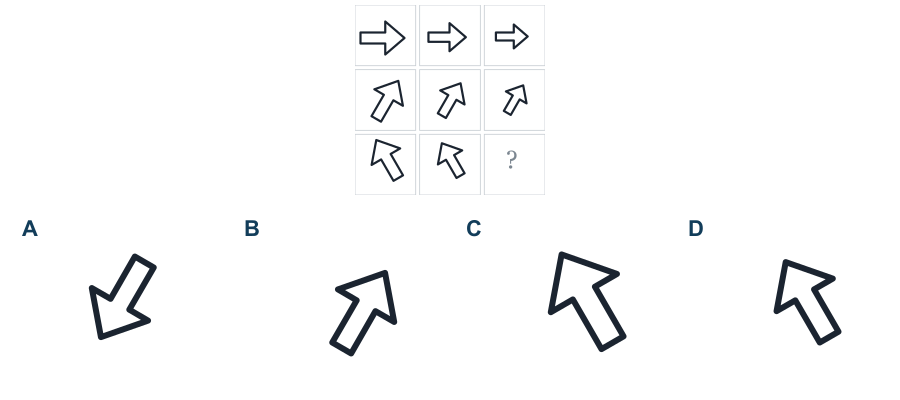
43. A 3x3 grid of figures follows a fixed rule across each row and down each column, with one cell left blank. Which figure completes the matrix?
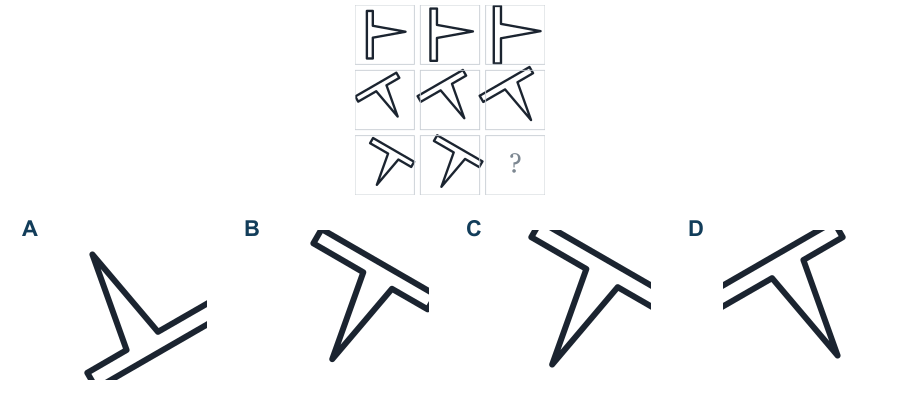
44. A 3x3 grid of figures follows a fixed rule across each row and down each column, with one cell left blank. Which figure completes the matrix?
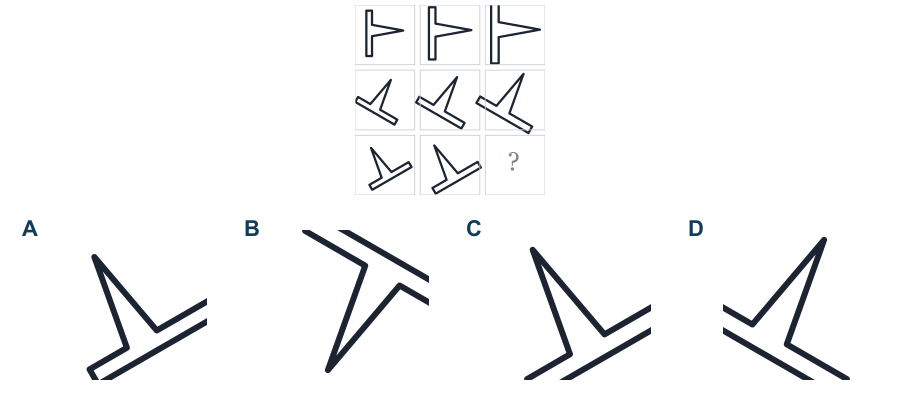
45. A 3x3 grid of figures follows a fixed rule across each row and down each column, with one cell left blank. Which figure completes the matrix?
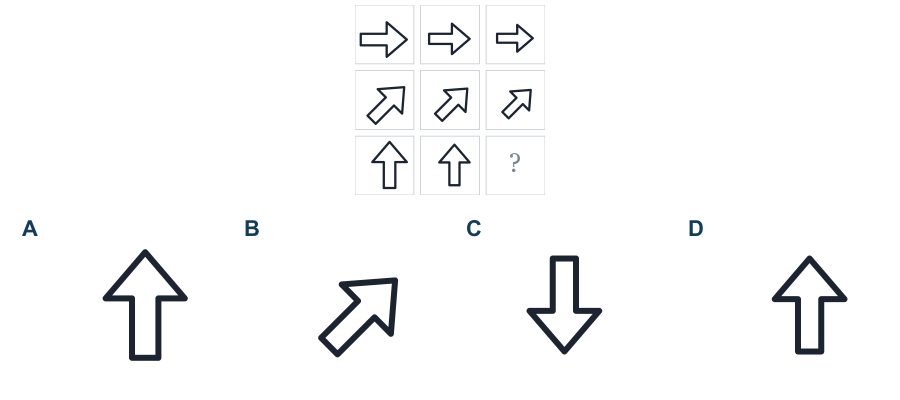
46. A 3x3 grid of figures follows a fixed rule across each row and down each column, with one cell left blank. Which figure completes the matrix?
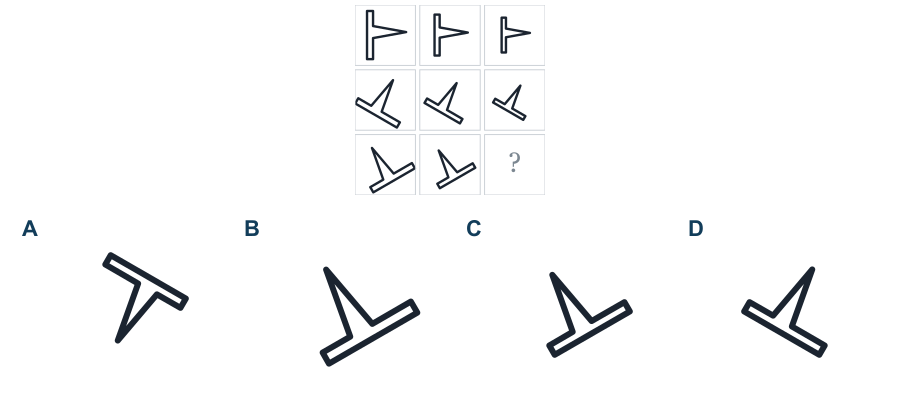
47. A 3x3 grid of figures follows a fixed rule across each row and down each column, with one cell left blank. Which figure completes the matrix?
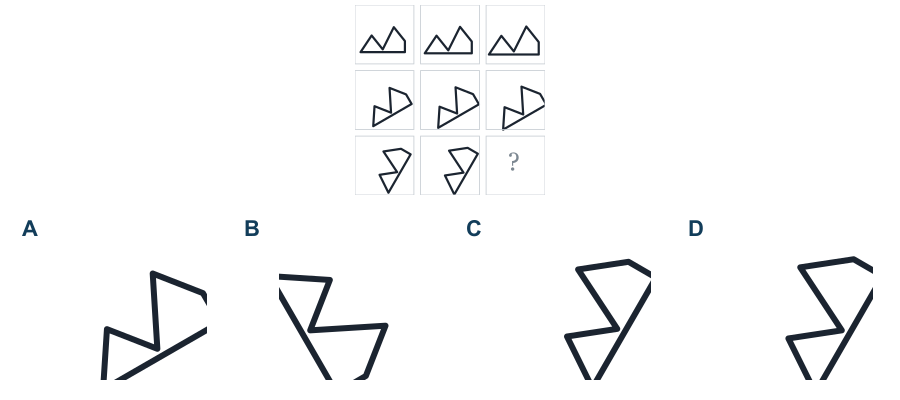
48. A 3x3 grid of figures follows a fixed rule across each row and down each column, with one cell left blank. Which figure completes the matrix?
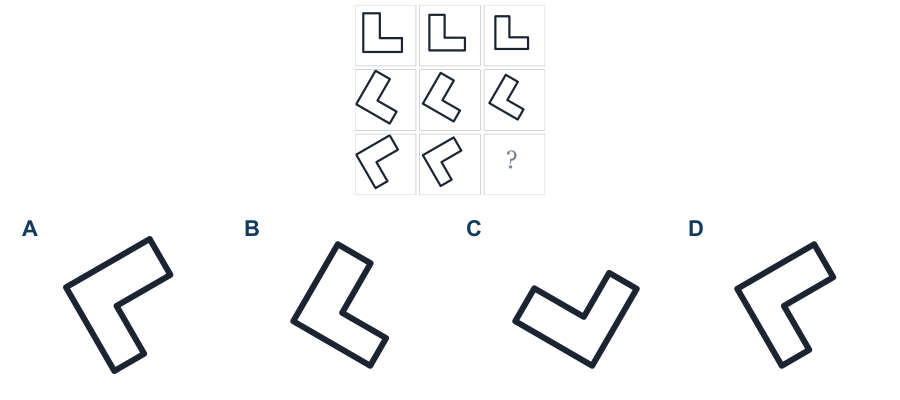
49. A 3x3 grid of figures follows a fixed rule across each row and down each column, with one cell left blank. Which figure completes the matrix?
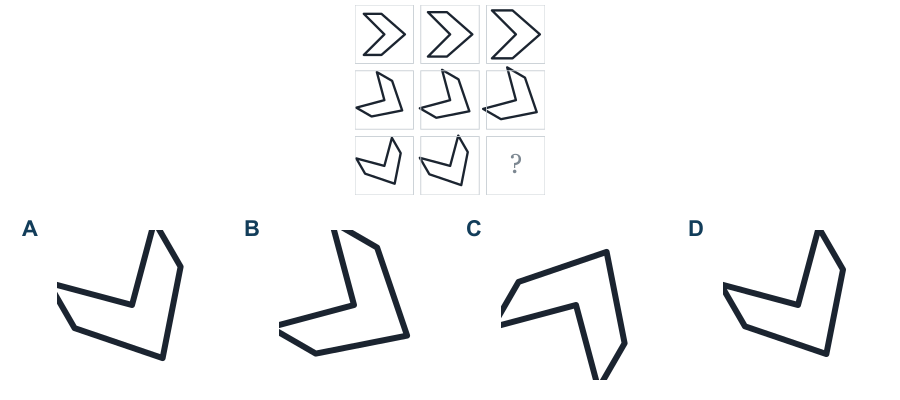
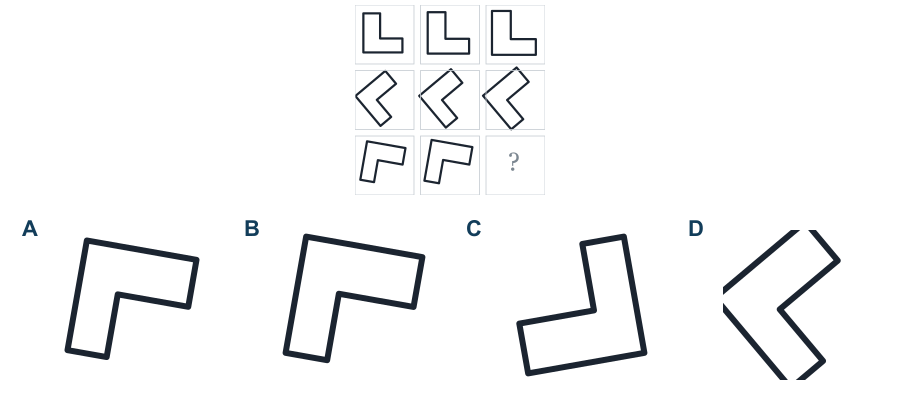
50. A 3x3 grid of figures follows a fixed rule across each row and down each column, with one cell left blank. Which figure completes the matrix?
Answers and explanations
After checking the key, explain the rule or diagram transformation to yourself before moving on.
1. C. Each figure is rotated 60° clockwise from the previous one. Applying this rule once more to the last shown figure gives the correct next figure.
APRS26-13-01 | Figure series — flag | Easy
2. A. Each figure is rotated 90° anti-clockwise from the previous one. Applying this rule once more to the last shown figure gives the correct next figure.
APRS26-13-02 | Figure series — bolt | Easy
3. D. Each figure is rotated 120° clockwise from the previous one. Applying this rule once more to the last shown figure gives the correct next figure.
APRS26-13-03 | Figure series — house | Easy
4. D. Each figure is rotated 120° anti-clockwise from the previous one. Applying this rule once more to the last shown figure gives the correct next figure.
APRS26-13-04 | Figure series — chevronR | Easy
5. B. Each figure is rotated 90° clockwise from the previous one. Applying this rule once more to the last shown figure gives the correct next figure.
APRS26-13-05 | Figure series — arrow | Easy
6. C. Each figure is rotated 120° clockwise from the previous one. Applying this rule once more to the last shown figure gives the correct next figure.
APRS26-13-06 | Figure series — house | Easy
7. B. Each figure is rotated 90° anti-clockwise from the previous one. Applying this rule once more to the last shown figure gives the correct next figure.
APRS26-13-07 | Figure series — zigzag | Easy
8. D. Each figure is rotated 120° clockwise from the previous one. Applying this rule once more to the last shown figure gives the correct next figure.
APRS26-13-08 | Figure series — flag | Easy
9. D. Each figure is rotated 30° clockwise and enlarged by a fixed factor from the previous one. Applying this rule once more to the last shown figure gives the correct next figure.
APRS26-13-09 | Figure series — zigzag | Medium
10. A. Each figure is rotated 72° anti-clockwise and shrunk by a fixed factor from the previous one. Applying this rule once more to the last shown figure gives the correct next figure.
APRS26-13-10 | Figure series — boot | Medium
11. B. Each figure is rotated 45° clockwise and enlarged by a fixed factor from the previous one. Applying this rule once more to the last shown figure gives the correct next figure.
APRS26-13-11 | Figure series — arrow | Medium
12. B. Each figure is rotated 72° clockwise and enlarged by a fixed factor from the previous one. Applying this rule once more to the last shown figure gives the correct next figure.
APRS26-13-12 | Figure series — bolt | Medium
13. B. Each figure is rotated 45° clockwise every step, and additionally mirrored (left-right) every 4th step. Applying this rule once more to the last shown figure gives the correct next figure.
APRS26-13-13 | Figure series — lshape | Medium
14. A. Each figure is rotated 30° anti-clockwise and shrunk by a fixed factor from the previous one. Applying this rule once more to the last shown figure gives the correct next figure.
APRS26-13-14 | Figure series — bolt | Medium
15. C. Each figure is rotated 45° clockwise every step, and additionally mirrored (top-bottom) every 4th step. Applying this rule once more to the last shown figure gives the correct next figure.
APRS26-13-15 | Figure series — arrow | Medium
16. D. Each figure is rotated 60° anti-clockwise every step, and additionally mirrored (left-right) every 4th step. Applying this rule once more to the last shown figure gives the correct next figure.
APRS26-13-16 | Figure series — lshape | Medium
17. A. Each figure is rotated 30° clockwise and shrunk by a fixed factor from the previous one. Applying this rule once more to the last shown figure gives the correct next figure.
APRS26-13-17 | Figure series — boot | Medium
18. C. Each figure is rotated 45° anti-clockwise and enlarged by a fixed factor from the previous one. Applying this rule once more to the last shown figure gives the correct next figure.
APRS26-13-18 | Figure series — bolt | Medium
19. D. Each figure is rotated 60° anti-clockwise every step, and additionally mirrored (left-right) every 4th step. Applying this rule once more to the last shown figure gives the correct next figure.
APRS26-13-19 | Figure series — zigzag | Medium
20. D. Each figure is rotated 30° clockwise and shrunk by a fixed factor from the previous one. Applying this rule once more to the last shown figure gives the correct next figure.
APRS26-13-20 | Figure series — flag | Medium
21. C. Each figure is rotated 60° clockwise every step, and additionally mirrored (left-right) every 4th step. Applying this rule once more to the last shown figure gives the correct next figure.
APRS26-13-21 | Figure series — arrow | Medium
22. C. Each figure is rotated 40° anti-clockwise every step, and additionally mirrored (left-right) every 4th step. Applying this rule once more to the last shown figure gives the correct next figure.
APRS26-13-22 | Figure series — arrow | Difficult
23. C. Each figure is rotated 40° anti-clockwise every step, and additionally mirrored (left-right) every 3rd step. Applying this rule once more to the last shown figure gives the correct next figure.
APRS26-13-23 | Figure series — flag | Difficult
24. A. Each figure is rotated 50° clockwise every step, and additionally mirrored (left-right) every 4th step. Applying this rule once more to the last shown figure gives the correct next figure.
APRS26-13-24 | Figure series — boot | Difficult
25. D. Each figure is rotated 30° clockwise every step, and additionally mirrored (top-bottom) every 3rd step. Applying this rule once more to the last shown figure gives the correct next figure.
APRS26-13-25 | Figure series — chevronR | Difficult
26. C. Along each row, the figure rotates by a fixed 120° clockwise step per column. Down each column, the figure stays the same size by a fixed ratio per row. Applying both rules to the missing bottom-right cell (row 3, column 3) gives the correct figure.
APRS26-13-26 | Figure matrix — bolt | Easy
27. A. Along each row, the figure rotates by a fixed 120° anti-clockwise step per column. Down each column, the figure stays the same size by a fixed ratio per row. Applying both rules to the missing bottom-right cell (row 3, column 3) gives the correct figure.
APRS26-13-27 | Figure matrix — lshape | Easy
28. D. Along each row, the figure rotates by a fixed 120° anti-clockwise step per column. Down each column, the figure stays the same size by a fixed ratio per row. Applying both rules to the missing bottom-right cell (row 3, column 3) gives the correct figure.
APRS26-13-28 | Figure matrix — bolt | Easy
29. C. Along each row, the figure rotates by a fixed 60° anti-clockwise step per column. Down each column, the figure stays the same size by a fixed ratio per row. Applying both rules to the missing bottom-right cell (row 3, column 3) gives the correct figure.
APRS26-13-29 | Figure matrix — bolt | Easy
30. B. Along each row, the figure rotates by a fixed 60° clockwise step per column. Down each column, the figure stays the same size by a fixed ratio per row. Applying both rules to the missing bottom-right cell (row 3, column 3) gives the correct figure.
APRS26-13-30 | Figure matrix — house | Easy
31. B. Along each row, the figure rotates by a fixed 60° clockwise step per column. Down each column, the figure stays the same size by a fixed ratio per row. Applying both rules to the missing bottom-right cell (row 3, column 3) gives the correct figure.
APRS26-13-31 | Figure matrix — lshape | Easy
32. D. Along each row, the figure rotates by a fixed 60° clockwise step per column. Down each column, the figure stays the same size by a fixed ratio per row. Applying both rules to the missing bottom-right cell (row 3, column 3) gives the correct figure.
APRS26-13-32 | Figure matrix — arrow | Easy
33. D. Along each row, the figure rotates by a fixed 90° anti-clockwise step per column. Down each column, the figure stays the same size by a fixed ratio per row. Applying both rules to the missing bottom-right cell (row 3, column 3) gives the correct figure.
APRS26-13-33 | Figure matrix — bolt | Easy
34. D. Along each row, the figure rotates by a fixed 45° anti-clockwise step per column. Down each column, the figure enlarges by a fixed ratio per row. Applying both rules to the missing bottom-right cell (row 3, column 3) gives the correct figure.
APRS26-13-34 | Figure matrix — bolt | Medium
35. C. Along each row, the figure rotates by a fixed 60° anti-clockwise step per column. Down each column, the figure shrinks by a fixed ratio per row. Applying both rules to the missing bottom-right cell (row 3, column 3) gives the correct figure.
APRS26-13-35 | Figure matrix — boot | Medium
36. A. Along each row, the figure rotates by a fixed 60° anti-clockwise step per column. Down each column, the figure enlarges by a fixed ratio per row. Applying both rules to the missing bottom-right cell (row 3, column 3) gives the correct figure.
APRS26-13-36 | Figure matrix — zigzag | Medium
37. D. Along each row, the figure rotates by a fixed 90° anti-clockwise step per column. Down each column, the figure shrinks by a fixed ratio per row. Applying both rules to the missing bottom-right cell (row 3, column 3) gives the correct figure.
APRS26-13-37 | Figure matrix — flag | Medium
38. B. Along each row, the figure rotates by a fixed 45° clockwise step per column. Down each column, the figure shrinks by a fixed ratio per row. Applying both rules to the missing bottom-right cell (row 3, column 3) gives the correct figure.
APRS26-13-38 | Figure matrix — arrow | Medium
39. D. Along each row, the figure rotates by a fixed 45° anti-clockwise step per column. Down each column, the figure shrinks by a fixed ratio per row. Applying both rules to the missing bottom-right cell (row 3, column 3) gives the correct figure.
APRS26-13-39 | Figure matrix — chevronR | Medium
40. C. Along each row, the figure rotates by a fixed 60° clockwise step per column. Down each column, the figure shrinks by a fixed ratio per row. Applying both rules to the missing bottom-right cell (row 3, column 3) gives the correct figure.
APRS26-13-40 | Figure matrix — boot | Medium
41. C. Along each row, the figure rotates by a fixed 45° anti-clockwise step per column. Down each column, the figure shrinks by a fixed ratio per row. Applying both rules to the missing bottom-right cell (row 3, column 3) gives the correct figure.
APRS26-13-41 | Figure matrix — bolt | Medium
42. D. Along each row, the figure rotates by a fixed 60° anti-clockwise step per column. Down each column, the figure shrinks by a fixed ratio per row. Applying both rules to the missing bottom-right cell (row 3, column 3) gives the correct figure.
APRS26-13-42 | Figure matrix — arrow | Medium
43. C. Along each row, the figure rotates by a fixed 60° clockwise step per column. Down each column, the figure enlarges by a fixed ratio per row. Applying both rules to the missing bottom-right cell (row 3, column 3) gives the correct figure.
APRS26-13-43 | Figure matrix — flag | Medium
44. C. Along each row, the figure rotates by a fixed 60° anti-clockwise step per column. Down each column, the figure enlarges by a fixed ratio per row. Applying both rules to the missing bottom-right cell (row 3, column 3) gives the correct figure.
APRS26-13-44 | Figure matrix — flag | Medium
45. D. Along each row, the figure rotates by a fixed 45° anti-clockwise step per column. Down each column, the figure shrinks by a fixed ratio per row. Applying both rules to the missing bottom-right cell (row 3, column 3) gives the correct figure.
APRS26-13-45 | Figure matrix — arrow | Medium
46. C. Along each row, the figure rotates by a fixed 60° anti-clockwise step per column. Down each column, the figure shrinks by a fixed ratio per row. Applying both rules to the missing bottom-right cell (row 3, column 3) gives the correct figure.
APRS26-13-46 | Figure matrix — flag | Medium
47. D. Along each row, the figure rotates by a fixed 30° anti-clockwise step per column. Down each column, the figure enlarges by a fixed ratio per row. Applying both rules to the missing bottom-right cell (row 3, column 3) gives the correct figure.
APRS26-13-47 | Figure matrix — zigzag | Difficult
48. D. Along each row, the figure rotates by a fixed 30° clockwise step per column. Down each column, the figure shrinks by a fixed ratio per row. Applying both rules to the missing bottom-right cell (row 3, column 3) gives the correct figure.
APRS26-13-48 | Figure matrix — lshape | Difficult
49. A. Along each row, the figure rotates by a fixed 30° clockwise step per column. Down each column, the figure enlarges by a fixed ratio per row. Applying both rules to the missing bottom-right cell (row 3, column 3) gives the correct figure.
APRS26-13-49 | Figure matrix — chevronR | Difficult
50. B. Along each row, the figure rotates by a fixed 50° clockwise step per column. Down each column, the figure enlarges by a fixed ratio per row. Applying both rules to the missing bottom-right cell (row 3, column 3) gives the correct figure.
APRS26-13-50 | Figure matrix — lshape | Difficult