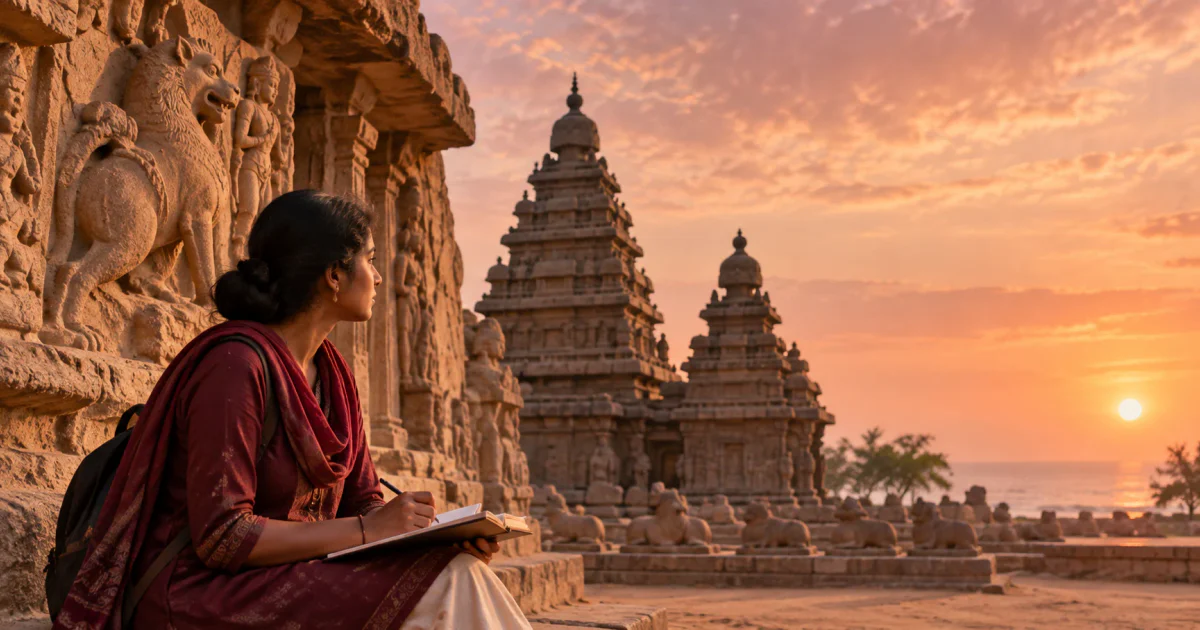
The Pallavas ruled South India from roughly 275 CE to 897 CE from their capital at Kanchipuram (Kanchi), pioneered rock-cut and structural Dravidian temple architecture, and were finally defeated by Aditya Chola. This post summarises their origins, major rulers, administration, religion and architecture, ending with the facts most often asked in SSC and RRB GK sections.
Origins of the Pallavas
The precise origins of the Pallavas are uncertain. Some historians suggest they began as feudatories of the Satavahanas of the Deccan and rose to prominence after the Satavahana decline. Simhavarman, regarded as the founder of the dynasty, defeated the Ikshvaku king Rudrapurushadatta and established Pallava rule in coastal Andhra, then known as Karmarashtra.
Major Pallava rulers
- Simhavarman (280-335 CE): Founder of the dynasty; established Pallava rule in coastal Andhra after defeating the Ikshvakus.
- Sivaskanda Varman: Early Pallava ruler who performed Vedic rituals including the Ashwamedha sacrifice.
- Simhavishnu (575-590 CE): Defeated the Kalabhras, beginning the "Age of the Imperial Pallavas". Followed the Buddhist faith.
- Mahendravarman I (590-630 CE): A versatile ruler who began the long Pallava-Chalukya conflict. Initially a Jain, he later converted to Shaivism.
- Narasimhavarman I (630-668 CE): Titled Mahamalla; under him Buddhism, Jainism and Hinduism flourished at Kanchi. Credited with Mamallapuram and its monolithic rathas.
- Mahendravarman II (668-670 CE): Brief reign; killed by the Chalukya king Vikramaditya I.
- Paramesvaravarman I (670-695 CE): Turned the Pallava-Chalukya conflict in favour of the Pallavas.
- Narasimhavarman II (695-722 CE): Built the Shore Temple at Mamallapuram and the Kailasanatha Temple at Kanchi.
- Nandivarman II (731-795 CE): A patron of learning and a devout Vishnu worshipper; restored old temples and built new ones.
Despite invasions by the Pandyas, Western Gangas and Rashtrakutas, the dynasty continued under Nandivarman (846-869 CE) and Nrupatunga (869-899 CE). The last ruler, Aparajitavarman, was defeated by Aditya Chola, ending Pallava rule.
Administration
- The king ruled under the title Dharma-Maharaja, headed the state, performed judicial duties and led the army.
- The kingdom was divided into Kottams, each administered by officers appointed by the king.
- Villages were the basic unit of administration and functioned as largely self-sufficient units with their own justice systems; local assemblies handled smaller territories.
- Land revenue, supplemented by various taxes, was the main source of income.
Religion
Early Pallavas favoured Jainism, which was later replaced by Vedic Hinduism, though Buddhism and Jainism continued to flourish under a policy of tolerance. Vedic yajnas such as Ashwamedha, Vajapeya and Agnistoma were performed. The Bhakti movement of the Alvars (Vaishnava) and Nayanars (Shaiva) in the 7th century drove the growth of Vaishnavism and Shaivism, and Adi Shankaracharya played a key role in reforming Vedic faith.
Architecture
The Pallavas pioneered Dravidian architecture and introduced rock-cut architecture to South India. Their major works include the Pancha Rathas and the Shore Temple at Mahabalipuram (Mamallapuram) and the Kailasanathar Temple at Kanchi. The transition from rock-cut monuments to free-standing stone temples is credited to them.
Education and literature
The University of Kanchi was a major centre of learning that attracted students from across India and abroad. The period saw extensive Sanskrit literature, the growth of Tamil literature, and royal patronage of music and dance linked to temple festivals.
Exam-relevant facts
- Founder: Simhavarman; capital: Kanchipuram (Kanchi).
- Period of rule: c. 275 CE to 897 CE; the "Age of the Imperial Pallavas" began with Simhavishnu's defeat of the Kalabhras.
- Narasimhavarman I (Mahamalla) built Mamallapuram and its monolithic (Pancha) rathas.
- Narasimhavarman II built the Shore Temple at Mamallapuram and the Kailasanatha Temple at Kanchi.
- Mahendravarman I started the Pallava-Chalukya conflict and converted from Jainism to Shaivism.
- Pallava kings used the title Dharma-Maharaja; provinces were called Kottams.
- The Pallavas pioneered rock-cut and Dravidian temple architecture in South India.
- The last Pallava ruler, Aparajitavarman, was defeated by Aditya Chola.
To revise these facts under exam conditions, try the Ancient History GK quizzes and mock tests on Pareeksha.
Comments (0)
No comments yet. Be the first to share your thoughts.