Kuchipudi's history includes village-linked troupe dance-drama and later solo formats taught to a wider range of students. This change affected the stage, training, repertoire and audience. A compact solo item can foreground an individual artist's technique, while a dance-drama uses roles and exchanges among characters. Neither is automatically more “authentic” for an exam answer; identify the format the question describes.
Modern institutions and gurus have helped transmit the form beyond its village and across India. The Krishna district history page names Vempati Chinna Satyam as a promoter; CCRT's account discusses the role of later teachers in solo and female training. Avoid turning a promotional title such as “father of modern Kuchipudi” into a universal historical fact unless the source defines it. Students need a stable map pair, a repertoire pair and a technique pair: village, Bhama Kalapam, and narrative-plus-rhythm. Those three resolve most standard questions without a long list of uncertain dates.
Worked example: Compare a village troupe's all-night dance drama with a shorter proscenium recital. Both may belong to the Kuchipudi tradition while staging, duration and ensemble have changed. An examiner may test the older troupe history or the contemporary solo format. Date the account and identify which aspect it describes instead of forcing one format to stand for all periods.
Active recall: What changed when a group dance-drama repertoire entered solo concert stages? Which facts about Kuchipudi remain stable?
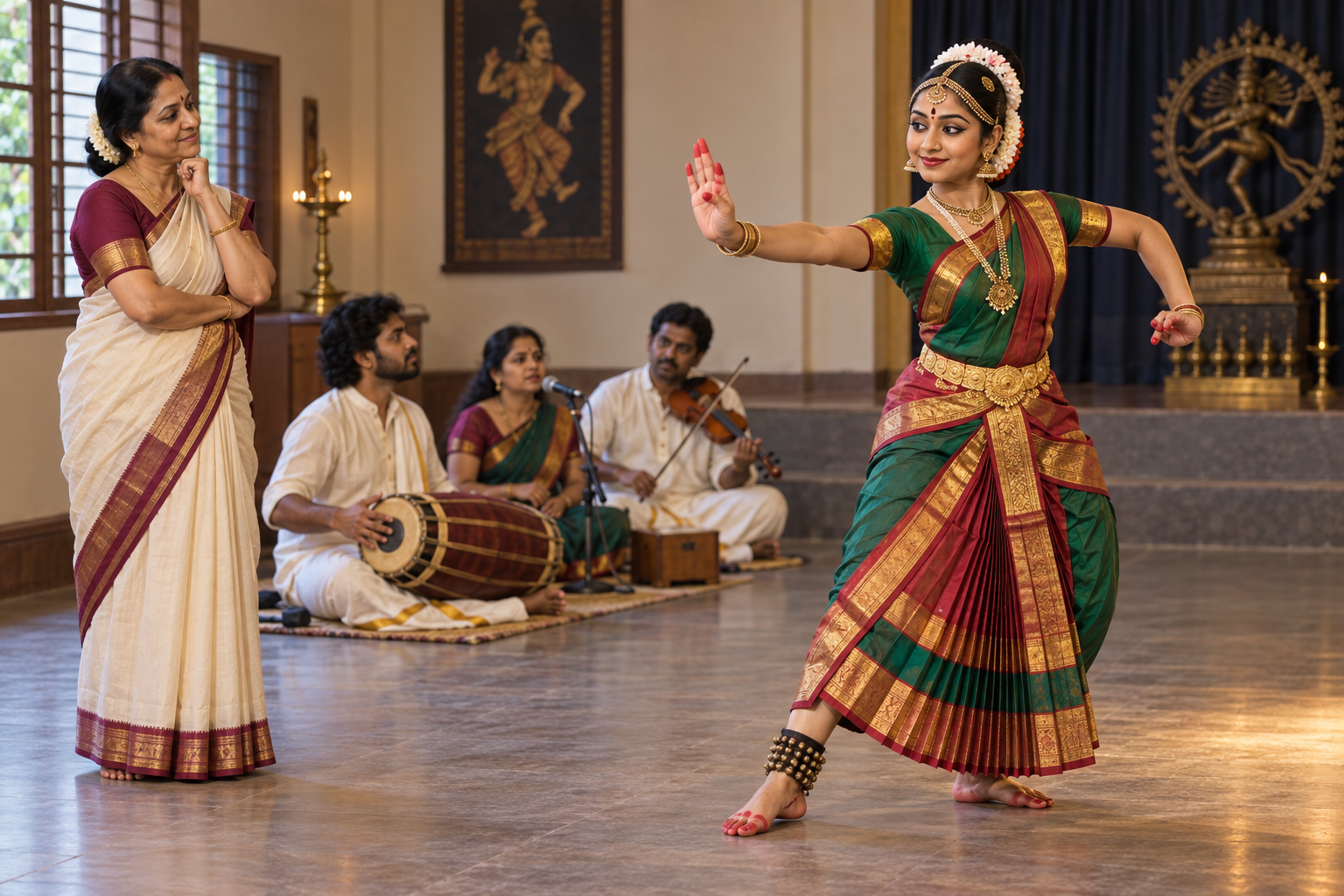
Kuchipudi rehearsal illustration
Original commissioned illustration; it depicts a concept, not a documented performer.
Read this visual
Storytelling forms overlap in voice and music. Read performer configuration and narrative purpose before naming Burrakatha or Harikatha.
Current district geometry: APSDMA. Cultural and GI details: credited public-body and registry sources.