Srikalahasti Kalamkari is associated with the temple town of Srikalahasti, in present Tirupati district. The style is widely described through freehand drawing and painting of narrative images on cloth, in contrast with the block-print emphasis of the Machilipatnam/Pedana tradition. The GI Registry treats Srikalahasthi Kalamkari as a separate registered name. The different spelling in the registry is a transliteration; it should not be turned into a third craft.
The process begins with cloth preparation and moves through drawn outlines, colour work and finishing. An exam needs the contrast, not an unsupported claim that every artisan uses one identical sequence or exclusively natural materials today. Srikalahasti's temple setting helps memory: place a drawn narrative cloth in the southern temple belt, and a repeated block motif on the Krishna coast. A GI name describes a geographically linked product under registered specifications, not a guarantee that any tourist-shop cloth with the word “Kalamkari” is genuine.
Worked example: Srikalahasti Kalamkari is often described through hand-drawn work. Contrast this process cue with block-print associations in other Kalamkari centres. One photograph of a pen or block is a useful hint, not enough to certify origin or authenticity. Ask for the exact product, maker and registered name if a question is about GI protection.
Active recall: Pair Srikalahasti with freehand narrative painting. How does its map location differ from Pedana?
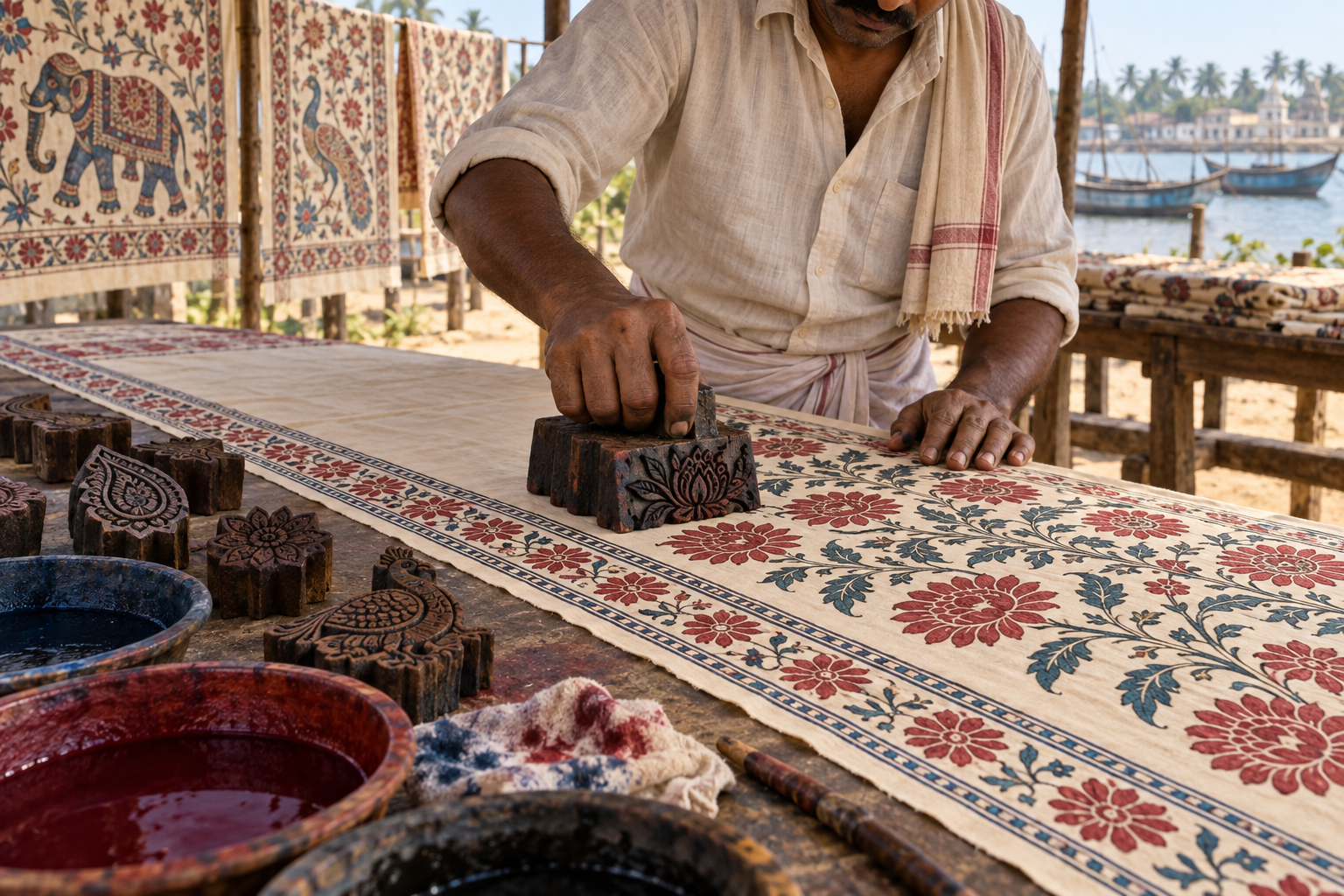
Coastal Kalamkari illustration
Original illustration of a block-printing worktable, not a documentary photograph.
Read this visual
Craft-place clusters are approximate. Pedana and Machilipatnam are distinct from Srikalahasti; method and registered product name matter more than a shop label.
Current district geometry: APSDMA. Cultural and GI details: credited public-body and registry sources.