Belum Caves are a natural cave attraction in the Nandyal-region tourism geography. Water and geological processes shaped the underground passages; people later developed visitor access and interpretation. This is the opposite formation category from an excavated rock-cut monument such as Undavalli. A ticket counter or built walkway inside Belum does not make the original cavern human-carved. The Nandyal district visitor listings recognise Belum among local destinations.
In an image question, look for natural passage shapes and cave formations, but do not claim a specific stalactite age from a photograph. Compare Belum with Borra: both are natural caves, yet Borra belongs to the northeastern Eastern Ghats setting near Araku, while Belum is in the southern inland belt. A separate MCQ may offer “fort,” “stupa,” “natural cave” and “temple”; Belum is the natural cave. Current opening conditions should be checked locally rather than treated as a permanent book fact.
Worked example: Belum is a natural cave system in inland southern AP. Artificial lighting, visitor stairs and signage are later tourism infrastructure, not evidence that people excavated the cave itself. A question asking 'natural versus rock-cut' should therefore classify by geological origin. A current opening notice is separate from cave formation and may change seasonally.
Active recall: Explain why Belum is a natural cave even with tourist paths. Which cave near Araku shares the natural-formation category?
Natural versus rock-cut caves
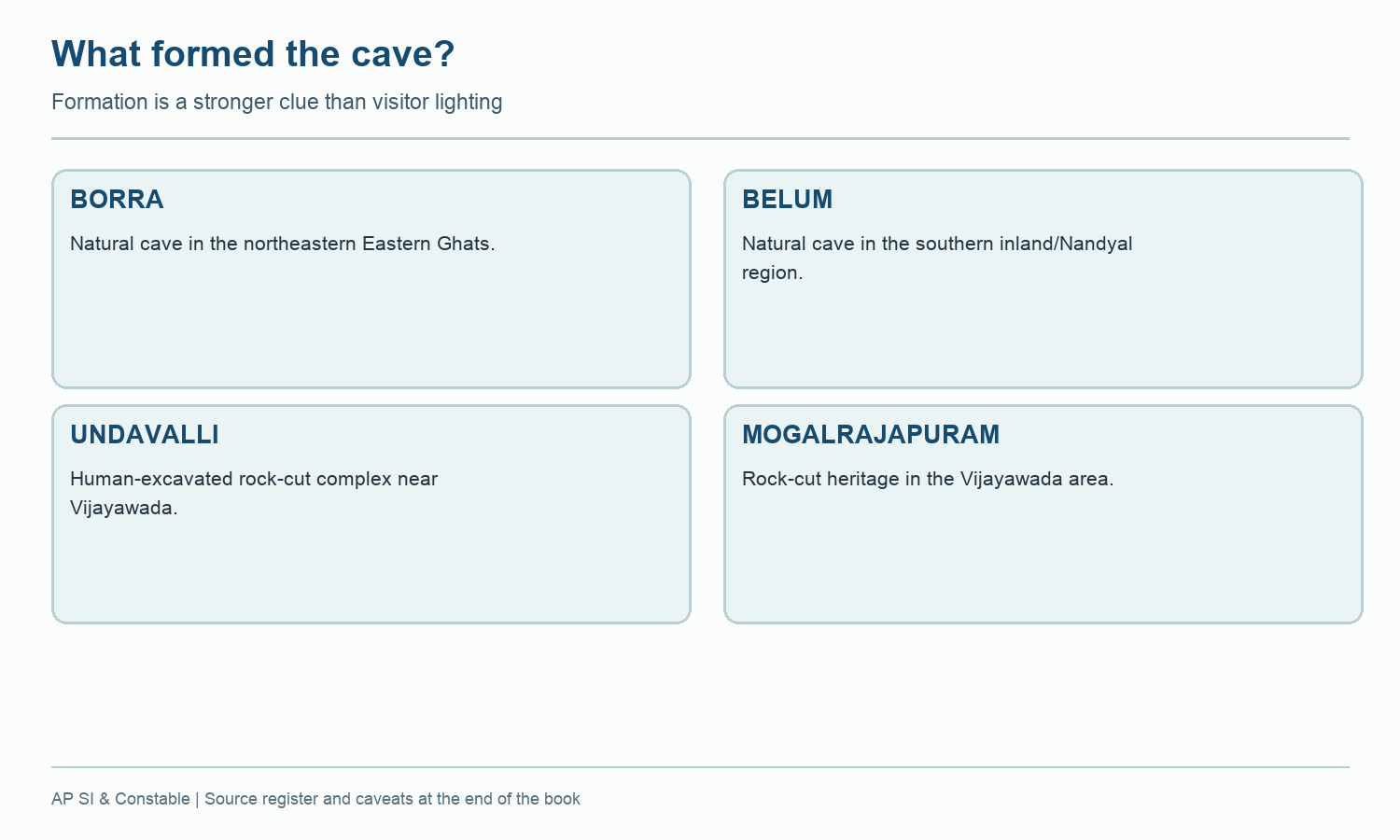
Geology created Borra and Belum; people excavated Undavalli.
Read this visual
Borra and Belum are natural caves; Undavalli and Mogalrajapuram are rock-cut. Visitor lighting does not determine origin.
Current district geometry: APSDMA. Site status and access: credited tourism, archaeology, UNESCO and forest sources.