The Andhra Pradesh Micro Irrigation Project, APMIP, covers drip, sprinkler and related systems for several crop sectors. Tirupati district lists horticulture, agriculture, oil palm, sugarcane and sericulture, while Nellore's project page explains water-use-efficiency objectives. A drip line applies water near roots; a sprinkler distributes it as spray. The right design depends on soil, crop, water quality and economics. “Micro-irrigation” does not name one universal device.
The project is linked to “Per Drop More Crop” policy language. That is a goal, not a measured saving for every installation. Subsidy percentages vary by date and farmer category, so they should be checked in the latest order and not embedded as timeless MCQ keys. Distinguish irrigation method from water source: drip can deliver groundwater, stored surface water or another suitable supply. It changes application efficiency but does not create water where none exists.
Worked example: Drip and sprinkler systems apply water to fields; a tank, canal or borewell supplies it. A farm can use a well and drip together, so the terms are not mutually exclusive. Compare conveyance losses and application efficiency without claiming a fixed percentage saving for every crop. A programme's installed area is not identical to fully functioning irrigation in a given season.
Active recall: Name two APMIP methods and explain why drip is not itself a river or reservoir.
Water source versus application
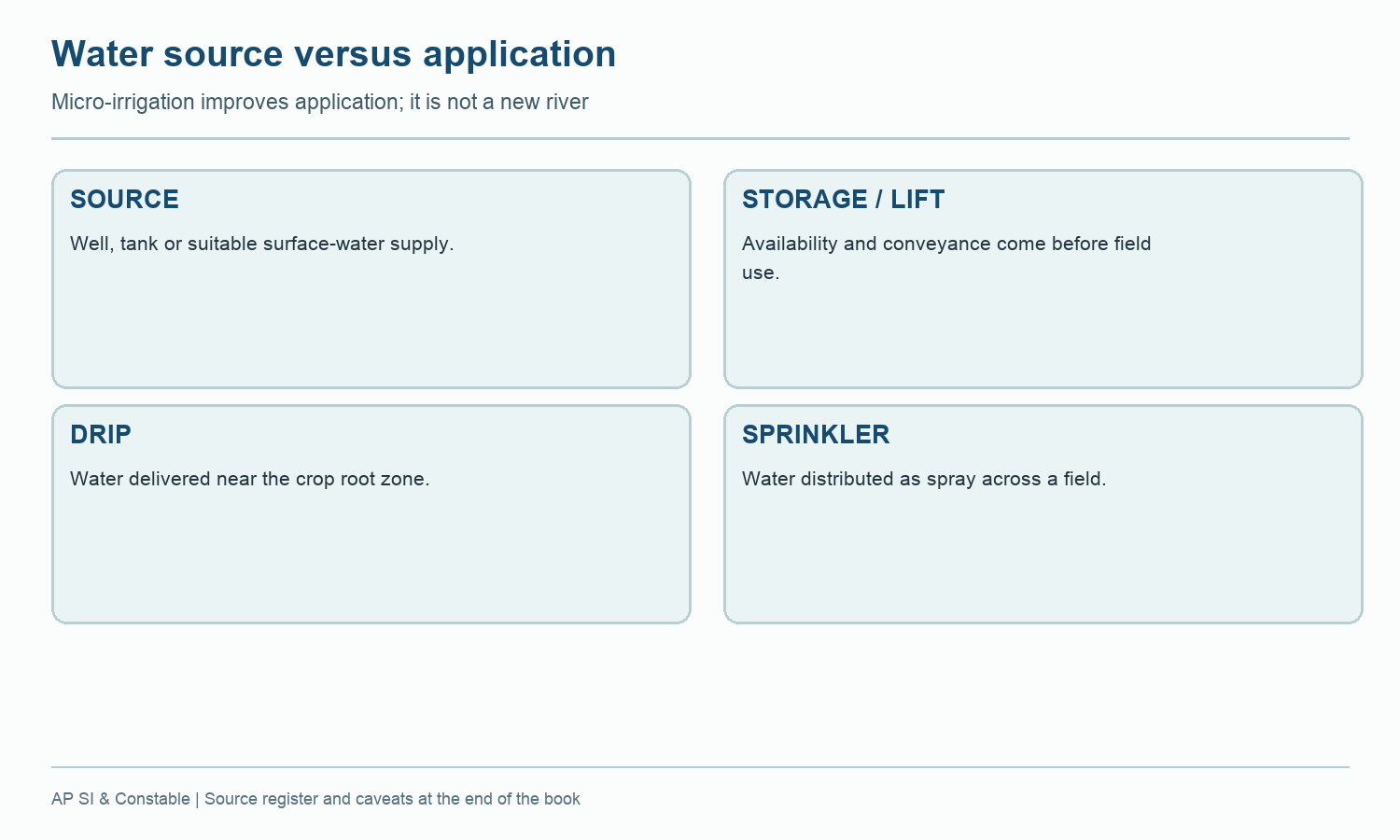
A tank or well supplies water; drip and sprinkler apply it.
Read this visual
Water source and field application are different: canal, tank or well can supply a drip or sprinkler system. Installed area is not necessarily fully operational area.
Current district geometry: APSDMA. Crop and irrigation claims: credited agriculture and water-authority sources.