Freedom movement in Andhra
What to remember
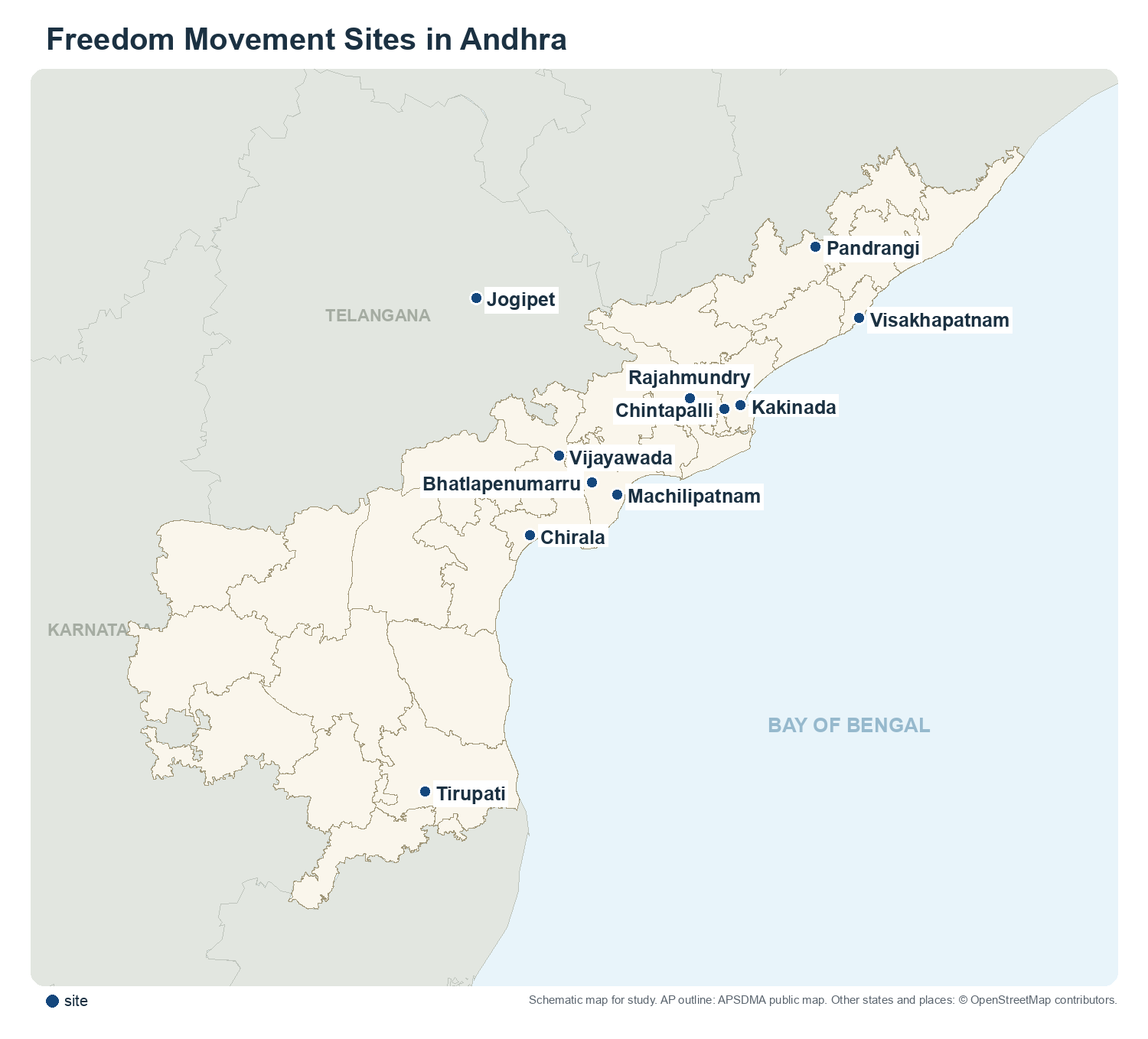
- Andhra's key events: Rampa Rebellion 1922 (Alluri Sitarama Raju), Chirala-Perala 1921, Palnadu Forest Satyagraha 1921, Kakinada Congress 1923, Salt Satyagraha 1930.
- Andhra leaders and titles: Prakasam (Andhra Kesari), Potti Sriramulu (Amarajeevi), Nageswara Rao (Desoddharaka), Gopalakrishnayya (Andhra Ratna), Konda Venkatappayya (Deshabhakta).
- Pingali Venkayya of Bhatlapenumarru designed the tricolour; it was presented at Vijayawada in 1921.
Early background
The Indian National Congress began in 1885 in Bombay under W. C. Bonnerjee. The Madras Mahajana Sabha (1884) and the Madras session of 1887 (chaired by Badruddin Tyabji, the first Muslim president) brought South India into politics. In Andhra, newspapers did much of the early work. Krishna Patrika began in 1902 at Machilipatnam; Mutnuri Krishna Rao later became its long-serving editor. Andhra Patrika began in 1908 under Kasinadhuni Nageswara Rao. Swarajya daily (1921) was started by Tanguturi Prakasam. Andhra Prabha began in 1938.
Reform and politics were linked. Kandukuri Veeresalingam's Hithakarini Samajam (1906) prepared minds for change.
National events and the Andhra response
| Year | National event |
|---|---|
| 1905 | Partition of Bengal; Swadeshi Movement |
| 1907 | Surat Split of Congress |
| 1916 | Home Rule League in Madras (Annie Besant); Lucknow Pact |
| 1917 | Champaran Satyagraha |
| 1919 | Rowlatt Act; Jallianwala Bagh massacre |
| 1920 | Non-Cooperation Movement begins |
| 1922 | Chauri Chaura |
| 1928 | Simon Commission arrives; Bardoli Satyagraha |
| 1929 | Lahore session declares Purna Swaraj (Nehru) |
| 1930 | Dandi March |
| 1931 | Gandhi-Irwin Pact |
| 1932 | Communal Award; Poona Pact |
| 1942 | Cripps Mission; Quit India Movement |
| 1946 | Cabinet Mission |
Gandhi first visited Andhra in 1921. The AICC session was held at Vijayawada in 1921. The Kakinada session of Congress was held in 1923 under Mohammed Ali Jauhar. Madras sessions also took place in 1894, 1898, 1903, 1908, 1914 and 1927.
The tricolour and Vijayawada, 1921
Pingali Venkayya, known as Jhanda Venkayya, was born at Bhatlapenumarru. He designed a national flag. It was presented at Vijayawada in 1921. Gandhi Hill in Vijayawada is a freedom landmark.
Mass movements inside Andhra
| Movement | Year | Leader / area |
|---|---|---|
| Rampa Rebellion | 1922 | Alluri Sitarama Raju, Godavari Agency / Eastern Ghats |
| Attack on Chintapalli police station | 1922 | Alluri Sitarama Raju |
| Chirala-Perala movement | 1921 | Duggirala Gopalakrishnayya, Guntur area |
| Palnadu Forest Satyagraha | 1921 | Kanneganti Hanumanthu, Guntur |
| Salt Satyagraha in Andhra | 1930 | Coastal Andhra |
Note: the Chirala-Perala movement belongs to 1921 (tax refusal from January, exodus to Ramanagar in April); older lists give 1919 or 1920, the years of the municipal scheme.
Alluri Sitarama Raju. Born at Pandrangi, he is called Manyam Veerudu. He led the hill people of the Rampa region against forest and police rules. The attack on Chintapalli police station was in 1922. He died in 1924.
Chirala-Perala. Duggirala Gopalakrishnayya, called Andhra Ratna, led villagers against municipal control and taxes. It is an example of a non-cooperation style protest.
Palnadu Forest Satyagraha. Villagers broke forest rules in Palnadu, Guntur district, to protest grazing and forest restrictions.
Andhra's leaders
| Leader | Title / work | Note |
|---|---|---|
| Tanguturi Prakasam | Andhra Kesari | Born at Vinodarayunipalem; Swarajya daily; first Chief Minister of Andhra State |
| Potti Sriramulu | Amarajeevi | Fasted for a separate Andhra State; died 1952 |
| Kasinadhuni Nageswara Rao | Desoddharaka | Founded Andhra Patrika |
| Duggirala Gopalakrishnayya | Andhra Ratna | Chirala-Perala |
| Konda Venkatappayya | Deshabhakta | Congress leader |
| Bhogaraju Pattabhi Sitaramayya | Founded Andhra Bank (1923) | Born at Gundugolanu; Congress president at Jaipur |
| Durgabai Deshmukh | Founded Andhra Mahila Sabha (1937) | Born at Rajahmundry; first chairperson of Central Social Welfare Board |
| Madapati Hanumantha Rao | Andhra Pitamaha | Andhra Mahasabha in Telangana |
Pattabhi Sitaramayya wrote History of the Indian National Congress and Feathers and Stones. He chaired the Jaipur session in 1948.
Congress sessions to remember
| Session | Year | President |
|---|---|---|
| Bombay (first) | 1885 | W. C. Bonnerjee |
| Calcutta | 1886 | Dadabhai Naoroji |
| Madras | 1887 | Badruddin Tyabji |
| Surat | 1907 | Rash Behari Ghosh |
| Lucknow | 1916 | Ambica Charan Majumdar |
| Calcutta | 1917 | Annie Besant |
| Amritsar | 1919 | Motilal Nehru |
| Kakinada | 1923 | Mohammed Ali Jauhar |
| Belgaum | 1924 | Mahatma Gandhi |
| Kanpur | 1925 | Sarojini Naidu |
| Lahore | 1929 | Jawaharlal Nehru |
| Karachi | 1931 | Sardar Vallabhbhai Patel |
| Haripura | 1938 | Subhas Chandra Bose |
National leaders and their titles
Tilak is Lokmanya. Lala Lajpat Rai is Punjab Kesari. Patel is the Iron Man of India. Subhas Chandra Bose is Netaji (born at Cuttack) and founded the Forward Bloc (1939) and led the Indian National Army. Chittaranjan Das is Deshbandhu and founded the Swaraj Party (1923). Khan Abdul Ghaffar Khan is Frontier Gandhi. Sarojini Naidu, born at Hyderabad, is the Nightingale of India. Gandhi, born at Porbandar, is the Father of the Nation. Nehru was born at Allahabad. Gokhale is called the political guru of Gandhi. Gandhi's Sabarmati Ashram is at Ahmedabad and his Sevagram Ashram is at Wardha.
Gandhi wrote Hind Swaraj. Nehru wrote The Discovery of India. Tilak wrote Gita Rahasya.
Laws and offers that sparked protest
| Measure | Subject |
|---|---|
| Vernacular Press Act (1878) | Control of Indian-language newspapers |
| Ilbert Bill (1883) | Trial of Europeans by Indian judges |
| Rowlatt Act (1919) | Detention without trial |
| Communal Award (1932) | Separate electorates |
| Poona Pact (1932) | Reserved seats for depressed classes |
| Cripps Mission (1942) | Dominion status after the war |
| August Offer (1940) | Expansion of the Viceroy's Executive Council |
The Individual Satyagraha of 1940 was launched by Gandhi; Vinoba Bhave was the first satyagrahi. The Cripps Mission failed to satisfy Congress, and Quit India followed in 1942.
Institutions and culture
Andhra Bank (1923), Andhra University (1926, Visakhapatnam), Andhra Mahasabha (1930) and Andhra Mahila Sabha (1937) show the spread of national feeling. Sri Venkateswara University at Tirupati came in 1954. Poets added to the mood. Sankarambadi Sundarachari wrote Maa Telugu Talliki Mallepoodanda. Sri Sri wrote Mahaprasthanam. Gurajada wrote Desamunu Preminchumanna. In 1919, Rabindranath Tagore translated Jana Gana Mana at Madanapalle.
Last years of the struggle
The Government of India Act of 1935 gave provincial autonomy. Quit India (1942) was followed by the Cabinet Mission (1946) and the Royal Indian Navy Mutiny (1946). India became independent in 1947. Operation Polo merged Hyderabad State with India in 1948. The Bhoodan Movement of Vinoba Bhave began at Pochampally in 1951.
Exam traps
- Prakasam is Andhra Kesari; Nageswara Rao is Desoddharaka; Gopalakrishnayya is Andhra Ratna.
- Potti Sriramulu is Amarajeevi; Pingali Venkayya is Jhanda Venkayya.
- Rampa 1922 (Raju) is not the same as Rampa 1879 (Koya chiefs).
- Kakinada session 1923 (Mohammed Ali Jauhar); Madras session 1887 (Tyabji).
- Andhra Patrika (1908) differs from Krishna Patrika (1902) and Andhra Prabha (1938).
- Annie Besant was the first woman Congress president; Sarojini Naidu was the first Indian woman president.
- Bardoli Satyagraha (1928) is Patel's; Champaran (1917) and Kheda (1918) are Gandhi's.
- Jana Gana Mana is by Tagore; Vande Mataram is by Bankim Chandra Chatterjee.
One-liners
- 1. Rampa Rebellion: 1922, Alluri Sitarama Raju.
- 2. Raju was born at Pandrangi and died in 1924.
- 3. Gandhi first visited Andhra in 1921.
- 4. Pingali Venkayya was born at Bhatlapenumarru.
- 5. Kakinada Congress: 1923.
- 6. Andhra Bank was founded in 1923 by Pattabhi Sitaramayya.
- 7. Andhra University began in 1926.
- 8. Andhra Mahasabha held its first conference, at Jogipet, in 1930.
- 9. Swarajya daily was started by Prakasam in 1921.
- 10. Dandi March: 1930; Quit India: 1942.
Background and context
The Indian National Congress began in 1885 in Bombay. At first it was a small body of educated men who sent petitions to the British government. South India joined early. The Madras session of 1887 was chaired by Badruddin Tyabji, the first Muslim president of the Congress. From then on, Madras was a regular venue for Congress meetings, and Telugu leaders took part in them.
Andhra was not a single province in those years. Telugu people lived in the Madras Presidency (the coastal districts and Rayalaseema), in the princely state of Hyderabad (Telangana), and in some small areas under other rulers. This split made the Telugu leaders think about language and culture as one common identity. The freedom movement and the demand for a Telugu-speaking state grew together.
Three forces shaped the early movement in Andhra.
- 1. Newspapers. The Telugu press carried national news to small towns. Krishna Patrika began in 1902 at Machilipatnam. Andhra Patrika was started by Kasinadhuni Nageswara Rao on 9 September 1908. It began as a weekly in Bombay, moved to Madras in 1914 and became a daily, the first long-running Telugu daily. It supported Gandhi's movement from 1920. Tanguturi Prakasam started the daily Swarajya in 1921. Andhra Prabha came in 1938.
- 2. Social reform. Kandukuri Veeresalingam's work, such as the Hithakarini Samajam of 1906, taught people to question old customs. Reform and politics often used the same speakers and the same halls.
- 3. National events. Each big event in India reached Andhra within weeks, through newspapers, speakers and visiting leaders.
| Year | National event | Why it mattered |
|---|---|---|
| 1905 | Partition of Bengal; Swadeshi | Boycott of foreign goods became a political tool |
| 1907 | Surat split | Congress divided into two camps for some years |
| 1916 | Home Rule League in Madras; Lucknow Pact | Annie Besant brought many new people into politics |
| 1917-18 | Champaran and Kheda | Gandhi's first local satyagrahas in India |
| 1919 | Rowlatt Act; Jallianwala Bagh | Anger against the government spread widely |
| 1920 | Non-Cooperation begins | Mass politics reached villages |
| 1922 | Chauri Chaura | Gandhi called off the movement |
| 1928 | Simon Commission; Bardoli | A new wave of protest |
| 1930 | Dandi March | Civil Disobedience begins |
| 1942 | Cripps Mission; Quit India | Final mass struggle |
Political history
1. Non-Cooperation and the first Andhra protests (1919-1923)
After Jallianwala Bagh and the Rowlatt Act, Gandhi turned the Congress into a mass body. The Non-Cooperation Movement of 1920 asked people to give up government titles, schools, courts and foreign cloth. Gandhi first visited Andhra in 1921. The All India Congress Committee met at Vijayawada (then called Bezwada) in 1921. A big public meeting and a fund drive for the Tilak Swaraj Fund made the town the centre of attention.
*Tricolour at Vijayawada.* Pingali Venkayya was born at Bhatlapenumarru. In his youth he went to South Africa as a soldier in the Second Boer War (1899-1902). Seeing Indian troops ordered to salute the Union Jack there, he came to feel that India must have a flag of its own. From the Calcutta Congress of 1906 onward, he spent years working out designs for it. In March 1921, at the Vijayawada meeting, he showed his flag to Gandhi. It had red and green stripes for the two large communities. Gandhi suggested a white stripe for all other communities. Venkayya was also a teacher at Andhra National College, a geologist and a farm scientist. His work in those fields earned him the nicknames "Diamond Venkayya" and "Cotton Venkayya". A stamp in his honour came out in India in 2009.
*Chirala-Perala.* The authorities made Chirala and Perala into one municipality. Local tax rose very sharply, from about 4,000 to about 40,000 rupees a year. The council members resigned. Duggirala Gopalakrishnayya led the people. Following Gandhi's advice, nearly all residents left the town and set up a new settlement called Ramanagar outside the municipal limit. With the town empty, the tax could not be collected. The movement lasted about eleven months. It ended when funds ran out and Gopalakrishnayya was arrested. People call him "Andhra Ratna." He died young, in 1928. This is a rare example of a "village migration" form of protest.
*Palnadu Forest Satyagraha (1921).* In the Palnadu area villagers broke forest rules that limited grazing of cattle and use of forest produce. Kanneganti Hanumanthu is the name linked with this protest. It is part of a wider series of forest protests in India at the time.
*Newspaper and the lawyer.* Tanguturi Prakasam was born at Vinodarayunipalem in 1872 and became a barrister after studies in Britain. He joined the Non-Cooperation Movement in 1921 and started the Swarajya newspaper. Many lawyers at that time gave up practice. Prakasam did so too.
*Rampa Rebellion (1922-24).* This is the most famous armed protest in Andhra. See the section below.
*Kakinada Congress (1923).* The Kakinada session of 1923 was held under Mohammed Ali Jauhar. Andhra Congress workers hosted a large gathering. The same year saw Andhra Bank founded by Pattabhi Sitaramayya, born at Gundugolanu. After Chauri Chaura in February 1922, Gandhi withdrew the movement. Some leaders then formed the Swaraj Party in 1923 (Chittaranjan Das) to work in the councils.
2. The Rampa Rebellion in detail
Alluri Sitarama Raju was born in 1897 or 1898 at Pandrangi. His father was a photographer. As a young man he took up the life of a sannyasi, when he was about 18 years old. He then lived with the hill tribes of the Eastern Ghats.
*Why the rebellion happened.* The Madras Forest Act of 1882 limited the movement of tribal people in the forest. It also stopped podu, the old shifting cultivation. Officers forced tribal people to do unpaid road work. The hereditary headmen (muttadars) lost their old powers. So the hill people and the headmen had the same complaints.
*What happened.* In August 1922 Raju led raids on police stations at Chintapalli, Krishnadevipeta and Rajavommangi. About 500 followers joined. They took guns and bullets. He used a method of sending a written warning before an attack, which people called "chilli post." His chief helpers were Gam Malludora and Gam Gantamdora. The government sent a special officer, Thomas George Rutherford, in 1924 and the rebels were hunted down. Raju was captured in the forest and shot at Koyyuru on 7 May 1924.
People call him "Manyam Veerudu," the hero of the forest. There is a memorial at Krishnadevipeta. Note that "Rampa 1922" is different from the older Rampa revolt of 1879, which was led by Koya chiefs.
3. Civil Disobedience (1930-34)
On 12 March 1930 Gandhi began the Dandi March from Sabarmati Ashram. It covered about 387 km and ended on 6 April 1930. It broke the salt law and started the Civil Disobedience Movement. On the east coast, C. Rajagopalachari led a parallel march to Vedaranyam. In Andhra, volunteers made salt at the coast in many places. Prakasam led a salt march from Devarampadu in 1930. Potti Sriramulu was jailed for his part in the Salt Satyagraha. The Andhra Mahasabha of Hyderabad State held its first conference at Jogipet in 1930.
Potti Sriramulu was born in 1901 in Padamatipalli. He was trained as a sanitary engineer and worked for a railway. After he lost his wife and child in 1929, he joined Gandhi's Sabarmati Ashram in 1931. He later joined individual satyagraha and Quit India, and he was jailed three times. Between 1946 and 1948 he fasted three times to support the right of Dalits to enter temples. In 1952 he began a fast for a separate Andhra State on 19 October. He died on 15 December 1952 after 58 days. Riots followed. Nehru announced the new state a few days later, on 19 December. Andhra State was formed on 1 October 1953, with Kurnool as the capital.
4. Simon Commission, Congress sessions and the 1930s
In 1928 the Simon Commission came to India with no Indian member. People protested in Madras. Prakasam walked up to armed officers and bared his chest. This earned him the name "Andhra Kesari," the Lion of Andhra. In 1929 the Lahore session of the Congress, under Nehru, declared "Purna Swaraj" as the goal. In 1931 came the Gandhi-Irwin Pact, and in 1932 the Communal Award and the Poona Pact. The Government of India Act of 1935 gave provinces more self-rule, and Congress took office in many provinces in 1937.
5. Quit India and the end (1939-1947)
The Individual Satyagraha of 1940 was launched by Gandhi; Vinoba Bhave was the first satyagrahi. The Cripps Mission of 1942 offered only dominion status after the war, and Congress rejected it. On 8 August 1942, at Bombay, Gandhi gave the call "Do or Die." Almost all leaders were arrested within hours. The movement continued as an underground struggle with strikes, attacks on post offices and railway stations, and secret radio. Andhra also saw arrests and protests. India became independent on 15 August 1947.
Administration and economy
The British ruled Andhra in two main ways. In the Madras Presidency, they ruled directly through collectors and taxes on land. In Hyderabad, the Nizam ruled, and the British had influence through a Resident. The movement used these differences.
Local bodies such as municipalities were meant to collect taxes. This is why the Chirala-Perala protest was so effective. When the people left, the whole system stopped.
Forest laws were another source of anger. The Madras Forest Act of 1882 turned forest land into government property. Hill people lost their claim to use it. This explains the Rampa rebellion.
The salt tax and the salt law of 1882 touched every home. This is why the salt march was a good symbol.
Economic ideas also changed. Swadeshi meant using local goods. Khadi spinning was promoted from the 1920s. In 1923 the Andhra Bank was founded, with Pattabhi Sitaramayya as the founder. It was a step to keep Telugu people's savings in Telugu hands. The Andhra Patrika and Swarajya newspapers built a Telugu public space.
Society, religion and culture
*Flag and symbols.* The tricolour was shaped in Vijayawada in 1921. The red and green stripes stood for two communities, and the white stripe was added by Gandhi's advice for all others.
*Education.* Andhra National College, where Pingali Venkayya taught, was a centre of national education. Andhra University was set up in 1926 under an Act of 1925, first at Vijayawada (Bezwada); its headquarters moved to Visakhapatnam (Waltair) around 1930. Its main founder is Sir C. R. Reddy. The Maharaja of Jeypore gave large donations. Sri Venkateswara University at Tirupati came in 1954.
*Women.* Durgabai Deshmukh, born at Rajahmundry, founded the Andhra Mahila Sabha in 1937. Later she was the first chair of the Central Social Welfare Board.
*Language and culture in Hyderabad.* In 1921 a Telugu resolution was refused at a social reforms meeting of the Nizam's state. Twelve members then formed the Andhra Janasangham, the body that later became the Andhra Mahasabha. Its first conference was held at Jogipet in 1930. Madapati Hanumantha Rao ("Andhra Pitamaha") was its main figure. Its aim was to protect Telugu language and culture. It also spoke against child marriage and for widow marriage. In 1930 to 1945 it held 13 big meetings. These spread political awareness against the Nizam.
*Poets and songs.* Poets added to the mood of the time. Sankarambadi Sundarachari wrote "Maa Telugu Talliki Mallepoodanda." Gurajada wrote "Desamunu Preminchumanna." Sri Sri wrote "Mahaprasthanam." In 1919 Rabindranath Tagore translated "Jana Gana Mana" into English at Madanapalle.
*Leaders and their titles.*
| Leader | Title / known for |
|---|---|
| Tanguturi Prakasam | Andhra Kesari; Swarajya daily; Premier of Madras (1946-47); first Chief Minister of Andhra State |
| Potti Sriramulu | Amarajeevi; fast of 1952 |
| Kasinadhuni Nageswara Rao | Desoddharaka; Andhra Patrika |
| Duggirala Gopalakrishnayya | Andhra Ratna; Chirala-Perala |
| Konda Venkatappayya | Deshabhakta |
| Pingali Venkayya | Jhanda Venkayya; tricolour |
| Alluri Sitarama Raju | Manyam Veerudu; Rampa 1922 |
| Pattabhi Sitaramayya | Andhra Bank (1923); Congress president, Jaipur 1948 |
| Durgabai Deshmukh | Andhra Mahila Sabha (1937) |
| Madapati Hanumantha Rao | Andhra Pitamaha; Andhra Mahasabha |
Decline, legacy and sites to know
The long struggle ended on 15 August 1947. In Andhra, the next goal was a separate state for Telugu speakers. Prakasam became Premier of the Madras Presidency in 1946 and worked against the zamindari system. He resigned in 1947 after quarrels inside his party. Potti Sriramulu's fast of 1952 forced the issue. Andhra State was formed on 1 October 1953 with Prakasam as its first Chief Minister. His government fell after a no-confidence vote, linked to the prohibition policy. He died in 1957. The district now called Prakasam was named after him in 1972.
In Hyderabad, the Nizam's rule continued after 1947. Operation Polo of 1948 merged Hyderabad State with India. Vinoba Bhave's Bhoodan Movement began at Pochampally in 1951. Andhra Pradesh was formed in 1956.
Alluri Sitarama Raju is now honoured in many ways: his name was given to a district and to an airport in Andhra Pradesh, and there is a memorial at Krishnadevipeta.
| Site | Link to the freedom movement |
|---|---|
| Vijayawada | AICC session 1921; flag shown to Gandhi; Gandhi Hill |
| Bhatlapenumarru | Birthplace of Pingali Venkayya |
| Pandrangi | Birthplace of Alluri Sitarama Raju |
| Chintapalli, Krishnadevipeta, Rajavommangi | Police station raids of August 1922 |
| Koyyuru | Place where Raju was shot, 1924 |
| Krishnadevipeta | Raju's memorial |
| Chirala and Perala (Ramanagar) | The migration protest of 1921 |
| Kakinada | Congress session, 1923 |
| Visakhapatnam | Andhra University, 1926 |
| Madanapalle | Tagore's translation of Jana Gana Mana, 1919 |
| Jogipet | First Andhra Mahasabha conference, 1930 |
| Pochampally | Start of Bhoodan, 1951 |
| Vinodarayunipalem | Birthplace of Prakasam |
How examiners use this chapter
- Titles match. Andhra Kesari is Prakasam, Desoddharaka is Nageswara Rao, Andhra Ratna is Gopalakrishnayya, Amarajeevi is Potti Sriramulu, Deshabhakta is Konda Venkatappayya, Jhanda Venkayya is Pingali Venkayya. Tie each title to one act: newspaper, protest, fast, flag.
- Newspaper order. Krishna Patrika 1902, Andhra Patrika 1908, Swarajya 1921, Andhra Prabha 1938.
- Place-and-event pairs. Rampa is Alluri Sitarama Raju and 1922. Chirala-Perala is Gopalakrishnayya. Palnadu is the forest satyagraha. Kakinada is the 1923 Congress session under Mohammed Ali Jauhar. Do not mix Rampa 1922 with Rampa 1879.
- Birthplaces. Pandrangi (Raju), Bhatlapenumarru (Venkayya), Vinodarayunipalem (Prakasam), Gundugolanu (Pattabhi), Rajahmundry (Durgabai).
- Institution years. Andhra Bank 1923, Andhra University 1926, Andhra Mahasabha first conference 1930, Andhra Mahila Sabha 1937, Andhra State 1953, Andhra Pradesh 1956.
- The flag. Presented at Vijayawada in 1921. The white stripe was suggested by Gandhi.
- Dates for the end. Raju shot on 7 May 1924. Sriramulu fast began 19 October 1952 and he died 15 December 1952. Andhra State was formed on 1 October 1953.
- National pairs often added. Bardoli is Patel (1928); Champaran 1917 and Kheda 1918 are Gandhi's. Annie Besant is the first woman Congress president; Sarojini Naidu is the first Indian woman president.
Worked cases
Case 1: Match the titles: Andhra Kesari, Desoddharaka, Andhra Ratna, Amarajeevi, Deshabhakta, Jhanda Venkayya.
Reasoning:
- 1. Andhra Kesari is Tanguturi Prakasam, who started the Swarajya daily.
- 2. Desoddharaka is Kasinadhuni Nageswara Rao, who founded Andhra Patrika.
- 3. Andhra Ratna is Duggirala Gopalakrishnayya of the Chirala-Perala movement.
- 4. Amarajeevi is Potti Sriramulu, Deshabhakta is Konda Venkatappayya, and Jhanda Venkayya is Pingali Venkayya, the flag designer.
Takeaway: Tie each title to one activity (newspaper, protest, fast, flag), and the match becomes easy.
Case 2: Arrange the newspapers by year of start: Andhra Prabha, Swarajya, Krishna Patrika, Andhra Patrika.
Reasoning:
- 1. Krishna Patrika began in 1902 at Machilipatnam; Mutnuri Krishna Rao later became its editor.
- 2. Andhra Patrika began in 1908 under Kasinadhuni Nageswara Rao.
- 3. Swarajya daily began in 1921 under Tanguturi Prakasam.
- 4. Andhra Prabha began in 1938.
Takeaway: 1902, 1908, 1921, 1938: Krishna, Andhra Patrika, Swarajya, Andhra Prabha.
Case 3: Which Congress session was held in Andhra: Madras 1887, Kakinada 1923, Belgaum 1924, Lahore 1929?
Reasoning:
- 1. Madras sessions (1887, 1894, 1898, 1903, 1908, 1914, 1927) were held at Madras.
- 2. Belgaum 1924 had Gandhi as president, and Lahore 1929 had Nehru.
- 3. Kakinada 1923 was chaired by Mohammed Ali Jauhar.
- 4. Kakinada is the only Andhra venue among the options.
Takeaway: Match the town first, and the president second.
Case 4: Who led which satyagraha: Champaran, Kheda, Bardoli?
Reasoning:
- 1. Champaran was in 1917 and Kheda in 1918. Both were led by Gandhi.
- 2. Bardoli was in 1928.
- 3. Bardoli was led by Sardar Vallabhbhai Patel, not Gandhi.
- 4. So the odd one out among the three leaders is Bardoli, with Patel.
Takeaway: Put the years in order (1917, 1918, 1928) and note that the last one changes the leader.
Compare and contrast
| Person | Session or role | Year or note |
|---|---|---|
| Dadabhai Naoroji | Congress president at Calcutta, Lahore and Calcutta again | 1886, 1893, 1906 |
| W. C. Bonnerjee | First president; also Allahabad | 1885, 1892 |
| Rash Behari Ghosh | Surat and Madras | 1907, 1908 |
| Annie Besant | First woman president | Calcutta 1917 |
| Sarojini Naidu | First Indian woman president | Kanpur 1925 |
| Organisation | Founder | Place or year |
|---|---|---|
| Home Rule League in Madras | Annie Besant | 1916 |
| Home Rule League of Pune | Bal Gangadhar Tilak | - |
| Swaraj Party | Chittaranjan Das | 1923 |
| Forward Bloc | Subhas Chandra Bose | 1939 |
| Hindu Mahasabha | Madan Mohan Malaviya | 1915 |
| Servants of India Society | Gopal Krishna Gokhale | 1905 |
How to use these tables: Congress presidents are asked in two ways, from the president to the town, or from the town to the president. Practise both. Some presidents held the chair more than once, so a single name can match two years. Do not mix Annie Besant, the first woman president, with Sarojini Naidu, the first Indian woman president. In the second table, the Home Rule League has two founders in two cities, so always add the city. Leaders with similar names also cause errors: Sardar Vallabhbhai Patel led Bardoli, Subhas Chandra Bose led the Forward Bloc and the Indian National Army, and Chittaranjan Das led the Swaraj Party.
Sequence and timeline
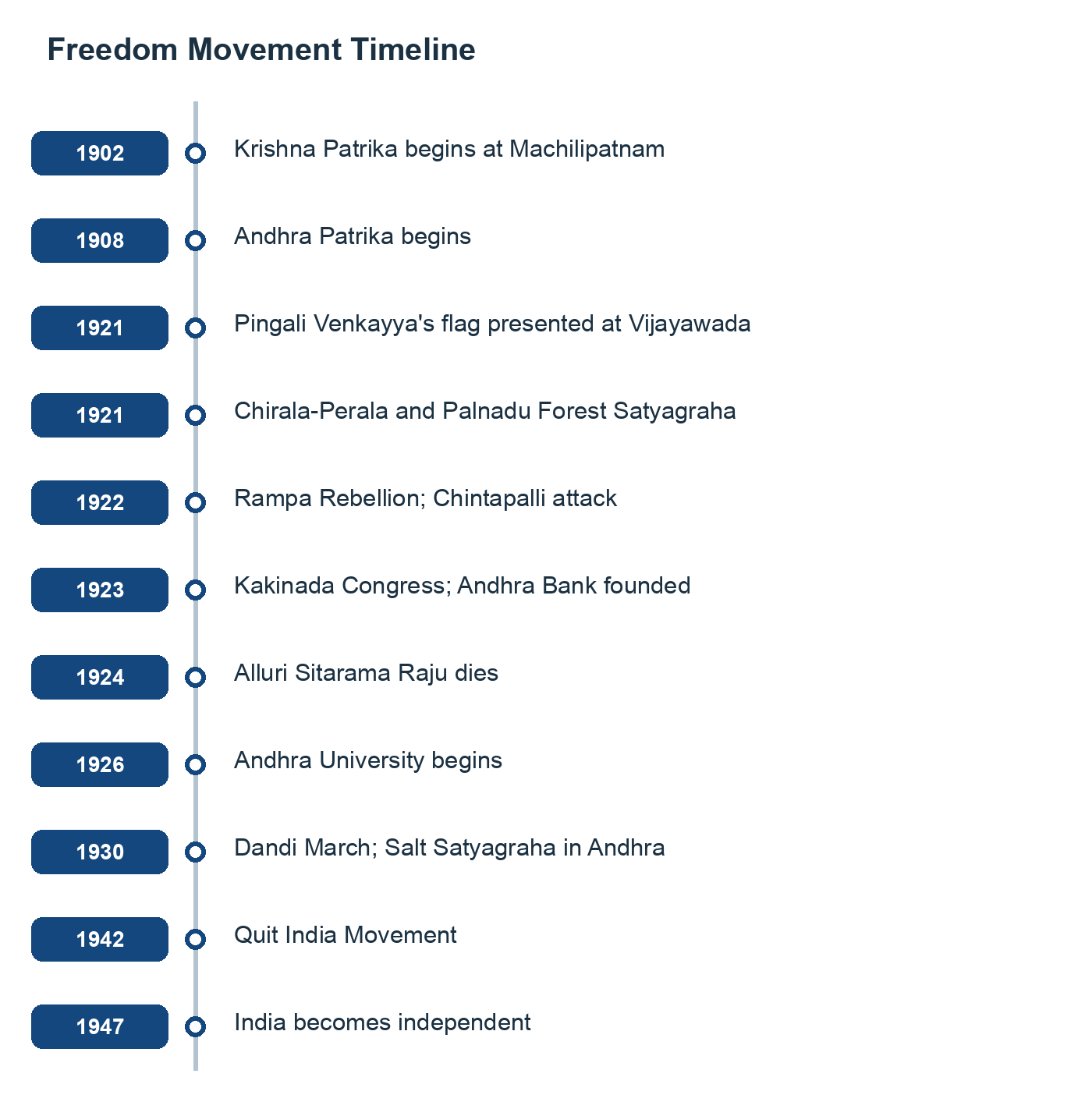
- 1. 1885 - Indian National Congress; 1887 - Madras session.
- 2. 1902 - Krishna Patrika; 1906 - Hithakarini Samajam.
- 3. 1908 - Andhra Patrika.
- 4. 1916 - Home Rule League in Madras.
- 5. 1917 - Champaran; 1918 - Kheda.
- 6. 1919 - Rowlatt Act; Jallianwala Bagh.
- 7. 1920 - Non-Cooperation begins.
- 8. 1921 - AICC at Vijayawada; Gandhi's first visit; Swarajya daily.
- 9. 1922 - Rampa rebellion; Chauri Chaura.
- 10. 1923 - Kakinada session; Andhra Bank.
- 11. 1924 - Raju dies.
- 12. 1926 - Andhra University.
- 13. 1928 - Simon Commission; Bardoli.
- 14. 1929 - Lahore session (Purna Swaraj).
- 15. 1930 - Dandi March; Andhra Mahasabha.
- 16. 1931 - Gandhi-Irwin Pact.
- 17. 1932 - Communal Award; Poona Pact.
- 18. 1937 - Andhra Mahila Sabha.
- 19. 1942 - Cripps Mission; Quit India.
- 20. 1946 - Cabinet Mission.
- 21. 1947 - Independence; 1948 - Operation Polo.
- 22. 1952 - Potti Sriramulu dies; 1953 - Andhra State; 1956 - Andhra Pradesh.
More one-liners
- 1. Andhra Prabha was founded by Ramnath Goenka.
- 2. The Hindu was founded by G. Subramania Iyer.
- 3. The Swaraj Party was founded in 1923.
- 4. The Hindu Mahasabha was founded in 1915.
- 5. The Congress Socialist Party was founded in 1934.
- 6. The Communist Party of India was founded in 1925.
- 7. The Kakori Train Robbery was in 1925.
- 8. The Sri Bagh Pact was in 1937.
- 9. Andhra State was formed in 1953 and Andhra Pradesh in 1956.
- 10. Kurnool was the capital of Andhra State.
- 11. Komaram Bheem led the Gond tribal revolt of Adilabad.
- 12. The first session of the Andhra Mahasabha at Jogipet was chaired by Suravaram Pratap Reddy.
- 13. The Dar Commission was headed by S. K. Dar and the States Reorganisation Commission by Fazl Ali.
- 14. The first Governor of Andhra State was Chandulal Madhavlal Trivedi.
- 15. The first Vice-Chancellor of Andhra University was Cattamanchi Ramalinga Reddy.
Practice questions
Which Andhra leader, along with Jawaharlal Nehru and Vallabhbhai Patel, was a member of the JVP Committee on linguistic provinces?
- Konda Venkatappayya
- Pingali Venkayya
- Tanguturi Prakasam
- Pattabhi Sitaramayya
Answer
D. Pattabhi Sitaramayya
The JVP Committee of 1948-49 comprised Jawaharlal, Vallabhbhai and Pattabhi.
భాషా ప్రాతిపదిక రాష్ట్రాలపై ఏర్పాటైన జేవీపీ కమిటీలో నెహ్రూ, పటేల్లతో పాటు సభ్యుడైన ఆంధ్ర నాయకుడు ఎవరు?
- కొండా వెంకటప్పయ్య
- పింగళి వెంకయ్య
- టంగుటూరి ప్రకాశం
- భోగరాజు పట్టాభి సీతారామయ్య
Who chaired First session of Andhra Mahasabha at Jogipet?
- Ambica Charan Majumdar
- Mahatma Gandhi
- Badruddin Tyabji
- Suravaram Pratap Reddy
Answer
D. Suravaram Pratap Reddy
జోగిపేటలో ఆంధ్ర మహాసభ మొదటి సమావేశం అధ్యక్షుడు ఎవరు?
- అంబికా చరణ్ మజుందార్
- మహాత్మా గాంధీ
- బద్రుద్దీన్ త్యాబ్జీ
- సురవరం ప్రతాపరెడ్డి
Who was the first Telugu person to become Congress president, at the 1891 Nagpur session?
- Tanguturi Prakasam
- P. Ananda Charlu
- Bhogaraju Pattabhi Sitaramayya
- Kasinadhuni Nageswara Rao
Answer
B. P. Ananda Charlu
P. Ananda Charlu presided in 1891; Pattabhi Sitaramayya was the second Telugu president (1948).
1891 నాగ్పూర్ సమావేశంలో కాంగ్రెస్ అధ్యక్షుడైన తొలి తెలుగు వ్యక్తి ఎవరు?
- టంగుటూరి ప్రకాశం
- పి. ఆనందాచార్యులు
- భోగరాజు పట్టాభి సీతారామయ్య
- కాశీనాధుని నాగేశ్వరరావు
Which Andhra leader, Congress president in 1948, authored 'The History of the Indian National Congress'?
- N. G. Ranga
- Tanguturi Prakasam
- Konda Venkatappayya
- Bhogaraju Pattabhi Sitaramayya
Answer
D. Bhogaraju Pattabhi Sitaramayya
Pattabhi Sitaramayya wrote the standard history of the Congress and also started the journal Janmabhoomi.
1948లో కాంగ్రెస్ అధ్యక్షుడైన, 'భారత జాతీయ కాంగ్రెస్ చరిత్ర' గ్రంథాన్ని రచించిన ఆంధ్ర నాయకుడు ఎవరు?
- ఎన్.జి. రంగా
- టంగుటూరి ప్రకాశం
- కొండా వెంకటప్పయ్య
- భోగరాజు పట్టాభి సీతారామయ్య
Suravaram Pratap Reddy chaired which of the following?
- Madras session of Indian National Congress 1914
- Kakinada session of Indian National Congress 1923
- First session of Andhra Mahasabha at Jogipet
- Madras session of Indian National Congress 1903
Answer
C. First session of Andhra Mahasabha at Jogipet
సురవరం ప్రతాపరెడ్డి అధ్యక్షత వహించినది ఏది?
- 1914 మద్రాసు కాంగ్రెస్ సమావేశం
- 1923 కాకినాడ కాంగ్రెస్ సమావేశం
- జోగిపేటలో ఆంధ్ర మహాసభ మొదటి సమావేశం
- 1903 మద్రాసు కాంగ్రెస్ సమావేశం
Arrange the following in chronological order (earliest first): (i) Jai Andhra Movement (ii) Death of Potti Sriramulu after fasting (iii) Formation of Hyderabad State Congress (iv) AICC session at Vijayawada
- (iv), (iii), (ii), (i)
- (i), (iv), (iii), (ii)
- (ii), (iv), (iii), (i)
- (ii), (i), (iii), (iv)
Answer
A. (iv), (iii), (ii), (i)
ఈ క్రింది వాటిని కాలక్రమానుసారం (పూర్వం నుండి తరువాతి వరకు) అమర్చండి: (i) జై ఆంధ్ర ఉద్యమం (ii) నిరాహార దీక్ష తర్వాత పొట్టి శ్రీరాములు మరణం (iii) హైదరాబాద్ స్టేట్ కాంగ్రెస్ ఏర్పాటు (iv) విజయవాడలో ఏఐసీసీ సమావేశం
- (iv), (iii), (ii), (i)
- (i), (iv), (iii), (ii)
- (ii), (iv), (iii), (i)
- (ii), (i), (iii), (iv)
Who was the first Chief Minister of Andhra State formed in 1953?
- Tanguturi Prakasam
- Alluri Sitarama Raju
- Durgabai Deshmukh
- Pingali Venkayya
Answer
A. Tanguturi Prakasam
Prakasam headed the new Andhra State; the 1956 Andhra Pradesh is a different entity.
1953లో ఏర్పడిన ఆంధ్ర రాష్ట్ర మొదటి ముఖ్యమంత్రి ఎవరు?
- టంగుటూరి ప్రకాశం
- అల్లూరి సీతారామరాజు
- దుర్గాబాయి దేశ్ముఖ్
- పింగళి వెంకయ్య
Which set of goals was declared at the 1906 Calcutta INC session?
- Simon Go Back, Purna Swaraj, Salt Satyagraha
- Non-cooperation, civil disobedience, Quit India
- Home Rule, Lucknow Pact, Khilafat
- Swaraj, Swadeshi, boycott, national education
Answer
D. Swaraj, Swadeshi, boycott, national education
The four goals declared were swaraj, swadeshi, boycott and national education.
1906 కలకత్తా INC సమావేశంలో ఏ లక్ష్యాలను ప్రకటించారు?
- సైమన్ గో బ్యాక్, పూర్ణ స్వరాజ్, ఉప్పు సత్యాగ్రహం
- సహాయ నిరాకరణ, శాసనోల్లంఘన, క్విట్ ఇండియా
- హోమ్ రూల్, లక్నో ఒప్పందం, ఖిలాఫత్
- స్వరాజ్యం, స్వదేశీ, బహిష్కరణ, జాతీయ విద్య
Consider the statements: (i) Krishna Patrika was founded by Konda Venkatappayya. (ii) The Golconda newspaper was founded by Suravaram Pratapa Reddy. (iii) Burgula Ramakrishna Rao was the first Chief Minister of Andhra State. Which of these is/are correct?
- Only (ii) and (iii)
- Only (i) and (iii)
- Only (i) and (ii)
- (i), (ii) and (iii)
Answer
C. Only (i) and (ii)
(i) and (ii) are true; the first Chief Minister of Andhra State was Prakasam Pantulu, while Burgula headed Hyderabad State.
ఈ ప్రకటనలను పరిశీలించండి: (i) కృష్ణా పత్రికను కొండా వెంకటప్పయ్య స్థాపించారు. (ii) గోల్కొండ పత్రికను సురవరం ప్రతాపరెడ్డి స్థాపించారు. (iii) ఆంధ్ర రాష్ట్ర తొలి ముఖ్యమంత్రి బూర్గుల రామకృష్ణారావు. వీటిలో సరైనవి ఏవి?
- (ii), (iii) మాత్రమే
- (i), (iii) మాత్రమే
- (i), (ii) మాత్రమే
- (i), (ii), (iii)
The tribal Rampa rebellion of 1922-24 in the Godavari hill tracts was led by
- Komaram Bheem
- Tanguturi Prakasam
- Alluri Sitarama Raju
- Pingali Venkayya
Answer
C. Alluri Sitarama Raju
Alluri Sitarama Raju, called Manyam Veerudu, led the revolt against forest restrictions and colonial police; Komaram Bheem was a Gond leader from Adilabad.
గోదావరి కొండ ప్రాంతాల్లో 1922-24లో జరిగిన గిరిజన రంప తిరుగుబాటుకు నాయకత్వం వహించినది ఎవరు?
- కొమురం భీమ్
- టంగుటూరి ప్రకాశం
- అల్లూరి సీతారామరాజు
- పింగళి వెంకయ్య
Who led the Chirala-Perala movement against the municipal tax and forced relocation in coastal Andhra?
- Tanguturi Prakasam
- Duggirala Gopalakrishnayya
- Konda Venkatappayya
- Pattabhi Sitaramayya
Answer
B. Duggirala Gopalakrishnayya
Duggirala Gopalakrishnayya led the 1919-1920 protest at Chirala and Perala.
కోస్తాంధ్రలో మున్సిపల్ పన్నుకు, బలవంతపు తరలింపునకు వ్యతిరేకంగా సాగిన చీరాల-పేరాల ఉద్యమానికి నాయకత్వం వహించింది ఎవరు?
- టంగుటూరి ప్రకాశం
- దుగ్గిరాల గోపాలకృష్ణయ్య
- కొండా వెంకటప్పయ్య
- పట్టాభి సీతారామయ్య
Who became India's first Dalit Chief Minister of a state (Andhra Pradesh, 1960-62)?
- Neelam Sanjiva Reddy
- Damodaram Sanjivayya
- Kasu Brahmananda Reddy
- Tanguturi Prakasam
Answer
B. Damodaram Sanjivayya
Damodaram Sanjivayya succeeded Neelam Sanjiva Reddy as Andhra Pradesh's Chief Minister.
ఒక రాష్ట్రానికి (ఆంధ్రప్రదేశ్, 1960-62) ముఖ్యమంత్రి అయిన భారతదేశపు తొలి దళిత నేత ఎవరు?
- నీలం సంజీవరెడ్డి
- దామోదరం సంజీవయ్య
- కాసు బ్రహ్మానందరెడ్డి
- టంగుటూరి ప్రకాశం
Which of the following is associated with Adilabad?
- Gond tribal revolt of Jodeghat
- Palnadu Forest Satyagraha
- Chirala-Perala movement
- Bhoodan Movement start
Answer
A. Gond tribal revolt of Jodeghat
ఈ క్రింది వాటిలో 'ఆదిలాబాద్' అనే అంశంతో ముడిపడినది ఏది?
- జోడేఘాట్ గోండు తిరుగుబాటు
- పల్నాడు అటవీ సత్యాగ్రహం
- చీరాల-పేరాల ఉద్యమం
- భూదానోద్యమ ప్రారంభం
Which of the following is NOT correctly paired with 1940 (Event – Year)?
- Death of Komaram Bheem
- Lahore Resolution of the Muslim League
- Rajasekhara Charitramu first Telugu novel written
- Individual Satyagraha
Answer
C. Rajasekhara Charitramu first Telugu novel written
ఈ క్రింది వాటిలో ఏది '1940' అనే అంశానికి సరిగ్గా జతకాదు? (సంఘటన – సంవత్సరం)
- కొమురం భీం మరణం
- ముస్లిం లీగ్ లాహోర్ తీర్మానం
- తొలి తెలుగు నవల రాజశేఖర చరిత్రము రచన
- వ్యక్తిగత సత్యాగ్రహం
Nehru announced the creation of Andhra State soon after which event?
- Submission of SRC report
- Cabinet Mission
- Hyderabad police action
- Death of Potti Sriramulu
Answer
D. Death of Potti Sriramulu
Violent protests after Sriramulu's death forced the announcement.
ఏ సంఘటన తరువాత వెంటనే నెహ్రూ ఆంధ్ర రాష్ట్ర ఏర్పాటును ప్రకటించారు?
- ఎస్.ఆర్.సి. నివేదిక సమర్పణ
- కేబినెట్ మిషన్
- హైదరాబాద్ పోలీసు చర్య
- పొట్టి శ్రీరాములు మరణం
The Andhra Mahila Sabha, founded in Madras in 1937 for women's education and welfare, was set up by:
- Kamaladevi Chattopadhyay
- Durgabai Deshmukh
- Sarojini Naidu
- Annie Besant
Answer
B. Durgabai Deshmukh
Durgabai Deshmukh founded the Sabha, which grew into a major welfare institution.
మహిళల విద్య, సంక్షేమం కోసం 1937లో మద్రాసులో ఏర్పాటైన ఆంధ్ర మహిళా సభను స్థాపించినవారు:
- కమలాదేవి చటోపాధ్యాయ
- దుర్గాబాయి దేశ్ముఖ్
- సరోజినీ నాయుడు
- అనీ బెసెంట్
Why was the Lahore session held?
- Absence of response from the British government to the Nehru Report ultimatum
- Arrival of Simon Commission
- Kakinada incident
- Gandhi's release
Answer
A. Absence of response from the British government to the Nehru Report ultimatum
The government did not respond to the demand based on the Nehru Report.
లాహోర్ సమావేశం ఎందుకు ఏర్పాటు చేశారు?
- బ్రిటిష్ ప్రభుత్వం నుంచి స్పందన లేకపోవడం
- సైమన్ కమిషన్ రాక
- కాకినాడ సంఘటన
- గాంధీ విడుదల
Who became the first Chief Minister of Andhra State when it was formed in 1953?
- Burgula Ramakrishna Rao
- Tanguturi Prakasam Pantulu
- Neelam Sanjiva Reddy
- Bezawada Gopala Reddy
Answer
B. Tanguturi Prakasam Pantulu
Tanguturi Prakasam Pantulu, known as Andhra Kesari, headed the first ministry of the newly carved Andhra State.
1953లో ఆంధ్ర రాష్ట్రం ఏర్పడినప్పుడు తొలి ముఖ్యమంత్రిగా ఎవరు బాధ్యతలు స్వీకరించారు?
- బూర్గుల రామకృష్ణారావు
- తంగుటూరి ప్రకాశం పంతులు
- నీలం సంజీవరెడ్డి
- బెజవాడ గోపాలరెడ్డి
Duggirala Gopalakrishnayya led which of the following?
- Chirala-Perala movement
- Lucknow rebellion of 1857
- Home Rule League of Pune
- Andhra State agitation fast unto death
Answer
A. Chirala-Perala movement
దుగ్గిరాల గోపాలకృష్ణయ్య నాయకత్వం వహించినది ఏది?
- చీరాల-పేరాల ఉద్యమం
- 1857 లక్నో తిరుగుబాటు
- పూణే హోమ్ రూల్ లీగ్
- ఆంధ్ర రాష్ట్ర సాధన నిరాహార దీక్ష
Who led Social reform movement in Andhra?
- Subhas Chandra Bose
- Kandukuri Veeresalingam
- Potti Sriramulu
- Alluri Sitarama Raju
Answer
B. Kandukuri Veeresalingam
ఆంధ్రలో సంఘ సంస్కరణ ఉద్యమం నాయకుడు ఎవరు?
- సుభాష్ చంద్రబోస్
- కందుకూరి వీరేశలింగం
- పొట్టి శ్రీరాములు
- అల్లూరి సీతారామరాజు
Consider the following pairs (Movement – Leader): (i) Rampa Rebellion – Alluri Sitarama Raju (ii) Revolt in Bengal against Balban – Tughril Khan (iii) Home Rule League of Madras – Annie Besant Which of the pairs are correctly matched?
- All of (i), (ii) and (iii)
- Only (ii)
- Only (i) and (ii)
- Only (i)
Answer
A. All of (i), (ii) and (iii)
ఈ క్రింది జతలను పరిశీలించండి (ఉద్యమం – నాయకుడు): (i) రంపా తిరుగుబాటు – అల్లూరి సీతారామరాజు (ii) బాల్బన్పై బెంగాల్ తిరుగుబాటు – తుగ్రిల్ ఖాన్ (iii) మద్రాసు హోమ్ రూల్ లీగ్ – అనీ బెసెంట్ సరిగ్గా జతపరచబడినవి ఏవి?
- (i), (ii), (iii) అన్నీ
- (ii) మాత్రమే
- (i), (ii) మాత్రమే
- (i) మాత్రమే
Consider the following pairs (Movement – Leader): (i) Gond rebellion of Adilabad – Komaram Bheem (ii) Home Rule League of Poona – Bal Gangadhar Tilak (iii) Uyyalawada revolt – Uyyalawada Narasimha Reddy Which of the pairs are correctly matched?
- Only (ii)
- Only (i)
- None of them
- All of (i), (ii) and (iii)
Answer
D. All of (i), (ii) and (iii)
ఈ క్రింది జతలను పరిశీలించండి (ఉద్యమం – నాయకుడు): (i) ఆదిలాబాద్ గోండు తిరుగుబాటు – కొమురం భీం (ii) పూనా హోమ్ రూల్ లీగ్ – బాల గంగాధర తిలక్ (iii) ఉయ్యాలవాడ తిరుగుబాటు – ఉయ్యాలవాడ నరసింహారెడ్డి సరిగ్గా జతపరచబడినవి ఏవి?
- (ii) మాత్రమే
- (i) మాత్రమే
- ఏదీ కాదు
- (i), (ii), (iii) అన్నీ
Consider the following pairs (Commission/Committee – Chairperson): (i) Wanchoo Committee – K. N. Wanchoo (ii) Indian National Congress session of 1931 at Karachi – Sardar Vallabhbhai Patel (iii) Mahalanobis Committee – P. C. Mahalanobis Which of the pairs are correctly matched?
- All of (i), (ii) and (iii)
- Only (iii)
- Only (ii)
- Only (ii) and (iii)
Answer
A. All of (i), (ii) and (iii)
ఈ క్రింది జతలను పరిశీలించండి (కమిషన్/కమిటీ – అధ్యక్షుడు): (i) వాంఛూ కమిటీ – కె. ఎన్. వాంచూ (ii) 1931 కరాచీ కాంగ్రెస్ సమావేశం – సర్దార్ వల్లభ్భాయ్ పటేల్ (iii) మహలనోబిస్ కమిటీ – పి. సి. మహలనోబిస్ సరిగ్గా జతపరచబడినవి ఏవి?
- (i), (ii), (iii) అన్నీ
- (iii) మాత్రమే
- (ii) మాత్రమే
- (ii), (iii) మాత్రమే
Which Telugu leader presided over the Indian National Congress session at Jaipur in 1948?
- N. Sanjiva Reddy
- Pattabhi Sitaramayya
- B. Gopala Reddy
- T. Prakasam
Answer
B. Pattabhi Sitaramayya
Pattabhi Sitaramayya was Congress president in 1948.
1948లో జైపూర్లో జరిగిన భారత జాతీయ కాంగ్రెస్ సమావేశానికి అధ్యక్షత వహించిన తెలుగు నాయకుడు ఎవరు?
- నీలం సంజీవరెడ్డి
- పట్టాభి సీతారామయ్య
- బెజవాడ గోపాలరెడ్డి
- టంగుటూరి ప్రకాశం
Who is popularly known as "Andhra Kesari"?
- Tanguturi Prakasam
- Duggirala Gopalakrishnayya
- Kandukuri Veeresalingam
- Bhogaraju Pattabhi Sitaramayya
Answer
A. Tanguturi Prakasam
Prakasam earned the title for his bold stand against colonial rule.
"ఆంధ్రకేసరి" అని ప్రసిద్ధిగాంచిన నాయకుడు ఎవరు?
- తంగుటూరి ప్రకాశం
- దుగ్గిరాల గోపాలకృష్ణయ్య
- కందుకూరి వీరేశలింగం
- భోగరాజు పట్టాభి సీతారామయ్య
Who was the first Chairperson of the Central Social Welfare Board set up in 1953?
- Durgabai Deshmukh
- Rajkumari Amrit Kaur
- Sarojini Naidu
- Kamaladevi Chattopadhyay
Answer
A. Durgabai Deshmukh
Durgabai Deshmukh led the board at its start.
1953లో ఏర్పడిన కేంద్ర సాంఘిక సంక్షేమ మండలి తొలి అధ్యక్షురాలు ఎవరు?
- దుర్గాబాయి దేశ్ముఖ్
- రాజకుమారి అమృత్ కౌర్
- సరోజినీ నాయుడు
- కమలాదేవి చటోపాధ్యాయ
Consider the statements: (i) Tanguturi Prakasam was the first Chief Minister of Andhra State. (ii) Neelam Sanjiva Reddy was the first Chief Minister of Andhra Pradesh in 1956. Which is/are correct?
- Only (i)
- Only (ii)
- Neither (i) nor (ii)
- Both (i) and (ii)
Answer
D. Both (i) and (ii)
Both statements are accurate.
ఈ ప్రకటనలను పరిశీలించండి: (i) తంగుటూరి ప్రకాశం ఆంధ్ర రాష్ట్ర తొలి ముఖ్యమంత్రి. (ii) నీలం సంజీవరెడ్డి 1956లో ఆంధ్రప్రదేశ్ తొలి ముఖ్యమంత్రి. ఏది/ఏవి సరైనవి?
- (i) మాత్రమే
- (ii) మాత్రమే
- (i), (ii) రెండూ కాదు
- (i) మరియు (ii) రెండూ
A proposal at the 1923 Kakinada Congress for a national volunteer corps led to the formation of:
- the Khilafat Committee
- Hindustani Seva Dal
- the Servants of India Society
- the Swaraj Party
Answer
B. Hindustani Seva Dal
The volunteer corps idea from Kakinada led to the Hindustani Seva Dal in 1923.
1923 కాకినాడ కాంగ్రెస్లో జాతీయ స్వచ్ఛంద సేవా దళం ఏర్పాటు ప్రతిపాదన ఫలితంగా ఏర్పడిన సంస్థ:
- ఖిలాఫత్ కమిటీ
- హిందుస్థానీ సేవా దళ్
- సర్వెంట్స్ ఆఫ్ ఇండియా సొసైటీ
- స్వరాజ్య పార్టీ
The Nellore district is officially named after which martyr of the Andhra statehood movement?
- Tanguturi Prakasam
- Alluri Sitarama Raju
- Potti Sriramulu
- Pingali Venkayya
Answer
C. Potti Sriramulu
It is called Sri Potti Sriramulu Nellore district.
నెల్లూరు జిల్లాకు అధికారికంగా ఆంధ్ర రాష్ట్ర ఉద్యమ అమరజీవి ఎవరి పేరు జతచేశారు?
- టంగుటూరి ప్రకాశం
- అల్లూరి సీతారామరాజు
- పొట్టి శ్రీరాములు
- పింగళి వెంకయ్య
Who presided over the 1927 Madras Congress, which first resolved to demand complete independence?
- M. A. Ansari
- Sarojini Naidu
- Motilal Nehru
- Annie Besant
Answer
A. M. A. Ansari
Dr M. A. Ansari presided at Madras in 1927.
సంపూర్ణ స్వాతంత్ర్య డిమాండ్ను మొదటిసారిగా తీర్మానించిన 1927 మద్రాసు కాంగ్రెస్కు అధ్యక్షత వహించినవారు:
- ఎం. ఎ. అన్సారీ
- సరోజినీ నాయుడు
- మోతీలాల్ నెహ్రూ
- అనీ బెసెంట్
Which institution founded by Annie Besant was converted into a university by Madan Mohan Malaviya?
- Central Hindu College (Banaras)
- Andhra College
- Madanapalle College
- National College
Answer
A. Central Hindu College (Banaras)
Malaviya converted the Hindu college at Banaras into Banaras Hindu University.
మదనపల్లె కళాశాలలో జన గణ మన గీతాన్ని ఎవరు ఆంగ్లంలోకి అనువదించారు?
- హిందూ కళాశాల (బనారస్)
- ఆంధ్ర కళాశాల
- మదనపల్లి కళాశాల
- నేషనల్ కళాశాల
Who led the Chirala-Perala movement?
- Konda Venkatappayya
- Tanguturi Prakasam
- Pattabhi Sitaramayya
- Duggirala Gopalakrishnayya
Answer
D. Duggirala Gopalakrishnayya
Duggirala Gopalakrishnayya led the movement.
చీరాల-పేరాల ఉద్యమ నాయకుడు ఎవరు?
- కొండా వెంకటప్పయ్య
- టంగుటూరి ప్రకాశం
- పట్టాభి సీతారామయ్య
- దుగ్గిరాల గోపాలకృష్ణయ్య
Who helped Nehru in founding the Independence League?
- Gandhi and Patel
- Tanguturi and Kasinadhuni
- Tilak and Gokhale
- Subhas Chandra Bose and Bulusu Sambamurthy
Answer
D. Subhas Chandra Bose and Bulusu Sambamurthy
Bose and Bulusu Sambamurthy assisted.
ఇండిపెండెన్స్ లీగ్ స్థాపనలో నెహ్రూకు సహకరించినవారు ఎవరు?
- గాంధీ, పటేల్
- టంగుటూరి, కాశీనాథుని
- తిలక్, గోఖలే
- సుభాష్ చంద్రబోస్, బులుసు సాంబమూర్తి
Who met Gandhi before the Second RTC to demand a separate Andhra?
- Bulusu Sambamurthy
- Tanguturi Prakasam
- Konda Venkatappayya
- Ayyadevara Kaleswara Rao and Bhogaraju Pattabhi Sitaramayya
Answer
D. Ayyadevara Kaleswara Rao and Bhogaraju Pattabhi Sitaramayya
These two presented the Andhra case to Gandhi.
2వ రౌండ్ టేబుల్ సమావేశం కు ముందు గాంధీని కలిసి ఆంధ్ర కోసం ప్రత్యేక ప్రాంతం కోరినవారు ఎవరు?
- బులుసు సాంబమూర్తి
- టంగుటూరి ప్రకాశం
- కొండా వెంకటప్పయ్య
- అయ్యదేవర కాళేశ్వరరావు, భోగరాజు పట్టాభి సీతారామయ్య
Which Andhra leader became the first general secretary of the All-India Kisan Sabha in 1936?
- T. Prakasam
- N.G. Ranga
- Pattabhi Sitaramayya
- Duggirala Gopalakrishnayya
Answer
B. N.G. Ranga
N.G. Ranga, a leader of the Andhra peasant movement, served as its general secretary.
1936లో అఖిల భారత కిసాన్ సభ మొదటి ప్రధాన కార్యదర్శి అయిన ఆంధ్ర నాయకుడు ఎవరు?
- టంగుటూరి ప్రకాశం
- ఎన్.జి. రంగా
- పట్టాభి సీతారామయ్య
- దుగ్గిరాల గోపాలకృష్ణయ్య
Who served as the Deputy Chief Minister in the first ministry of Andhra State in 1953?
- Konda Venkatappayya
- Bezawada Gopala Reddy
- Neelam Sanjiva Reddy
- Kala Venkata Rao
Answer
C. Neelam Sanjiva Reddy
Neelam Sanjiva Reddy was Deputy Chief Minister under Prakasam Pantulu and later became a Chief Minister of Andhra Pradesh.
1953లో ఆంధ్ర రాష్ట్ర తొలి మంత్రివర్గంలో ఉప ముఖ్యమంత్రిగా ఎవరు పనిచేశారు?
- కొండా వెంకటప్పయ్య
- బెజవాడ గోపాలరెడ్డి
- నీలం సంజీవరెడ్డి
- కళా వెంకటరావు
Who was the first elected Chief Minister of Hyderabad State after the 1952 elections?
- Burgula Ramakrishna Rao
- M. K. Vellodi
- Marri Chenna Reddy
- Neelam Sanjiva Reddy
Answer
A. Burgula Ramakrishna Rao
Burgula Ramakrishna Rao led the Congress ministry in Hyderabad State from 1952; Vellodi before him was a nominated civil servant head.
1952 ఎన్నికల తర్వాత హైదరాబాద్ రాష్ట్రానికి తొలి ఎన్నికైన ముఖ్యమంత్రి ఎవరు?
- బూర్గుల రామకృష్ణారావు
- ఎం.కె. వెల్లోడి
- మర్రి చెన్నారెడ్డి
- నీలం సంజీవరెడ్డి
Who died at Madras in 1952 after a fast of 58 days demanding the formation of a separate Andhra State?
- Sathya Sai Baba
- Vinoba Bhave
- Krishnadevaraya
- Potti Sriramulu
Answer
D. Potti Sriramulu
ప్రత్యేక ఆంధ్ర రాష్ట్ర ఏర్పాటును డిమాండ్ చేస్తూ 58 రోజుల నిరాహార దీక్ష తరువాత 1952లో మద్రాసులో మరణించినవారు ఎవరు?
- సత్యసాయి బాబా
- వినోబా భావే
- కృష్ణదేవరాయలు
- పొట్టి శ్రీరాములు
Who led the Rampa rebellion in the Godavari agency area against British rule in 1922-24?
- Kopalli Hanumantha Rao
- Surendranath Banerjea
- Alluri Sitarama Raju
- Pattabhi Sitaramayya
Answer
C. Alluri Sitarama Raju
1922-24లో బ్రిటిష్ పాలనకు వ్యతిరేకంగా గోదావరి ఏజెన్సీ ప్రాంతంలో రంప తిరుగుబాటుకు నాయకత్వం వహించినవారు ఎవరు?
- కొపల్లి హనుమంతరావు
- సురేంద్రనాథ్ బెనర్జీ
- అల్లూరి సీతారామరాజు
- పట్టాభి సీతారామయ్య
Durgabai Deshmukh was the founder of which of the following?
- Indian National Congress
- Andhra Mahila Sabha
- Vivekavardhini journal
- Telugu Desam Party
Answer
B. Andhra Mahila Sabha
దుర్గాబాయి దేశ్ముఖ్ ఈ క్రింది వాటిలో దేనికి స్థాపకుడు?
- భారత జాతీయ కాంగ్రెస్
- ఆంధ్ర మహిళా సభ
- వివేకవర్ధని పత్రిక
- తెలుగుదేశం పార్టీ
Bhogaraju Pattabhi Sitaramayya was the founder of which of the following?
- Satyashodhak Samaj
- Swarajya daily
- Servants of India Society
- Andhra Bank
Answer
D. Andhra Bank
భోగరాజు పట్టాభి సీతారామయ్య ఈ క్రింది వాటిలో దేనికి స్థాపకుడు?
- సత్యశోధక్ సమాజ్
- స్వరాజ్య దినపత్రిక
- సర్వెంట్స్ ఆఫ్ ఇండియా సొసైటీ
- ఆంధ్రా బ్యాంక్
Tanguturi Prakasam was the founder of which of the following?
- Aligarh Muslim University
- Indian Premier League
- Swarajya daily
- Swaraj Party
Answer
C. Swarajya daily
టంగుటూరి ప్రకాశం ఈ క్రింది వాటిలో దేనికి స్థాపకుడు?
- అలీగఢ్ ముస్లిం విశ్వవిద్యాలయం
- ఇండియన్ ప్రీమియర్ లీగ్
- స్వరాజ్య దినపత్రిక
- స్వరాజ్ పార్టీ
Which of the following correctly describes Swami Ramanand Tirtha?
- first president of the Hyderabad State Congress
- first elected Chief Minister of Hyderabad State
- first Chief Minister of Andhra State
- first Military Governor of Hyderabad
Answer
A. first president of the Hyderabad State Congress
'స్వామి రామానంద తీర్థ' గురించిన సరైన వివరణ ఈ క్రింది వాటిలో ఏది?
- హైదరాబాద్ స్టేట్ కాంగ్రెస్ మొదటి అధ్యక్షుడు
- హైదరాబాద్ రాష్ట్ర మొదటి ఎన్నికైన ముఖ్యమంత్రి
- ఆంధ్ర రాష్ట్ర మొదటి ముఖ్యమంత్రి
- హైదరాబాద్ మొదటి సైనిక గవర్నర్
Which of the following is NOT correctly paired with 1913 (Event – Year)?
- Formation of the Ghadar Party
- Rabindranath Tagore receiving the Nobel Prize in Literature
- Uyyalawada Narasimha Reddy revolt against the British
- First Andhra Conference at Bapatla
Answer
C. Uyyalawada Narasimha Reddy revolt against the British
ఈ క్రింది వాటిలో ఏది '1913' అనే అంశానికి సరిగ్గా జతకాదు? (సంఘటన – సంవత్సరం)
- గదర్ పార్టీ ఏర్పాటు
- రవీంద్రనాథ్ ఠాగూర్కు సాహిత్య నోబెల్ బహుమతి లభించడం
- ఉయ్యాలవాడ నరసింహారెడ్డి బ్రిటిష్ వ్యతిరేక తిరుగుబాటు
- బాపట్లలో మొదటి ఆంధ్ర మహాసభ
Kanneganti Hanumanthu led which of the following?
- Non-Cooperation Movement
- Home Rule League at Poona
- Home Rule League of Madras
- Palnadu Forest Satyagraha
Answer
D. Palnadu Forest Satyagraha
కన్నెగంటి హనుమంతు నాయకత్వం వహించినది ఏది?
- సహాయ నిరాకరణ ఉద్యమం
- పూనా హోమ్ రూల్ లీగ్
- మద్రాసు హోమ్ రూల్ లీగ్
- పల్నాడు అటవీ సత్యాగ్రహం
Practice set 2
'Feathers and Stones', a collection of writings from the Ahmednagar Fort prison, is by:
- Tanguturi Prakasam
- Pattabhi Sitaramayya
- Jawaharlal Nehru
- Konda Venkatappayya
Answer
B. Pattabhi Sitaramayya
Pattabhi wrote it while detained with other Congress leaders after Quit India.
అహ్మద్నగర్ కోట చెరసాలలో రాసిన రచనల సంకలనం 'ఫెదర్స్ అండ్ స్టోన్స్' రచయిత:
- టంగుటూరి ప్రకాశం
- భోగరాజు పట్టాభి సీతారామయ్య
- జవహర్లాల్ నెహ్రూ
- కొండా వెంకటప్పయ్య
Krishna Patrika, the weekly started in 1902 at Machilipatnam, was founded by:
- Mutnuri Krishna Rao
- Suravaram Pratapa Reddy
- Kandukuri Veeresalingam
- Konda Venkatappayya
Answer
D. Konda Venkatappayya
Konda Venkatappayya founded Krishna Patrika; Mutnuri Krishna Rao later became its celebrated editor.
1902లో మచిలీపట్నంలో ప్రారంభమైన కృష్ణా పత్రిక వారపత్రికను స్థాపించినవారు:
- ముట్నూరి కృష్ణారావు
- సురవరం ప్రతాపరెడ్డి
- కందుకూరి వీరేశలింగం
- కొండా వెంకటప్పయ్య
Who wrote the Telugu state song 'Maa Telugu Talliki Mallepudanda'?
- Sankarambadi Sundarachari
- Cattamanchi Ramalinga Reddy
- Manavalli Ramakrishna Kavi
- Sultan Muhammad Qutb Shah
Answer
A. Sankarambadi Sundarachari
'మా తెలుగు తల్లికి మల్లెపూదండ' అనే తెలుగు రాష్ట్ర గీతాన్ని రచించింది ఎవరు?
- శంకరంబాడి సుందరాచారి
- చట్టమంచి రామలింగారెడ్డి
- మానవల్లి రామకృష్ణ కవి
- సుల్తాన్ మహమ్మద్ కుతుబ్ షా
Who was the founder of Andhra Mahila Sabha?
- Durgabai Deshmukh
- Eunice Kennedy Shriver
- Tanguturi Prakasam
- Ramnath Goenka
Answer
A. Durgabai Deshmukh
ఆంధ్ర మహిళా సభ స్థాపకుడు ఎవరు?
- దుర్గాబాయి దేశ్ముఖ్
- యూనిస్ కెన్నెడీ ష్రైవర్
- టంగుటూరి ప్రకాశం
- రామ్నాథ్ గోయెంకా
Who led Fast unto death for a separate Andhra State?
- Bahadur Shah Zafar
- Maulvi Ahmadullah Shah
- Suravaram Pratap Reddy
- Potti Sriramulu
Answer
D. Potti Sriramulu
ప్రత్యేక ఆంధ్ర రాష్ట్రం కోసం ఆమరణ నిరాహార దీక్ష నాయకుడు ఎవరు?
- బహదూర్ షా జఫర్
- మౌల్వీ అహ్మదుల్లా షా
- సురవరం ప్రతాపరెడ్డి
- పొట్టి శ్రీరాములు
Suravaram Pratap Reddy led which of the following?
- Home Rule League at Adyar
- Salt Satyagraha at Vedaranyam
- Andhra Mahasabha of Telangana
- Munda Ulgulan
Answer
C. Andhra Mahasabha of Telangana
సురవరం ప్రతాపరెడ్డి నాయకత్వం వహించినది ఏది?
- అడయార్ హోమ్ రూల్ లీగ్
- వేదారణ్యం ఉప్పు సత్యాగ్రహం
- తెలంగాణ ఆంధ్ర మహాసభ
- ముండా ఉల్గులాన్
Who led Gond tribal revolt of Adilabad?
- Mahatma Gandhi
- Komaram Bheem
- Khan Bahadur Khan
- Alluri Sitarama Raju
Answer
B. Komaram Bheem
ఆదిలాబాద్ గోండు గిరిజన తిరుగుబాటు నాయకుడు ఎవరు?
- మహాత్మా గాంధీ
- కొమురం భీం
- ఖాన్ బహదూర్ ఖాన్
- అల్లూరి సీతారామరాజు
Which institution for women's welfare was founded by Durgabai Deshmukh in Madras in 1937?
- Seva Sadan
- Andhra Mahila Sabha
- Arya Mahila Samaj
- Ramabai Mukti Mission
Answer
B. Andhra Mahila Sabha
Andhra Mahila Sabha offered education and training to women.
1937లో మద్రాసులో దుర్గాబాయి దేశ్ముఖ్ స్థాపించిన మహిళా సంక్షేమ సంస్థ ఏది?
- సేవా సదన్
- ఆంధ్ర మహిళా సభ
- ఆర్య మహిళా సమాజ్
- రమాబాయి ముక్తి మిషన్
Duggirala Gopalakrishnayya is associated with which movement of 1919-20?
- Rampa rebellion
- Palnadu satyagraha
- Chirala-Perala movement
- Salt Satyagraha
Answer
C. Chirala-Perala movement
He led residents against the municipal tax in Chirala-Perala.
దుగ్గిరాల గోపాలకృష్ణయ్య 1919-20లో ఏ ఉద్యమంతో సంబంధం కలిగి ఉన్నారు?
- రంపా తిరుగుబాటు
- పల్నాడు సత్యాగ్రహం
- చీరాల-పేరాల ఉద్యమం
- ఉప్పు సత్యాగ్రహం
Because of which event did Gandhi suspend the Non-Cooperation Movement?
- Chauri Chaura
- Jallianwala Bagh
- Kakinada incident
- Rowlatt Act
Answer
A. Chauri Chaura
The Chauri Chaura incident of 5 Feb 1922 led to suspension.
గాంధీ సహాయ నిరాకరణను ఏ సంఘటన వలన నిలిపివేశారు?
- చౌరీచౌరా
- జలియన్వాలా బాగ్
- కాకినాడ సంఘటన
- రౌలట్ చట్టం
Which Andhra leader moved the Purna Swaraj resolution at the session?
- Bulusu Sambamurthy
- Tanguturi Prakasam
- Kasinadhuni
- Konda Venkatappayya
Answer
A. Bulusu Sambamurthy
Bulusu Sambamurthy is credited with the Purna Swaraj resolution.
దేశంలో మొదటిసారి పూర్ణ స్వరాజ్ తీర్మానాన్ని ప్రవేశపెట్టిన ఆంధ్ర నాయకుడు ఎవరు?
- బులుసు సాంబమూర్తి
- టంగుటూరి ప్రకాశం
- కాశీనాథుని
- కొండా వెంకటప్పయ్య
Who led the movement at Machilipatnam?
- Bulusu, Tenneti
- Gadicherla, Unnava
- Bhogaraju Pattabhi Sitaramayya, Mutnuri Krishna Rao, Ayyadevara Kaleswara Rao
- Tanguturi, Kasinadhuni
Answer
C. Bhogaraju Pattabhi Sitaramayya, Mutnuri Krishna Rao, Ayyadevara Kaleswara Rao
These three led at Machilipatnam.
మచిలీపట్నంలో ఉద్యమాన్ని నిర్వహించిన నాయకులు ఎవరు?
- బులుసు, తెన్నేటి
- గాడిచర్ల, ఉన్నవ
- భోగరాజు పట్టాభి సీతారామయ్య, ముట్నూరి కృష్ణారావు, అయ్యదేవర కాళేశ్వరరావు
- టంగుటూరి, కాశీనాథుని
Who presided over the 1917 Calcutta INC session which permitted a separate Congress branch?
- Sarojini Naidu
- Annie Besant
- Indira Gandhi
- Vijayalakshmi Pandit
Answer
B. Annie Besant
Annie Besant presided.
ప్రత్యేక కాంగ్రెస్ శాఖకు 1917లో కలకత్తాలో అనుమతి ఇచ్చిన INC సమావేశానికి అధ్యక్షురాలు ఎవరు?
- సరోజినీ నాయుడు
- అనిబిసెంట్
- ఇందిరా గాంధీ
- విజయలక్ష్మీ పండిట్
Who received the title 'Gadya Tikkana'?
- Potti Sreeramulu
- Duggirala Gopalakrishnayya
- Kandukuri Veeresalingam
- Alluri Sitarama Raju
Answer
C. Kandukuri Veeresalingam
Kandukuri Veeresalingam was known as Gadya Tikkana.
'గద్య తిక్కన' బిరుదు పొందినవారు ఎవరు?
- పొట్టి శ్రీరాములు
- దుగ్గిరాల గోపాలకృష్ణయ్య
- కందుకూరి వీరేశలింగం
- అల్లూరి సీతారామరాజు
Which party formed the ministry in the Madras Presidency after the 1920 Council elections, which the Congress boycotted?
- Swarajya Party
- Justice Party
- Muslim League
- Home Rule League
Answer
B. Justice Party
The Justice Party won a majority in the 1920 elections and formed the government.
కాంగ్రెస్ బహిష్కరించిన 1920 మండలి ఎన్నికల తర్వాత మద్రాసు ప్రెసిడెన్సీలో మంత్రివర్గం ఏర్పరచిన పార్టీ ఏది?
- స్వరాజ్య పార్టీ
- జస్టిస్ పార్టీ
- ముస్లిం లీగ్
- హోమ్ రూల్ లీగ్
An early comprehensive history of the Andhras titled 'Andhrula Charitramu' was written by:
- Suravaram Pratapa Reddy
- Chilukuri Veerabhadra Rao
- Gurajada Apparao
- Kandukuri Veeresalingam
Answer
B. Chilukuri Veerabhadra Rao
Chilukuri Veerabhadra Rao authored Andhrula Charitramu.
'ఆంధ్రుల చరిత్రము' అనే ప్రారంభ సమగ్ర చరిత్ర గ్రంథాన్ని రచించినవారు:
- సురవరం ప్రతాపరెడ్డి
- చిలుకూరి వీరభద్రరావు
- గురజాడ అప్పారావు
- కందుకూరి వీరేశలింగం
Who wrote the Telugu work Kavitvatatva Vicharamu?
- Manavalli Ramakrishna Kavi
- Sankarambadi Sundarachari
- Pemmasani Ramalinga Naidu
- Cattamanchi Ramalinga Reddy
Answer
D. Cattamanchi Ramalinga Reddy
కవిత్వతత్త్వ విచారము అనే తెలుగు రచనను రచించింది ఎవరు?
- మానవల్లి రామకృష్ణ కవి
- శంకరంబాడి సుందరాచారి
- పెమ్మసాని రామలింగ నాయుడు
- చట్టమంచి రామలింగారెడ్డి
Which eminent educationist and Vice-Chancellor of Andhra University served as President of the Chittoor District Board in the mid-1930s?
- Annie Besant
- C. R. Reddy
- A.C. Mitra
- M.R. Jayakar
Answer
B. C. R. Reddy
1930ల మధ్యకాలంలో చిత్తూరు జిల్లా బోర్డు అధ్యక్షుడిగా పనిచేసిన ప్రముఖ విద్యావేత్త, ఆంధ్ర విశ్వవిద్యాలయ ఉపకులపతి ఎవరు?
- అనీ బెసెంట్
- సి. ఆర్. రెడ్డి
- ఎ. సి. మిత్ర
- ఎం. ఆర్. జయకర్
Which movement, begun after the 1905 partition of Bengal, advocated boycott of foreign goods and national education?
- Non-Co-operation Movement
- Khilafat movement
- Bhoodan Movement
- Swadeshi Movement
Answer
D. Swadeshi Movement
1905 బెంగాల్ విభజన తరువాత ప్రారంభమై విదేశీ వస్తువుల బహిష్కరణను, జాతీయ విద్యను సమర్థించిన ఉద్యమం ఏది?
- సహాయ నిరాకరణ ఉద్యమం
- ఖిలాఫత్ ఉద్యమం
- భూదాన ఉద్యమం
- స్వదేశీ ఉద్యమం
The end of which movement made Muslim voters take keen interest in the 1923 Madras Council elections?
- Bhoodan movement
- Khilafat movement
- Swadeshi Movement
- Civil Disobedience Movement
Answer
B. Khilafat movement
ఏ ఉద్యమం ముగియడంతో ముస్లిం ఓటర్లు 1923 మద్రాసు కౌన్సిల్ ఎన్నికలపై ఆసక్తి చూపారు?
- భూదాన ఉద్యమం
- ఖిలాఫత్ ఉద్యమం
- స్వదేశీ ఉద్యమం
- శాసనోల్లంఘన ఉద్యమం
Ramnath Goenka was the founder of which of the following?
- Red Cross
- Andhra Prabha
- Brahmo Samaj
- Telugu Desam Party
Answer
B. Andhra Prabha
రామ్నాథ్ గోయెంకా ఈ క్రింది వాటిలో దేనికి స్థాపకుడు?
- రెడ్క్రాస్
- ఆంధ్ర ప్రభ
- బ్రహ్మసమాజం
- తెలుగుదేశం పార్టీ
Who was the founder of Golkonda Patrika?
- Suravaram Pratapareddy
- Annie Besant
- Mahatma Gandhi
- Jawaharlal Nehru
Answer
A. Suravaram Pratapareddy
గోల్కొండ పత్రిక స్థాపకుడు ఎవరు?
- సురవరం ప్రతాపరెడ్డి
- అనీ బెసెంట్
- మహాత్మా గాంధీ
- జవహర్లాల్ నెహ్రూ
By which name or title is Tanguturi Prakasam known?
- Manyam Veerudu
- Andhra Kesari
- Deshbandhu
- Andhra Ratna
Answer
B. Andhra Kesari
టంగుటూరి ప్రకాశం ఏ పేరుతో లేదా బిరుదుతో పిలువబడుతుంది?
- మన్యం వీరుడు
- ఆంధ్ర కేసరి
- దేశబంధు
- ఆంధ్ర రత్న
By which name or title is Potti Sriramulu known?
- Deshbandhu
- Frontier Gandhi
- Amarajeevi
- Andhra Ratna
Answer
C. Amarajeevi
పొట్టి శ్రీరాములు ఏ పేరుతో లేదా బిరుదుతో పిలువబడుతుంది?
- దేశబంధు
- సరిహద్దు గాంధీ
- అమరజీవి
- ఆంధ్ర రత్న
By which name or title is Duggirala Gopalakrishnayya known?
- Nightingale of India
- Deshbandhu
- Andhra Kesari
- Andhra Ratna
Answer
D. Andhra Ratna
దుగ్గిరాల గోపాలకృష్ణయ్య ఏ పేరుతో లేదా బిరుదుతో పిలువబడుతుంది?
- భారత కోకిల
- దేశబంధు
- ఆంధ్ర కేసరి
- ఆంధ్ర రత్న
By which name or title is Alluri Sitarama Raju known?
- Deshbandhu
- Deshabhakta
- Punjab Kesari
- Manyam Veerudu
Answer
D. Manyam Veerudu
అల్లూరి సీతారామరాజు ఏ పేరుతో లేదా బిరుదుతో పిలువబడుతుంది?
- దేశబంధు
- దేశభక్త
- పంజాబ్ కేసరి
- మన్యం వీరుడు
Consider the following pairs (Event – Year): (i) Vande Mataram movement in Hyderabad – 1928 (ii) Vasco da Gama reaches Calicut – 1498 (iii) Simon Commission arrival in India – 1938 Which of the pairs are correctly matched?
- Only (i) and (ii)
- Only (i)
- None of them
- Only (ii)
Answer
D. Only (ii)
ఈ క్రింది జతలను పరిశీలించండి (సంఘటన – సంవత్సరం): (i) హైదరాబాద్లో వందేమాతరం ఉద్యమం – 1928 (ii) వాస్కో డ గామా కాలికట్ చేరిక – 1498 (iii) సైమన్ కమిషన్ భారత రాక – 1938 సరిగ్గా జతపరచబడినవి ఏవి?
- (i), (ii) మాత్రమే
- (i) మాత్రమే
- ఏదీ కాదు
- (ii) మాత్రమే
Which of the following is NOT correctly paired with 1922 (Event – Year)?
- Discovery of Mohenjo-daro
- Chauri Chaura incident
- Rampa Rebellion
- Merger of Oriental Bank of Commerce with Punjab National Bank
Answer
D. Merger of Oriental Bank of Commerce with Punjab National Bank
ఈ క్రింది వాటిలో ఏది '1922' అనే అంశానికి సరిగ్గా జతకాదు? (సంఘటన – సంవత్సరం)
- మొహెంజొదారో ఆవిష్కరణ
- చౌరీచౌరా సంఘటన
- రంపా తిరుగుబాటు
- ఓరియంటల్ బ్యాంక్ ఆఫ్ కామర్స్ పంజాబ్ నేషనల్ బ్యాంక్లో విలీనం
Who led Palnadu Forest Satyagraha?
- Rani Lakshmibai
- Mahatma Gandhi
- Haji Shariatullah
- Kanneganti Hanumanthu
Answer
D. Kanneganti Hanumanthu
పల్నాడు అటవీ సత్యాగ్రహం నాయకుడు ఎవరు?
- రాణి లక్ష్మీబాయి
- మహాత్మా గాంధీ
- హాజీ షరియతుల్లా
- కన్నెగంటి హనుమంతు
Who led Andhra Mahasabha of Telangana?
- Abdul Ghaffar Khan
- Suravaram Pratap Reddy
- Rani Chennamma
- Pazhassi Raja
Answer
B. Suravaram Pratap Reddy
తెలంగాణ ఆంధ్ర మహాసభ నాయకుడు ఎవరు?
- అబ్దుల్ గఫార్ ఖాన్
- సురవరం ప్రతాపరెడ్డి
- రాణి చెన్నమ్మ
- పళశ్శి రాజా
Consider the following pairs (Movement – Leader): (i) Palnadu Brahmanaidu war – Brahmanaidu (ii) Jai Telangana movement of 1969 – M. Chenna Reddy (iii) Gond rebellion of Adilabad – Komaram Bheem Which of the pairs are correctly matched?
- All of (i), (ii) and (iii)
- Only (i) and (ii)
- Only (i) and (iii)
- Only (i)
Answer
A. All of (i), (ii) and (iii)
ఈ క్రింది జతలను పరిశీలించండి (ఉద్యమం – నాయకుడు): (i) పల్నాటి యుద్ధం – బ్రహ్మనాయుడు (ii) 1969 జై తెలంగాణ ఉద్యమం – ఎం. చెన్నారెడ్డి (iii) ఆదిలాబాద్ గోండు తిరుగుబాటు – కొమురం భీం సరిగ్గా జతపరచబడినవి ఏవి?
- (i), (ii), (iii) అన్నీ
- (i), (ii) మాత్రమే
- (i), (iii) మాత్రమే
- (i) మాత్రమే
Consider the following pairs (Event – Year): (i) Merger of Hyderabad State into India – 1948 (ii) Moving of Objectives Resolution by Nehru – 1946 (iii) First widow remarriage organised by Veeresalingam – 1881 Which of the pairs are correctly matched?
- Only (i) and (ii)
- Only (ii) and (iii)
- All of (i), (ii) and (iii)
- Only (i) and (iii)
Answer
C. All of (i), (ii) and (iii)
ఈ క్రింది జతలను పరిశీలించండి (సంఘటన – సంవత్సరం): (i) హైదరాబాద్ రాష్ట్రం భారత్లో విలీనం – 1948 (ii) నెహ్రూ లక్ష్యాల తీర్మానం ప్రవేశపెట్టడం – 1946 (iii) వీరేశలింగం నిర్వహించిన తొలి వితంతు పునర్వివాహం – 1881 సరిగ్గా జతపరచబడినవి ఏవి?
- (i), (ii) మాత్రమే
- (ii), (iii) మాత్రమే
- (i), (ii), (iii) అన్నీ
- (i), (iii) మాత్రమే
Manyam Veerudu is an honorific associated with whom?
- Alluri Sitarama Raju
- Potti Sriramulu
- Kandukuri Veeresalingam
- Nyapati Subbarao
Answer
A. Alluri Sitarama Raju
The title recalls Alluri's forest-region struggle.
మన్యం వీరుడు అనే బిరుదు ఎవరితో ముడిపడి ఉంది?
- అల్లూరి సీతారామరాజు
- పొట్టి శ్రీరాములు
- కందుకూరి వీరేశలింగం
- న్యాపతి సుబ్బారావు
Which movement included Durgabai Deshmukh organising women satyagrahis?
- Salt Satyagraha
- Rampa rebellion
- Chirala-Perala relocation
- Kavi Trayam
Answer
A. Salt Satyagraha
She took part in Gandhi-led Salt/Civil Disobedience activity.
దుర్గాబాయి దేశ్ముఖ్ మహిళా సత్యాగ్రహులను నిర్వహించిన ఉద్యమం ఏది?
- ఉప్పు సత్యాగ్రహం
- రంప తిరుగుబాటు
- చీరాల-పేరాల తరలింపు
- కవిత్రయం
Which movement is most directly associated with armed forest resistance?
- Chirala-Perala
- Rampa rebellion
- Flag design
- Telugu language day
Answer
B. Rampa rebellion
Alluri's Rampa rebellion belongs to the forest Agency region.
సాయుధ అటవీ ప్రతిఘటనతో అత్యంత నేరుగా ముడిపడిన ఉద్యమం ఏది?
- చీరాల-పేరాల
- రంప తిరుగుబాటు
- జెండా రూపకల్పన
- తెలుగు భాషా దినోత్సవం
Andhra Pradesh was formed by merging Andhra State with which area?
- The whole of Hyderabad State
- Telugu areas of Bombay State
- Telugu areas of Mysore
- The Telangana region of Hyderabad State
Answer
D. The Telangana region of Hyderabad State
Only the Telugu-speaking Telangana region of Hyderabad State merged with Andhra State.
ఆంధ్ర రాష్ట్రాన్ని ఏ ప్రాంతంతో కలిపి ఆంధ్రప్రదేశ్ ఏర్పాటు చేశారు?
- మొత్తం హైదరాబాద్ రాష్ట్రం
- బొంబాయిలోని తెలుగు ప్రాంతాలు
- మైసూరులోని తెలుగు ప్రాంతాలు
- హైదరాబాద్ రాష్ట్రంలోని తెలంగాణ ప్రాంతం
Which title is associated with Potti Sriramulu?
- Manyam Veerudu
- Amarajeevi
- Deshabhakta
- Andhra Kesari
Answer
B. Amarajeevi
He is remembered as Amarajeevi for his sacrifice.
పొట్టి శ్రీరాములుకు సంబంధించిన బిరుదు ఏది?
- మన్యం వీరుడు
- అమరజీవి
- దేశభక్త
- ఆంధ్రకేసరి
Bhogaraju Pattabhi Sitaramayya presided over the Congress session held at:
- Lucknow
- Nagpur
- Lahore
- Jaipur
Answer
D. Jaipur
He was Congress President at the Jaipur session of 1948.
భోగరాజు పట్టాభి సీతారామయ్య అధ్యక్షత వహించిన కాంగ్రెస్ సమావేశం ఎక్కడ జరిగింది?
- లక్నో
- నాగపూర్
- లాహోర్
- జైపూర్
Assertion (A): Potti Sriramulu is remembered as Amarajeevi. Reason (R): His death after a fast in 1952 hastened the creation of Andhra as the first linguistic state.
- A is true but R is false
- A is false but R is true
- Both A and R are true and R explains A
- Both A and R are true but R does not explain A
Answer
C. Both A and R are true and R explains A
The fast and death triggered the linguistic state of Andhra.
ప్రతిపాదన (A): పొట్టి శ్రీరాములు అమరజీవిగా స్మరించబడతారు. కారణం (R): 1952లో దీక్ష తర్వాత ఆయన మరణం భాషా ప్రాతిపదికన తొలి రాష్ట్రంగా ఆంధ్ర ఏర్పాటును వేగవంతం చేసింది.
- A సరైనది, R తప్పు
- A తప్పు, R సరైనది
- A, R రెండూ సరైనవి, R ద్వారా A వివరించబడింది
- A, R రెండూ సరైనవి, కానీ R ద్వారా A వివరించబడలేదు
After the 1983 election, the Telugu Desam Party formed the government after defeating:
- Communist Party
- Janata Party
- Indian National Congress
- Bharatiya Janata Party
Answer
C. Indian National Congress
The Congress lost power for the first time in the state.
1983 ఎన్నికల తర్వాత తెలుగుదేశం పార్టీ ఎవరిని ఓడించి ప్రభుత్వం ఏర్పాటు చేసింది?
- కమ్యూనిస్టు పార్టీ
- జనతా పార్టీ
- భారత జాతీయ కాంగ్రెస్
- భారతీయ జనతా పార్టీ
Gidugu Ramamurthy is best known for the movement promoting:
- Chirala-Perala movement
- Salt Satyagraha
- Widow remarriage
- Spoken-language (vyavaharika) Telugu in writing
Answer
D. Spoken-language (vyavaharika) Telugu in writing
He campaigned for modern spoken Telugu in education and literature.
గిడుగు రామమూర్తి ప్రధానంగా ఏ ఉద్యమం ద్వారా ప్రసిద్ధులు?
- చీరాల-పేరాల ఉద్యమం
- ఉప్పు సత్యాగ్రహం
- వితంతు వివాహం
- వ్యావహారిక భాషలో రచన
Annie Besant's Home Rule League of September 1916 was based at:
- Bombay
- Lucknow
- Adyar, Madras
- Calcutta
Answer
C. Adyar, Madras
Besant ran her league from Adyar, the Theosophical Society headquarters in Madras.
1916 సెప్టెంబరులో అనీ బెసెంట్ స్థాపించిన హోమ్ రూల్ లీగ్ కేంద్రం ఎక్కడ ఉంది?
- బొంబాయి
- లక్నో
- అడయార్, మద్రాసు
- కలకత్తా
Gandhi suspended the Non-Cooperation Movement after the violence at Chauri Chaura in:
- January 1923
- August 1921
- March 1930
- February 1922
Answer
D. February 1922
The Chauri Chaura incident of February 1922 led to the withdrawal.
చౌరీ చౌరా హింస తరువాత గాంధీ సహాయ నిరాకరణ ఉద్యమాన్ని నిలిపివేసిన కాలం:
- 1923 జనవరి
- 1921 ఆగస్టు
- 1930 మార్చి
- 1922 ఫిబ్రవరి
Gandhi began the Dandi March on 12 March 1930 from:
- Sabarmati Ashram
- Champaran
- Wardha
- Bardoli
Answer
A. Sabarmati Ashram
The march set out from Sabarmati Ashram near Ahmedabad.
1930 మార్చి 12న గాంధీ దండి యాత్రను ఎక్కడి నుంచి ప్రారంభించారు?
- సబర్మతి ఆశ్రమం
- చంపారణ్
- వార్ధా
- బార్డోలీ
Durgabai Deshmukh, a native of Rajahmundry, organised women volunteers in the 1930 Salt Satyagraha in which city?
- Madras
- Bombay
- Hyderabad
- Calcutta
Answer
A. Madras
She led women's participation in Madras and was jailed for it.
రాజమండ్రికి చెందిన దుర్గాబాయి దేశ్ముఖ్ 1930 ఉప్పు సత్యాగ్రహంలో మహిళా వాలంటీర్లను ఏ నగరంలో సంఘటితం చేశారు?
- మద్రాసు
- బొంబాయి
- హైదరాబాద్
- కలకత్తా