A resource estimate describes mineral material identified under geological categories; a reserve is the economically mineable subset under specified technical and legal conditions. Production is the quantity actually extracted in a dated period. Indian Minerals Yearbook 2024 reports AP mineral resources and a 2023–24 production table separately. Swapping a resource percentage with production share produces a plausible-looking but false exam fact.
The AP yearbook says the state holds a very large share of India's barytes resources and lists multiple mineral occurrences. A mineral can occur in a district without an active mine there. Likewise, a mine can have a lease but not produce in a given year. Record the unit and period: tonnes of extracted mineral in a financial year differ from a geological inventory measured over a deposit. A “leading producer” claim also needs the year and mineral, since another state may overtake it later.
Worked example: An IBM table reports a resource estimate, while another table reports annual production. A large resource does not guarantee an active mine, marketable grade or output this year. Exploration, environmental clearance, lease, operation and shipment are separate steps. In an MCQ, underline the word 'reserves', 'resources' or 'production' before choosing a mineral rank.
Active recall: Which is a dated flow and which is a stock: annual output or mineral resource inventory?
Resource to product stages
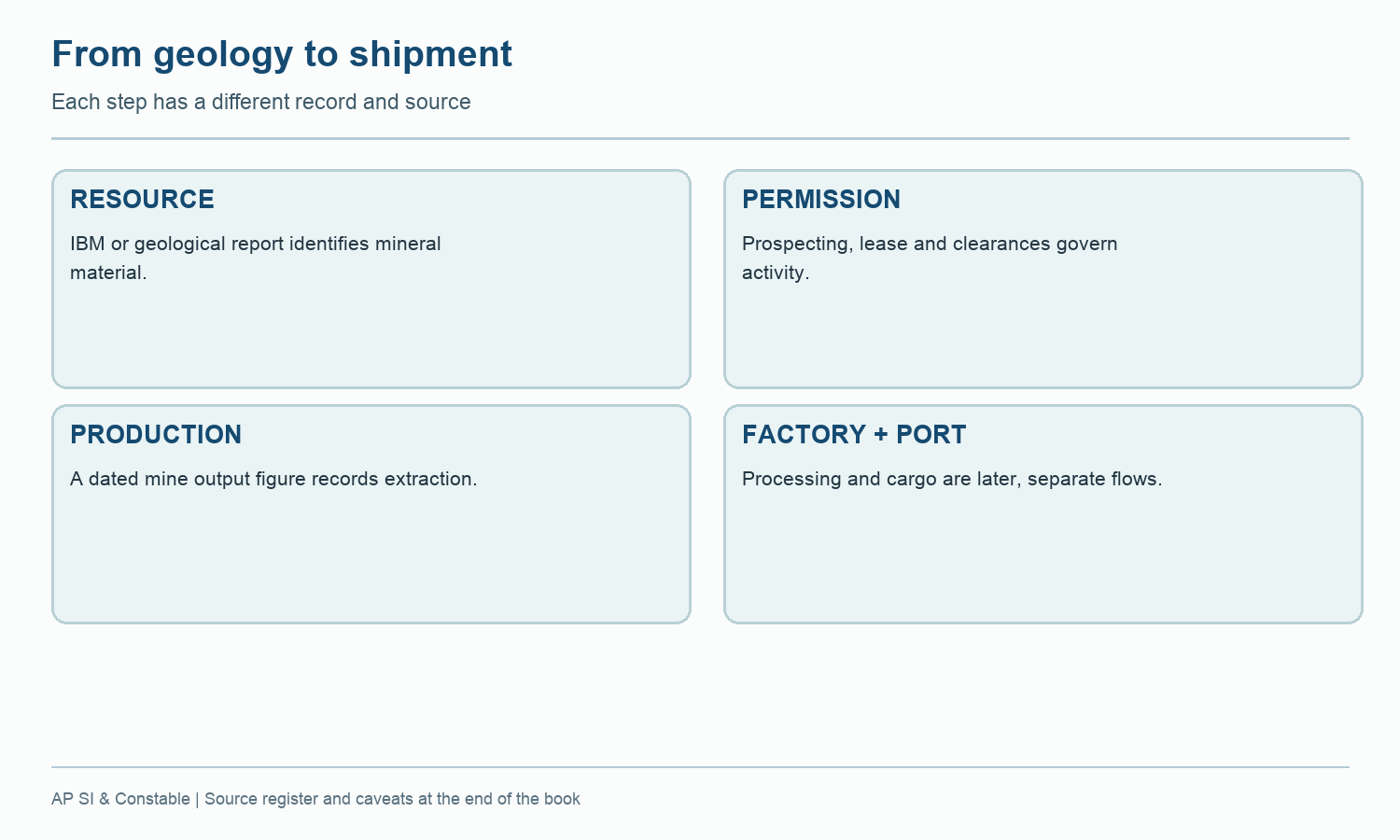
A discovery, lease, mine, factory and port shipment require different evidence.
Read this visual
A resource, lease, active mine, factory and shipment are separate stages. A claim about one needs its own official evidence.
Current district geometry: APSDMA. Mining, industry, SEZ and port claims: credited issuing bodies.